China Top 10 Yuken Directional Valve Suppliers?

China’s hydraulic supply chain serves machinery makers across construction, agriculture, manufacturing, and mobile equipment. Grand View Research’s Hydraulic Equipment Market Size, Share & Trends Analysis Report describes continued demand for hydraulic systems, supported by industrial and infrastructure applications. That wider trend makes supplier selection more important, but it does not prove that every listed company is an authorized Yuken distributor.

A yuken directional valve controls the direction and flow of hydraulic fluid, helping actuators move predictably under load. Buyers should check model numbers, port sizes, pressure ratings, voltage requirements, and available documentation. Ask for clear product photographs, test records, warranty terms, and confirmation of the valve’s origin. Small details matter. A matching connection does not guarantee matching performance.

This guide examines ten China-based suppliers connected with Yuken directional valves and related sourcing needs. It considers product range, technical support, export experience, and the clarity of each supplier’s claims. Where possible, buyers should verify authorization directly with Yuken or its regional representatives, then compare quotations against the original specifications. Treat the list as a starting point, not a certification. Supplier information can change, and online listings may blur the difference between genuine Yuken products, replacement parts, and compatible alternatives. That distinction deserves more attention than it often gets.
China Top 10 Yuken Directional Valve Suppliers?

What Defines a Yuken Directional Valve: 2-, 3-, and 4-Way Flow Paths

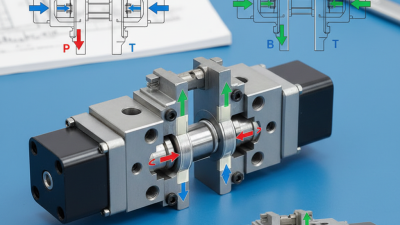
A directional valve controls where hydraulic fluid travels. “Way” describes the number of flow connections, not the number of spool positions. A 2-way valve opens or blocks a basic inlet-to-outlet path. It can start or stop flow to a simple circuit. A 3-way valve adds a return path, often serving a single-acting cylinder. A 4-way valve connects pressure and return lines to two actuator ports. Reversing those connections extends or retracts a double-acting cylinder. Small details matter.

Port labels and spool symbols deserve close attention. A valve marked 4-way may still have different center conditions, such as blocked, open, or tandem center. These affect actuator movement and pump flow when the spool rests. In a real circuit review, check the schematic against the machine’s operating sequence. The naming can still feel confusing, especially when catalog diagrams use different conventions. Don’t rely on port count alone.

Tips: Trace the pressure, return, and actuator lines on the symbol before choosing a valve. Confirm the required center condition, flow capacity, and mounting interface. A quick sketch can reveal a mismatch early. It is easy to overlook return flow, and that small oversight may cause unexpected motion or heat.

How ISO 4401 Sizes 03, 05, and 07 Specify Valve Mounting Interfaces

ISO 4401 defines the mounting face for directional valves, including port positions and bolt patterns. Sizes 03, 05, and 07 indicate different interface scales, not a valve’s exact flow capacity. Size 03 is compact and common in smaller hydraulic circuits. Size 05 provides a larger mounting face for higher-flow applications. Size 07 is larger again, allowing larger passages and greater potential flow.

Small details matter.

When checking a manifold, compare the valve’s ISO 4401 designation with the drawing, then verify port locations, bolt spacing, and sealing surfaces. A valve may look close to the right size but still fail to seat correctly. The interface code also does not specify every detail, such as electrical connections or operating limits. Check the full designation and manufacturer’s dimensional data before ordering. In practice, I would not rely on a size label alone; it is an easy assumption to make, and one worth questioning. A clean match can reduce leaks, awkward rework, and delays during installation.

Which Ratings Matter: Pressure, Flow, Spool Position, and ISO 4406 Cleanliness

When comparing directional valve suppliers, treat ratings as a working set, not isolated numbers. A pressure rating should cover continuous duty and expected peaks. A valve operating near its limit may leak internally or wear early. Check whether figures refer to inlet pressure, port pressure, or differential pressure. These values are not interchangeable.

Flow capacity matters just as much. A valve selected by nominal flow alone can cause a sharp pressure drop, especially with cold, viscous oil. That drop becomes heat. Confirm the rated flow’s test conditions and compare them with your circuit’s actual demand. Spool position matters too: the number of positions and center configuration determine what actuators do when the spool rests. I have seen a suitable flow rating fail a machine because the center condition was overlooked. Easy to miss.

Tips: Ask for pressure-flow curves, not just headline ratings. Match ISO 4406 cleanliness targets to the valve’s stated requirements and your filtration plan. Record fluid temperature and duty cycle. Keep uncertainties on the checklist; field conditions rarely match a catalog page perfectly.

How to Verify China Suppliers: Yuken Authorization, Traceability, and Test Records

When evaluating a directional valve supplier, ask for current authorization evidence and verify it through the manufacturer’s official contact channel. Check that the document names the legal business entity, not just a sales office or trading name. Compare the supplier’s address with its quotation and invoice. A mismatch deserves a clear explanation. Paper alone is weak.

Traceability should connect the valve in your shipment to its production and inspection records. Request photographs of the nameplate, packaging label, and batch or serial number before dispatch. Then compare those details with the packing list and test report. For stocked items, ask when the unit entered inventory and whether its packaging was opened. Small details matter.

Request test records that identify the exact model and batch, test date, measured pressure, leakage result, and instrument calibration status. Generic certificates may look polished but prove little about the units being shipped. If possible, witness a sample test or have an independent inspector check a pre-shipment sample. Keep the records with your purchase documents. This process takes time, and even a careful review can miss something; repeat key checks when the shipment arrives.

China Top 10 Yuken Directional Valve Suppliers? — How to Verify Authorization, Traceability, and Test Records

Verification framework, not a ranked supplier list: Use these checks to assess any prospective supplier. Authorization, product origin, and compliance should be confirmed for the specific product and transaction.

No. Verification area Evidence to request How to verify Positive signal / warning sign
1 Authorization status Current authorization evidence identifying the authorized legal entity, product scope, territory, and validity period. Confirm the authorization directly with the relevant manufacturer using contact details obtained independently. Check that the document covers the specific valve range and selling entity. Positive: Scope and validity are independently confirmed. Warning: An undated certificate or a document covering a different entity or product range.
2 Legal business identity Business registration details, registered address, and the legal entity named on the quotation and invoice. Check the company’s legal existence and registration details through the relevant official business registry. Ensure the contracting and payment entities are consistent. Positive: Legal name and registration details match across records. Warning: Unexplained changes in entity, address, or payee.
3 Product identification Clear photographs of the valve, nameplate, packaging labels, and the exact model or ordering code offered. Compare the markings and configuration with current manufacturer documentation. Confirm that the proposed model matches the required mounting pattern, spool function, ports, and electrical options. Positive: Markings and configuration are consistent with product documentation. Warning: Altered labels, incomplete codes, or specifications that do not match the quotation.
4 Traceability Serial or lot identification, product labels, packing list, and any available chain-of-custody or purchase records. Check that identifiers on the product, packaging, and documents agree. Ask the manufacturer or authorized channel whether the identifiers and claimed origin can be confirmed. Positive: Identifiers form a consistent record for the supplied units. Warning: Missing, duplicated, obscured, or mismatched identifiers.
5 Test records Unit- or batch-specific inspection and test reports, including the test date, tested identifiers, method, and results. Check that the report corresponds to the quoted product and states measurable results against defined acceptance criteria. Request clarification for missing or ambiguous fields. Positive: Results are linked to the supplied units or batch and show clear acceptance criteria. Warning: Generic reports with no product identifiers or measured results.
6 Pressure and leakage checks Applicable pressure-test and leakage-test results, with test conditions and acceptance limits. Confirm that the reported test pressure, duration, fluid, and acceptance criteria are appropriate for the specified valve and match the test procedure or product documentation. Positive: Conditions and limits are stated and relevant to the model. Warning: A simple “passed” statement without test conditions or criteria.
7 Electrical checks, if applicable For solenoid-operated valves, records for coil voltage, connector configuration, and applicable electrical inspection results. Compare the coil and connector details with the purchase specification. Confirm that any stated electrical test results relate to the supplied configuration. Positive: Voltage and connector details match the order. Warning: Substituted coils or unclear voltage and connector markings.
8 Certificates and compliance claims Any certificates or declarations claimed for the exact product, with issuing body, scope, and validity information. Verify certificates with the issuing organization where possible. Check that the document applies to the product and destination market; do not treat a company-level certificate as proof of product certification. Positive: Scope and issuing source are verifiable. Warning: Expired, unverifiable, or out-of-scope documents.
9 Storage and handling Storage conditions, packaging details, and inspection information for stock held before shipment. Ask how the valve has been protected from contamination, moisture, impact, and corrosion. Inspect packaging and exposed ports on receipt. Positive: Ports are protected and packaging is intact. Warning: Open ports, damaged seals, corrosion, or signs of rework.
10 Warranty and after-sales support Written warranty terms, return procedure, claim contact, and stated handling of inspection or failure investigations. Check that the terms identify the responsible legal entity, coverage period, exclusions, and process for resolving quality claims. Positive: Responsibilities and claim steps are written and clear. Warning: Verbal-only promises or no defined process for defective goods.

How to Compare 10 China-Based Suppliers by Models, Standards, Service, and Lead Time

Comparing ten China-based directional valve suppliers works best when every supplier answers the same technical questions. Request model codes, spool diagrams, rated pressure, flow capacity, voltage, and mounting dimensions.

A catalog photo is not enough.

Confirm whether a quoted valve matches your existing manifold and operating conditions; similar-looking units may differ internally. Ask for dimensional drawings and a written cross-reference before approving a sample. Keep the comparison table simple, but record missing data rather than guessing.

Check applicable interface and quality requirements, such as ISO 4401 mounting dimensions, and ask how each supplier verifies production consistency. Request inspection records, material details, and a sample test report where available. Service quality shows in the response: can the technical team explain spool options, seal materials, and troubleshooting steps clearly?

Some replies will be vague. That matters.

Compare warranty terms, spare-part availability, and whether support continues after shipment. Lead time should include production, inspection, packing, and transport, not just the factory estimate. Ask suppliers to confirm current stock and provide a realistic dispatch date in writing. A low quote may still cost more if documentation or delivery slips. Even a careful comparison can miss details, so verify critical dimensions on the sample before ordering in volume.