


- Home
- A-Z Catalogue
- Products
- Valves
- Cetop
- Manual Directional Valves
- Proportional Valves
- Poppet Valves
- High-Speed Linear Servo Valves
- All High-Speed Linear Servo Valves
- Cetop 10 (NG32) Two Stage Type High Speed Linear Servo Valves – LSVHG-10
- Cetop 10 (NG32) Two Stage Type High Speed Linear Servo Valves – LSVHG-10 (With Fail-Safe)
- Cetop 8 (NG25) Two Stage Type High Speed Linear Servo Valves – LSVHG-06
- Cetop 8 (NG25) Two Stage Type High Speed Linear Servo Valves – LSVHG-06 (With Fail-Safe)
- Cetop 7 (NG16) Two Stage Type High Speed Linear Servo Valves – LSVHG-04
- Cetop 7 (NG16) Two Stage Type High Speed Linear Servo Valves – LSVHG-04 (With Fail-Safe)
- Cetop 5 (NG10) Direct Type High Speed Linear Servo Valves – LSVG-03
- Cetop 5 (NG10) OBE Type Direct Operated Linear Servo Valves – LSVG-03-EH
- Cetop 3 (NG6) OBE Type Direct Operated Linear Servo Valves – LSVG-01-EH
- Pumps
- Pressure control
- Flow Control Valves
- Pressure Control Valves
- All Pressure Control Valves
- Brake Valves
- Direct Relief Valve
- Low Noise Solenoid Controlled Relief Valves
- Low Noise Pilot Operated Relief Valves
- Pilot Operated Relief Valves
- Pressure reducing and relieving valves
- Pressure reducing and check valves
- Pressure control valves
- Remote Control Relief Valves
- Solenoid Controlled Relief Valves – BSG
- Solenoid Controlled Relief Valves – BST
- Unloading relief valves
- Check valves
- Environmental
- Valves
- Hydraulic Systems
- Power pack
- About Us
- Contact
- Blog

China Top 10 Grinding Media Balls Manufacturers?
China’s grinding media industry supports two demanding sectors: mineral processing and cement production. Grinding Media Balls must withstand repeated impact, abrasion, and thermal stress inside large mills. A small difference in hardness can change power consumption, liner wear, and product quality.
The scale is substantial. The World Steel Association reported approximately 1.005 billion tonnes of Chinese crude steel production in 2024. USGS Mineral Commodity Summaries 2025 also estimated China’s cement output at about 1.8 billion tonnes in 2024. These figures help explain the country’s strong manufacturing base for forged and cast grinding media. However, production volume alone does not identify a reliable supplier.
This guide examines China’s top 10 Grinding Media Balls manufacturers through practical purchasing criteria. These include chemical composition, hardness distribution, impact toughness, dimensional consistency, heat-treatment controls, and traceable inspection records. Relevant industry research from Grand View Research and Mordor Intelligence also connects grinding media demand with expanding mining, cement, and mineral-processing operations. Their market estimates differ, reminding buyers to compare methodology before accepting any forecast.
Look beyond polished catalogs. Ask for mill trial data, wear-rate results, quality certificates, and recent export references. ISO 9001 certification is useful, but it cannot replace batch-level testing. Some suppliers may report impressive laboratory hardness while providing limited field evidence. That is an uncomfortable gap. Therefore, this ranking should be treated as a purchasing starting point, not an unquestionable verdict. The best manufacturer depends on ore abrasiveness, mill design, ball diameter, operating conditions, and delivered cost.
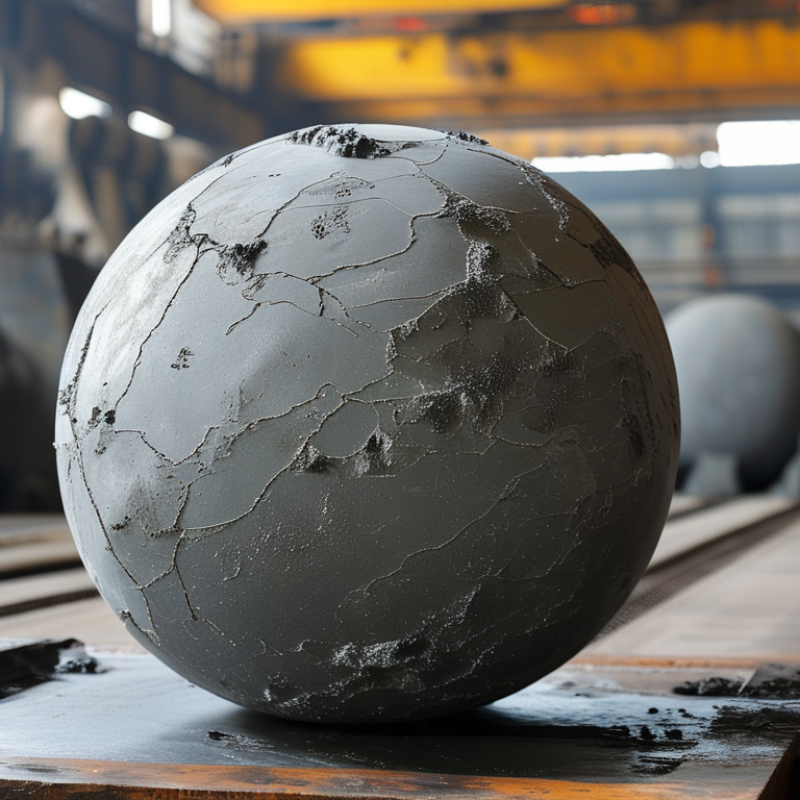
Table of Contents [Hide]
What Are Grinding Media Balls and Why Do They Matter?
Grinding media balls are hardened spheres used inside industrial mills to crush and refine raw materials. They transfer impact and abrasion energy as the mill rotates. Common materials include forged steel, cast steel, and ceramic compounds. Each option behaves differently under pressure, heat, and repeated collision.
Their importance is easy to see inside a working mill. A properly selected ball creates a steady grinding action, while poor sizing can leave coarse particles behind. Excessive hardness may reduce wear but increase liner damage. Lower hardness can produce faster consumption and unwanted metal contamination. Small details matter. Ball diameter, density, surface condition, and chemical composition all influence performance.
In plant inspections, operators often check ball wear, mill noise, power draw, and product fineness together. These signs provide more useful evidence than a single laboratory claim. A reliable purchasing review should include hardness tests, impact resistance, dimensional checks, and traceable production records. Samples should also be tested under operating conditions when possible. Laboratory results are useful, but they cannot perfectly reproduce every mill.
I have seen unevenly worn balls reduce efficiency within weeks. That experience is easy to underestimate. Material feed, moisture, mill speed, and liner design can change the result. Therefore, comparing manufacturers requires more than a catalog specification. The best choice depends on verified performance, consistent quality control, and the actual grinding environment.
China Top 10 Grinding Media Balls Manufacturers? - What Are Grinding Media Balls and Why Do They Matter?
Grinding media balls are wear-resistant bodies used in ball mills, SAG mills, and other tumbling mills to reduce material size through impact and abrasion. The following table presents ten commonly specified product profiles and selection factors used when evaluating industrial grinding media. Values are typical ranges and may vary according to alloy composition, heat treatment, mill design, feed size, slurry chemistry, and operating conditions.
| Profile | Grinding Media Type | Typical Material or Composition | Common Diameter Range | Typical Hardness | Approximate Density | Typical Applications | Main Performance Advantage | Important Quality Checks |
|---|---|---|---|---|---|---|---|---|
| 1 | Forged Carbon Steel Balls | Medium- to high-carbon steel, commonly with carbon content around 0.60%–1.00% | 20–150 mm | Approximately 55–65 HRC at the working surface | About 7.80 g/cm³ | Mining, copper, gold, iron ore, and general-purpose wet grinding | High impact resistance and good resistance to breakage | Surface hardness, core hardness, impact toughness, dimensional tolerance, and quench quality |
| 2 | High-Chromium Cast Balls | Cast iron or steel alloy containing approximately 10%–30% chromium | 25–120 mm | Approximately 58–68 HRC | About 7.40–7.80 g/cm³ | Dry or wet grinding where abrasive wear is dominant | Strong abrasion resistance and reduced ball consumption in suitable mill conditions | Chromium and carbon content, carbide distribution, hardness gradient, porosity, and crack inspection |
| 3 | Low-Chromium Cast Balls | Cast alloy iron with a lower chromium addition, often below 10% | 25–100 mm | Approximately 50–62 HRC | About 7.30–7.70 g/cm³ | Cement, limestone, coal, and moderately abrasive feed materials | Balanced cost, hardness, and impact performance | Microstructure, hardness consistency, casting defects, roundness, and wear test results |
| 4 | High-Manganese Steel Balls | Manganese steel generally containing approximately 10%–14% manganese | 30–150 mm | Typically 180–300 HB initially; surface hardening may occur during impact | About 7.70–7.90 g/cm³ | Applications involving high impact and larger feed particles | Good toughness and resistance to impact-related breakage | Manganese content, heat-treatment condition, impact toughness, work-hardening response, and crack control |
| 5 | Stainless Steel Balls | Martensitic or austenitic stainless steel, selected for corrosion-sensitive processes | 5–100 mm | Approximately 25–60 HRC, depending on grade and treatment | About 7.70–8.00 g/cm³ | Food, pharmaceutical, chemical, pigment, and laboratory grinding | Improved corrosion resistance and lower risk of iron contamination in selected grades | Corrosion resistance, alloy verification, cleanliness, surface finish, and dimensional accuracy |
| 6 | Alumina Ceramic Balls | High-purity aluminum oxide, commonly 85%–99.9% Al₂O₃ | 0.5–100 mm | Approximately 1,500–2,000 HV | About 3.30–3.90 g/cm³ | Mineral processing, ceramics, paints, coatings, and contamination-sensitive grinding | Very low iron contamination and high chemical stability | Alumina purity, water absorption, apparent porosity, crushing strength, roundness, and chipping |
| 7 | Zirconia Ceramic Balls | Stabilized zirconium dioxide, commonly yttria- or ceria-stabilized | 0.1–30 mm | Approximately 1,000–1,400 HV | About 5.80–6.10 g/cm³ | Fine grinding, electronic materials, inks, coatings, and advanced ceramics | High density, high toughness, and efficient fine-particle size reduction | Zirconia content, stabilizer content, density, wear rate, surface finish, and bead size distribution |
| 8 | Silicon Nitride Balls | Reaction-bonded or pressure-sintered silicon nitride ceramic | 1–50 mm | Approximately 1,400–1,700 HV | About 3.10–3.30 g/cm³ | High-purity milling, electronic powders, technical ceramics, and specialty chemicals | Low density, high temperature resistance, and low contamination potential | Density, fracture toughness, porosity, thermal-shock resistance, and dimensional precision |
| 9 | Glass Grinding Beads | Soda-lime or borosilicate glass, selected according to chemical compatibility | 0.5–10 mm | Typically about 500–700 HV | About 2.40–2.60 g/cm³ | Paints, inks, coatings, agricultural chemicals, and low-to-medium energy dispersion | Cost-effective operation and relatively low material contamination | Bead roundness, chemical resistance, breakage rate, size distribution, and surface defects |
| 10 | Tungsten Carbide Balls | Tungsten carbide with a metallic binder, commonly nickel- or cobalt-based | 0.5–50 mm | Approximately 1,200–2,000 HV | About 14.50–15.20 g/cm³ | Very fine grinding of hard minerals, metal powders, and advanced technical materials | Extremely high density and exceptional resistance to severe abrasive wear | Carbide grain size, binder content, density, magnetic properties, porosity, and fracture resistance |
Selection should be based on mill type, ball diameter, feed hardness, slurry chemistry, operating speed, target particle size, and the required balance between impact resistance, wear life, and contamination control.