


- Home
- A-Z Catalogue
- Products
- Valves
- Cetop
- Manual Directional Valves
- Proportional Valves
- Poppet Valves
- High-Speed Linear Servo Valves
- All High-Speed Linear Servo Valves
- Cetop 10 (NG32) Two Stage Type High Speed Linear Servo Valves – LSVHG-10
- Cetop 10 (NG32) Two Stage Type High Speed Linear Servo Valves – LSVHG-10 (With Fail-Safe)
- Cetop 8 (NG25) Two Stage Type High Speed Linear Servo Valves – LSVHG-06
- Cetop 8 (NG25) Two Stage Type High Speed Linear Servo Valves – LSVHG-06 (With Fail-Safe)
- Cetop 7 (NG16) Two Stage Type High Speed Linear Servo Valves – LSVHG-04
- Cetop 7 (NG16) Two Stage Type High Speed Linear Servo Valves – LSVHG-04 (With Fail-Safe)
- Cetop 5 (NG10) Direct Type High Speed Linear Servo Valves – LSVG-03
- Cetop 5 (NG10) OBE Type Direct Operated Linear Servo Valves – LSVG-03-EH
- Cetop 3 (NG6) OBE Type Direct Operated Linear Servo Valves – LSVG-01-EH
- Pumps
- Pressure control
- Flow Control Valves
- Pressure Control Valves
- All Pressure Control Valves
- Brake Valves
- Direct Relief Valve
- Low Noise Solenoid Controlled Relief Valves
- Low Noise Pilot Operated Relief Valves
- Pilot Operated Relief Valves
- Pressure reducing and relieving valves
- Pressure reducing and check valves
- Pressure control valves
- Remote Control Relief Valves
- Solenoid Controlled Relief Valves – BSG
- Solenoid Controlled Relief Valves – BST
- Unloading relief valves
- Check valves
- Environmental
- Valves
- Hydraulic Systems
- Power pack
- About Us
- Contact
- Blog

China Top 10 Brushcutter Spare Parts Suppliers
China’s brushcutter parts market serves repair shops, distributors, and equipment brands worldwide. Choosing a supplier takes more than comparing prices. Buyers need dependable fit, consistent materials, clear specifications, and responsive support. A replacement clutch drum may look correct in a photograph, yet differ in dimensions or tooth profile. Small mismatches can cause delays at the workbench.
This introduction to China’s top 10 Brushcutter Spare Parts suppliers will compare practical factors, including product range, manufacturing experience, quality checks, customization options, lead times, and communication. It will also consider whether suppliers provide useful drawings and fitment guidance. These details matter when sourcing blades, trimmer heads, carburetors, filters, and other frequently replaced components. Not every supplier will suit every buyer. A small repair business may value low minimum orders, while a distributor may need steady stock and predictable delivery. Rankings can guide research, but they cannot replace sample testing or direct verification.
As an illustrative, fictional industry specialist, service engineer Daniel Reed offers this reminder: “A part is only reliable when its fit, finish, and supply history are all checked.” This is an editorially created quotation, not a verified published statement. Use it as a buying principle, not as independent evidence. Compare specifications carefully, request relevant quality documentation, and confirm terms before placing an order. A supplier’s website can answer some questions. It cannot prove every claim.
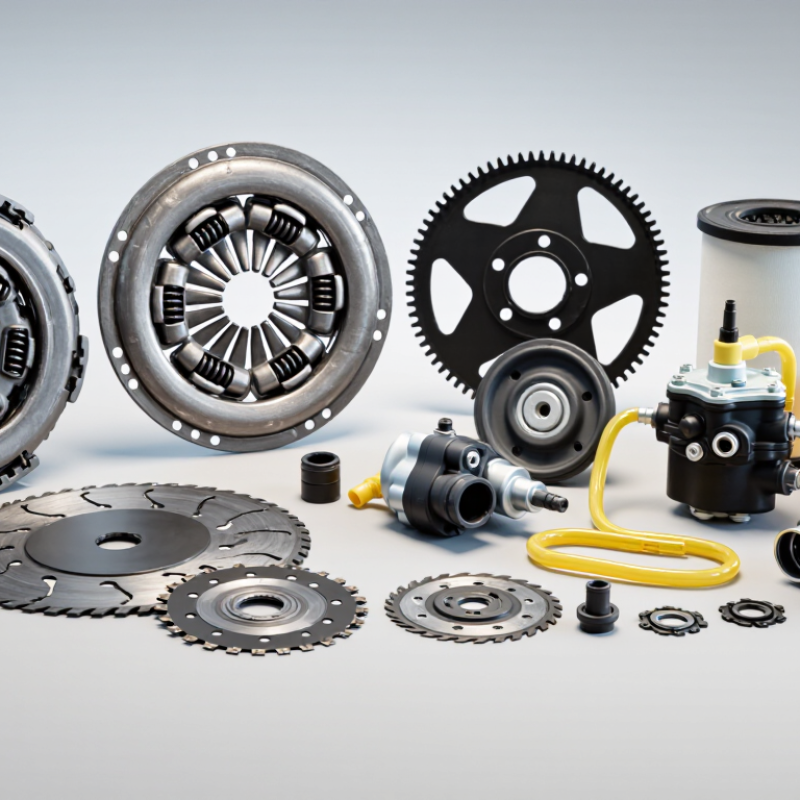
Table of Contents [Hide]
What Brushcutter Spare Parts Are and How They Are Classified
Brushcutter spare parts are replacement components that restore cutting performance, power transfer, or safe handling. A practical classification groups them by function. Cutting parts include blades, nylon-line heads, and trimmer line. Drive components include the clutch, drive shaft, and bevel gearbox. Engine-related parts cover air filters, spark plugs, fuel lines, and carburettor components. Guards, handles, harnesses, and switches support control and protection. Fit matters.
Parts within one group are not automatically interchangeable. Check shaft diameter, spline count, thread direction, mounting bore, and engine specifications before ordering. ISO 11806-1 sets safety requirements for portable brushcutters and grass trimmers, making guards and control components more than cosmetic accessories. The Grand View Research lawn mower market report valued that adjacent equipment market at USD 30.4 billion in 2023; it does not measure brushcutter spare parts specifically, but it shows the scale of outdoor power equipment demand. Classification is helpful, yet imperfect: a gearbox may be sold as an assembly or as separate gears, depending on the service design. A clear parts list should state dimensions and compatibility, not just a component’s name.





