


- Home
- A-Z Catalogue
- Products
- Valves
- Cetop
- Manual Directional Valves
- Proportional Valves
- Poppet Valves
- High-Speed Linear Servo Valves
- All High-Speed Linear Servo Valves
- Cetop 10 (NG32) Two Stage Type High Speed Linear Servo Valves – LSVHG-10
- Cetop 10 (NG32) Two Stage Type High Speed Linear Servo Valves – LSVHG-10 (With Fail-Safe)
- Cetop 8 (NG25) Two Stage Type High Speed Linear Servo Valves – LSVHG-06
- Cetop 8 (NG25) Two Stage Type High Speed Linear Servo Valves – LSVHG-06 (With Fail-Safe)
- Cetop 7 (NG16) Two Stage Type High Speed Linear Servo Valves – LSVHG-04
- Cetop 7 (NG16) Two Stage Type High Speed Linear Servo Valves – LSVHG-04 (With Fail-Safe)
- Cetop 5 (NG10) Direct Type High Speed Linear Servo Valves – LSVG-03
- Cetop 5 (NG10) OBE Type Direct Operated Linear Servo Valves – LSVG-03-EH
- Cetop 3 (NG6) OBE Type Direct Operated Linear Servo Valves – LSVG-01-EH
- Pumps
- Pressure control
- Flow Control Valves
- Pressure Control Valves
- All Pressure Control Valves
- Brake Valves
- Direct Relief Valve
- Low Noise Solenoid Controlled Relief Valves
- Low Noise Pilot Operated Relief Valves
- Pilot Operated Relief Valves
- Pressure reducing and relieving valves
- Pressure reducing and check valves
- Pressure control valves
- Remote Control Relief Valves
- Solenoid Controlled Relief Valves – BSG
- Solenoid Controlled Relief Valves – BST
- Unloading relief valves
- Check valves
- Environmental
- Valves
- Hydraulic Systems
- Power pack
- About Us
- Contact
- Blog

7 Tips to Find the Best Tyre Pyrolysis Plant Price?
Choosing a tyre pyrolysis plant is not simply a search for the lowest quotation. The real decision involves equipment quality, processing capacity, fuel consumption, emission controls, installation support, and long-term maintenance. A plant priced at $200,000 may appear attractive, yet missing condensers, weak reactors, or limited technical service can create expensive problems later. Small details matter, such as reactor plate thickness, oil cooling time, and the distance between the factory and your site.
Process engineer Dr. Michael H. Wilson offers a practical reminder: “The cheapest plant is not always the lowest-cost plant.” This principle should guide every comparison of Tyre Pyrolysis Plant Price. Ask for a detailed quotation, not a single figure. Confirm whether it includes shipping, installation, training, spare parts, testing, and environmental-control equipment. Request operating references, production records, and realistic fuel-consumption data. Marketing photographs are not enough.
A reliable evaluation also considers feedstock quality. Wet, mixed, or heavily contaminated tyres can reduce output and increase maintenance. That part is often overlooked. It should not be. Buyers should compare oil yield, carbon quality, steel recovery, labor requirements, and expected downtime. Some quotations may exclude essential after-sales support, while others may include stronger warranties and better commissioning services. The price table is only the beginning. Careful questions, independent verification, and a site-specific cost model can reveal the more dependable investment. Mistakes still happen, but a documented comparison makes them less costly.
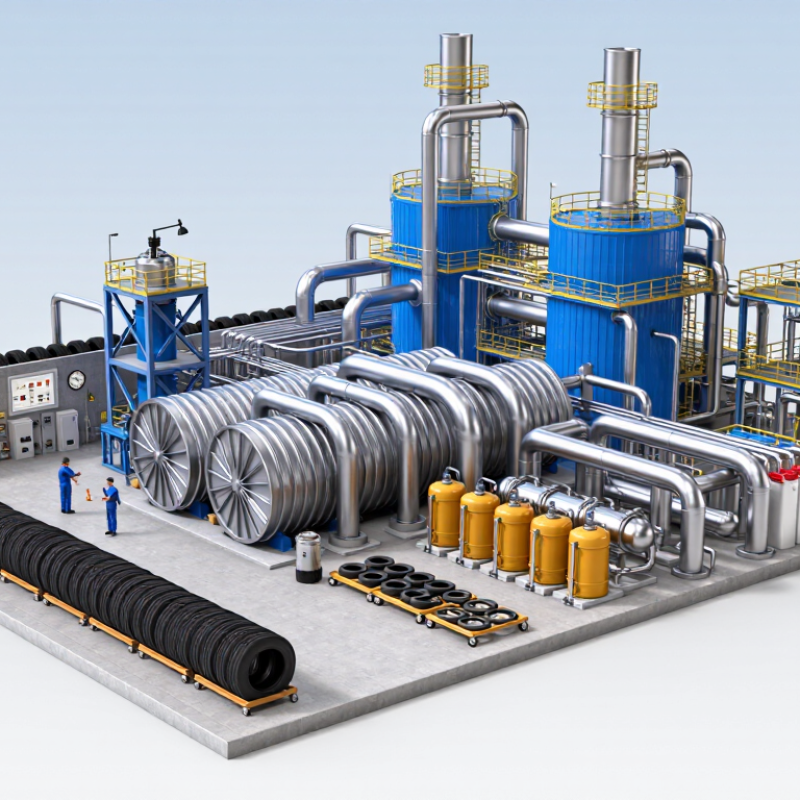
Table of Contents [Hide]
Define Your Tyre Pyrolysis Plant Capacity and Processing Goals
7 Tips to Find the Best Tyre Pyrolysis Plant Price?
Define Your Tyre Pyrolysis Plant Capacity and Processing Goals
Your capacity decision should begin with feedstock, not a sales quotation. The 2023 U.S. Tire Manufacturers Association report estimated 256 million scrap tyres were generated in 2021. It also reported a recovery rate near 71%. These figures show strong supply, but local collection remains uneven. A plant processing 5 tonnes daily needs far less storage than a 20-tonne facility.
Tip: Measure your real supply.
Record tyre sizes, moisture, steel content, and weekly delivery volumes. Passenger tyres may feed differently from truck tyres. A larger reactor is not automatically better. If supply drops during rainy months, unused capacity can quietly damage your return. I have seen planning spreadsheets assume perfect deliveries. That assumption needs challenge.
Define your output targets before comparing prices. Decide whether you need fuel oil, recovered carbon material, or recovered steel. Each product requires different handling, cooling, storage, and quality controls. The International Energy Agency’s circular-economy research stresses that material recovery depends on consistent quality and reliable processing systems. Cheap equipment may produce more residue than expected.
Tip: Price the whole system.
Include shredding, feeding, condensation, emissions monitoring, labour, maintenance, and product storage. Ask for measured throughput, energy consumption, and downtime records from comparable installations. Capacity is only useful when the plant can sustain it. That detail is often missed.