


- Home
- A-Z Catalogue
- Products
- Valves
- Cetop
- Manual Directional Valves
- Proportional Valves
- Poppet Valves
- High-Speed Linear Servo Valves
- All High-Speed Linear Servo Valves
- Cetop 10 (NG32) Two Stage Type High Speed Linear Servo Valves – LSVHG-10
- Cetop 10 (NG32) Two Stage Type High Speed Linear Servo Valves – LSVHG-10 (With Fail-Safe)
- Cetop 8 (NG25) Two Stage Type High Speed Linear Servo Valves – LSVHG-06
- Cetop 8 (NG25) Two Stage Type High Speed Linear Servo Valves – LSVHG-06 (With Fail-Safe)
- Cetop 7 (NG16) Two Stage Type High Speed Linear Servo Valves – LSVHG-04
- Cetop 7 (NG16) Two Stage Type High Speed Linear Servo Valves – LSVHG-04 (With Fail-Safe)
- Cetop 5 (NG10) Direct Type High Speed Linear Servo Valves – LSVG-03
- Cetop 5 (NG10) OBE Type Direct Operated Linear Servo Valves – LSVG-03-EH
- Cetop 3 (NG6) OBE Type Direct Operated Linear Servo Valves – LSVG-01-EH
- Pumps
- Pressure control
- Flow Control Valves
- Pressure Control Valves
- All Pressure Control Valves
- Brake Valves
- Direct Relief Valve
- Low Noise Solenoid Controlled Relief Valves
- Low Noise Pilot Operated Relief Valves
- Pilot Operated Relief Valves
- Pressure reducing and relieving valves
- Pressure reducing and check valves
- Pressure control valves
- Remote Control Relief Valves
- Solenoid Controlled Relief Valves – BSG
- Solenoid Controlled Relief Valves – BST
- Unloading relief valves
- Check valves
- Environmental
- Valves
- Hydraulic Systems
- Power pack
- About Us
- Contact
- Blog

7 Tips for Choosing the Right RO Booster Pump
Choosing the right Ro Booster Pump can shape reverse osmosis performance. It can help maintain stable pressure, consistent flow, and dependable water production. In homes, offices, and small commercial systems, demand changes throughout the day. A quiet pump may fill a storage tank smoothly. A poorly matched model may create vibration, leaks, or disappointing output. The pump must work with inlet pressure, membrane capacity, tubing size, power supply, and daily water usage.
These seven tips reflect checks commonly used by experienced technicians and installers. Flow rate matters, but pressure range, automatic controls, motor durability, and energy use also deserve attention. A pump designed for a laboratory system may be excessive for a kitchen unit. An undersized model may run continuously and wear faster. Check the manufacturer’s performance curve, not only its advertised pressure rating. That detail is often overlooked. Confirm compatibility with the membrane, transformer, switches, fittings, and available cabinet space. A reliable supplier should provide clear specifications, installation guidance, warranty terms, and responsive technical support.
Real conditions can reveal weaknesses that product pages hide. Hard water, voltage fluctuations, limited space, and irregular maintenance can affect pump performance. Listen for unusual vibration during operation. Inspect connections for dampness. Record pressure before and after installation. Small observations matter. No selection method is perfect, and careful advice can still miss a site-specific problem. A pump that performs well in one building may not suit another. Comparing verified specifications, operating conditions, and long-term support offers a more dependable path than choosing by price or appearance alone.
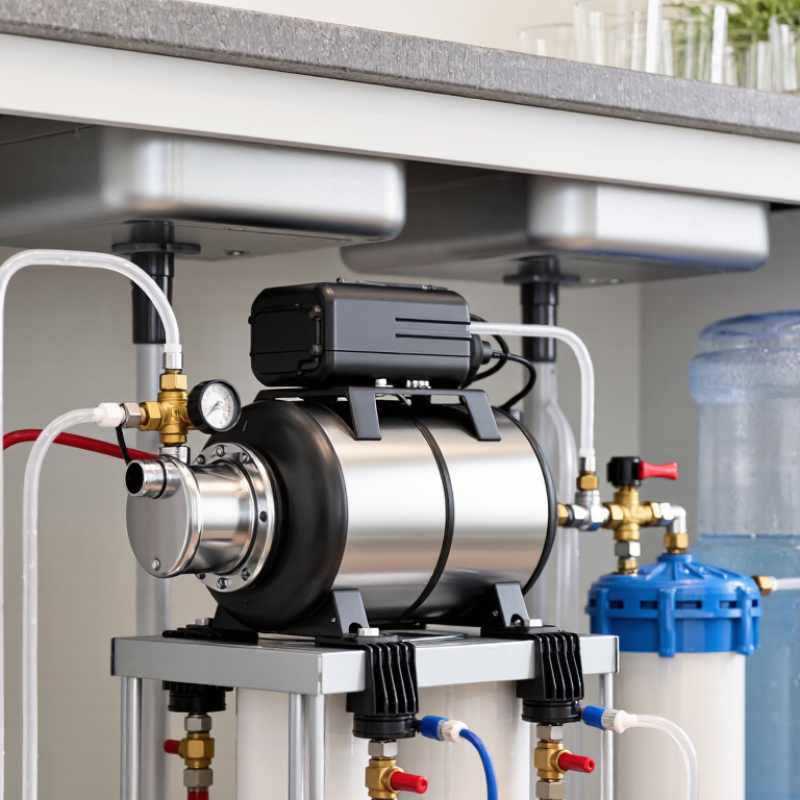
Table of Contents [Hide]
Understanding the Role of an RO Booster Pump
An RO booster pump raises feed-water pressure before water reaches the membrane. This pressure helps the membrane separate dissolved salts, metals, and other unwanted substances. Without enough pressure, production slows, rejection performance may fall, and wastewater can increase. In field checks, I measure pressure while the system is running. Static readings can be misleading. A pump that sounds quiet at startup may become harsh under continuous load.
Choose a pump by required flow, working pressure, and water temperature, not by size alone. Check the membrane’s rated pressure before increasing output. Excess pressure can damage housings, seals, or fittings. Confirm that the pump suits the feed-water quality and electrical supply. A prefilter matters too. Sediment can restrict the inlet and make the pump work harder. I also prefer pressure-switch and dry-run protection, plus an accessible shutoff valve. These features reduce risk when a supply tank empties or a filter blocks.
Noise, vibration, and frequent cycling deserve attention during installation. Flexible connections can reduce vibration, but they cannot correct poor alignment. Leave space for filter changes and inspect leaks after several hours of operation. Keep a simple record of inlet pressure, outlet pressure, flow, and membrane age. Pressure tells the story. That record can reveal gradual performance loss. My early pump selections were sometimes oversized. More power was not always better. A correctly matched pump supports stable pressure and predictable water output.





