


- Home
- A-Z Catalogue
- Products
- Valves
- Cetop
- Manual Directional Valves
- Proportional Valves
- Poppet Valves
- High-Speed Linear Servo Valves
- All High-Speed Linear Servo Valves
- Cetop 10 (NG32) Two Stage Type High Speed Linear Servo Valves – LSVHG-10
- Cetop 10 (NG32) Two Stage Type High Speed Linear Servo Valves – LSVHG-10 (With Fail-Safe)
- Cetop 8 (NG25) Two Stage Type High Speed Linear Servo Valves – LSVHG-06
- Cetop 8 (NG25) Two Stage Type High Speed Linear Servo Valves – LSVHG-06 (With Fail-Safe)
- Cetop 7 (NG16) Two Stage Type High Speed Linear Servo Valves – LSVHG-04
- Cetop 7 (NG16) Two Stage Type High Speed Linear Servo Valves – LSVHG-04 (With Fail-Safe)
- Cetop 5 (NG10) Direct Type High Speed Linear Servo Valves – LSVG-03
- Cetop 5 (NG10) OBE Type Direct Operated Linear Servo Valves – LSVG-03-EH
- Cetop 3 (NG6) OBE Type Direct Operated Linear Servo Valves – LSVG-01-EH
- Pumps
- Pressure control
- Flow Control Valves
- Pressure Control Valves
- All Pressure Control Valves
- Brake Valves
- Direct Relief Valve
- Low Noise Solenoid Controlled Relief Valves
- Low Noise Pilot Operated Relief Valves
- Pilot Operated Relief Valves
- Pressure reducing and relieving valves
- Pressure reducing and check valves
- Pressure control valves
- Remote Control Relief Valves
- Solenoid Controlled Relief Valves – BSG
- Solenoid Controlled Relief Valves – BST
- Unloading relief valves
- Check valves
- Environmental
- Valves
- Hydraulic Systems
- Power pack
- About Us
- Contact
- Blog

7 Tips for Choosing a China Generator Factory
Choosing a generator supplier in China is not just a matter of comparing prices or reading a polished product page. A dependable China generator factory should be able to explain how its units are built, tested, and supported after shipment. For buyers, the details matter: engine and alternator brands, rated output, fuel use, control-panel layout, and access to spare parts. Ask how the factory verifies performance under load, rather than relying only on a no-load demonstration. A photo of a test bench helps, but a dated test record and clear, model-specific specifications offer stronger evidence. Small details count.
The seven tips in this guide focus on practical checks, from reviewing manufacturing experience to assessing quality controls and after-sales support. They also cover factory communication, sample orders, warranty terms, and references from buyers with similar requirements. Compare quotations carefully; a lower price may reflect different components, testing, or service, not simply better value. Request documentation for relevant certifications, and confirm that it matches the model and destination market. If possible, discuss your expected workload and operating conditions with the supplier before choosing a unit. No checklist removes all risk. A factory may give an unclear answer at first, and that deserves follow-up rather than an instant rejection. The aim is to make a well-supported decision, not to assume any supplier is perfect. A little skepticism can save time, money, and avoidable trouble later.
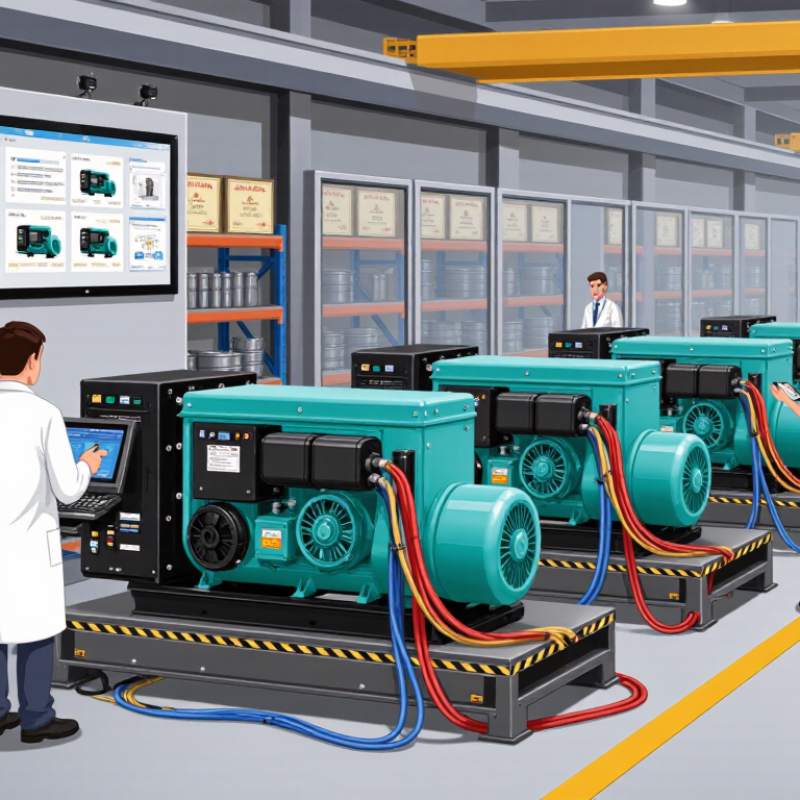
Table of Contents [Hide]
Define Your Generator Requirements and Applicable Standards
01 Before contacting a China generator factory, define the job the generator must perform. Is it for standby power during outages or continuous operation? Specify the required output in kW and kVA, voltage, frequency, and single- or three-phase supply. Include the equipment starting loads, not just its normal running load. Motors can draw several times their rated current at startup.
02 Small details matter. Note the site’s altitude, expected temperature range, fuel type, daily runtime, and acceptable noise level. These conditions affect engine sizing, cooling, fuel consumption, and enclosure design. A simple load list with each machine’s rating and start-up method gives suppliers something concrete to review. It is easy to over-specify capacity “just in case”; that can raise costs and leave the set operating inefficiently.
03 Identify the standards required in the generator’s destination market and for its intended use. ISO 8528 covers generator sets, while IEC 60034 addresses rotating electrical machines; neither automatically replaces local electrical, emissions, or noise requirements. Ask the factory which editions it designs to and request relevant test records, such as load-test results. Check that documents match the proposed model, voltage, and configuration. If a requirement is unclear, confirm it with a qualified local engineer before production. Paperwork can look complete and still miss a site-specific detail.





