


- Home
- A-Z Catalogue
- Products
- Valves
- Cetop
- Manual Directional Valves
- Proportional Valves
- Poppet Valves
- High-Speed Linear Servo Valves
- All High-Speed Linear Servo Valves
- Cetop 10 (NG32) Two Stage Type High Speed Linear Servo Valves – LSVHG-10
- Cetop 10 (NG32) Two Stage Type High Speed Linear Servo Valves – LSVHG-10 (With Fail-Safe)
- Cetop 8 (NG25) Two Stage Type High Speed Linear Servo Valves – LSVHG-06
- Cetop 8 (NG25) Two Stage Type High Speed Linear Servo Valves – LSVHG-06 (With Fail-Safe)
- Cetop 7 (NG16) Two Stage Type High Speed Linear Servo Valves – LSVHG-04
- Cetop 7 (NG16) Two Stage Type High Speed Linear Servo Valves – LSVHG-04 (With Fail-Safe)
- Cetop 5 (NG10) Direct Type High Speed Linear Servo Valves – LSVG-03
- Cetop 5 (NG10) OBE Type Direct Operated Linear Servo Valves – LSVG-03-EH
- Cetop 3 (NG6) OBE Type Direct Operated Linear Servo Valves – LSVG-01-EH
- Pumps
- Pressure control
- Flow Control Valves
- Pressure Control Valves
- All Pressure Control Valves
- Brake Valves
- Direct Relief Valve
- Low Noise Solenoid Controlled Relief Valves
- Low Noise Pilot Operated Relief Valves
- Pilot Operated Relief Valves
- Pressure reducing and relieving valves
- Pressure reducing and check valves
- Pressure control valves
- Remote Control Relief Valves
- Solenoid Controlled Relief Valves – BSG
- Solenoid Controlled Relief Valves – BST
- Unloading relief valves
- Check valves
- Environmental
- Valves
- Hydraulic Systems
- Power pack
- About Us
- Contact
- Blog

10 Tips for Buying the Best Rolling Tool Carts
Choosing the right Rolling Tool Carts is not simply a matter of picking the largest model. A crowded workshop quickly reveals weak casters, shallow drawers, and uncomfortable handles. I have seen a cart look impressive online, then wobble when loaded with cordless drills, sockets, and a heavy compressor accessory. Small details matter.
This guide presents ten practical tips for comparing construction, storage, mobility, security, and value. Pay close attention to steel thickness, drawer capacity, wheel quality, and the manufacturer’s stated weight limits. A cart with four smooth casters may move easily across concrete, yet struggle on thresholds or uneven garage flooring. Measure your available space, too. A beautiful cart can become an obstacle when its drawers cannot open fully.
Test the details before trusting the appearance. That matters. Pull each drawer, check its alignment, and inspect the locking mechanism for excessive play. Read warranty terms and independent user feedback, not only promotional descriptions. Specifications can still be incomplete. Some buyers, including me, have focused too heavily on drawer count and overlooked total loaded weight. That mistake is easy to repeat.
The best choice depends on your tools, workspace, budget, and working habits. These tips will help you make a more informed decision without chasing features you may never use. Expect trade-offs. A compact cart saves floor space but may limit future storage. A larger unit offers capacity but demands stronger flooring and safer handling. Reliability should guide the purchase.
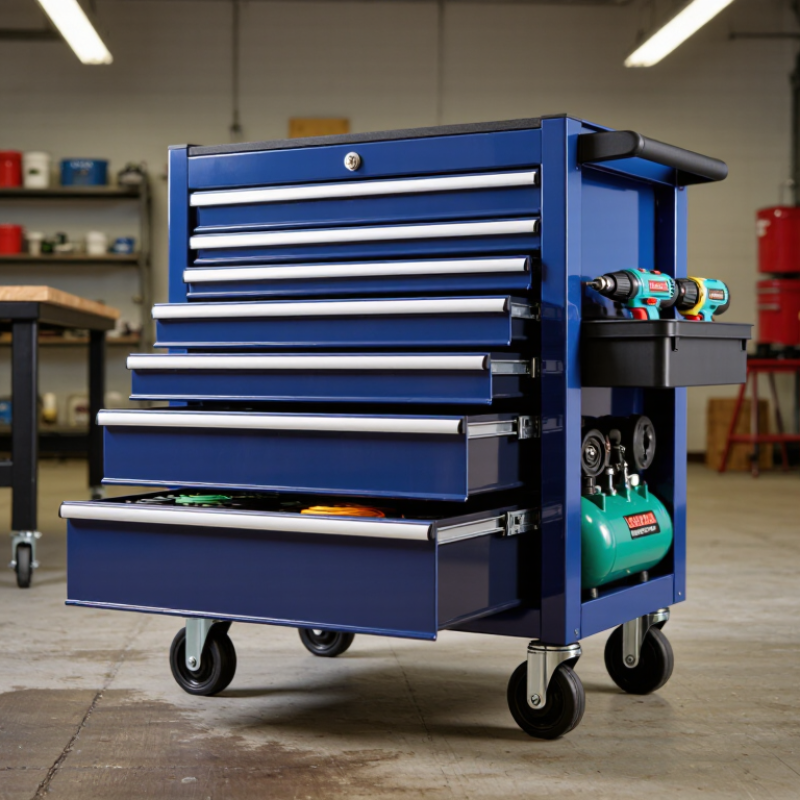
Table of Contents [Hide]
Define Your Workspace and Rolling Tool Cart Requirements
Before choosing a rolling tool cart, define the work it must support. Measure your workspace, including doorways, benches, and storage gaps. A narrow garage may offer only 30 inches of movement space. Mark the cart footprint with masking tape. Include room for open drawers and your walking path.
List your tools by frequency, weight, and size. Daily items should sit in shallow, easy-to-reach drawers. Heavy tools belong in lower compartments for better stability. Check the cart’s rated capacity against your actual load, not an imagined one. Read the manufacturer’s specifications carefully. A cart that looks spacious can become crowded quickly.
Your floor matters too. Uneven concrete requires sturdy casters and reliable brakes. Match drawer depth to your largest hand tools, measuring them before shopping. Tall handles should clear nearby shelves and workbenches. I once selected a cart that fit under my bench perfectly. The top drawer could not open fully. That mistake taught me to measure clearance twice. Leave room for future tools, but avoid buying excess storage. If you use powered equipment, plan cable access and keep cords away from moving wheels. Recheck the layout after a week of real work. Some requirements only appear after the first messy repair.





