


- Home
- A-Z Catalogue
- Products
- Valves
- Cetop
- Manual Directional Valves
- Proportional Valves
- Poppet Valves
- High-Speed Linear Servo Valves
- All High-Speed Linear Servo Valves
- Cetop 10 (NG32) Two Stage Type High Speed Linear Servo Valves – LSVHG-10
- Cetop 10 (NG32) Two Stage Type High Speed Linear Servo Valves – LSVHG-10 (With Fail-Safe)
- Cetop 8 (NG25) Two Stage Type High Speed Linear Servo Valves – LSVHG-06
- Cetop 8 (NG25) Two Stage Type High Speed Linear Servo Valves – LSVHG-06 (With Fail-Safe)
- Cetop 7 (NG16) Two Stage Type High Speed Linear Servo Valves – LSVHG-04
- Cetop 7 (NG16) Two Stage Type High Speed Linear Servo Valves – LSVHG-04 (With Fail-Safe)
- Cetop 5 (NG10) Direct Type High Speed Linear Servo Valves – LSVG-03
- Cetop 5 (NG10) OBE Type Direct Operated Linear Servo Valves – LSVG-03-EH
- Cetop 3 (NG6) OBE Type Direct Operated Linear Servo Valves – LSVG-01-EH
- Pumps
- Pressure control
- Flow Control Valves
- Pressure Control Valves
- All Pressure Control Valves
- Brake Valves
- Direct Relief Valve
- Low Noise Solenoid Controlled Relief Valves
- Low Noise Pilot Operated Relief Valves
- Pilot Operated Relief Valves
- Pressure reducing and relieving valves
- Pressure reducing and check valves
- Pressure control valves
- Remote Control Relief Valves
- Solenoid Controlled Relief Valves – BSG
- Solenoid Controlled Relief Valves – BST
- Unloading relief valves
- Check valves
- Environmental
- Valves
- Hydraulic Systems
- Power pack
- About Us
- Contact
- Blog

What Are the Top Types of Shaped Pouches?
Shaped pouches turn flexible packaging into a more distinctive, product-specific format. Curved shoulders, rounded corners, and custom-cut outlines can make a pack easier to recognize on a crowded shelf. Some designs also improve grip or help products pour neatly. But shape alone does not guarantee better performance. Material choice, seal strength, filling equipment, and transport conditions matter just as much.
Industry data shows why flexible formats deserve attention. The Flexible Packaging Association’s 2023 State of the U.S. Flexible Packaging Industry report valued the sector at $42.9 billion in 2022, about 21% of the U.S. packaging market. That figure covers flexible packaging broadly, not shaped pouches alone. It should not be read as proof that one pouch style leads sales. Still, it offers useful context for brands comparing packaging options. Smithers’ market research on flexible packaging also examines demand drivers such as convenience, material use, and changing pack formats.
This guide looks at common Shaped Pouch types, including stand-up contour pouches, spouted designs, flat-bottom styles, and custom-shaped packs. Each serves different needs. A spout can control pouring; a broad base can help a pouch stand upright. Details matter. We will compare typical uses, practical strengths, and design trade-offs, while noting where claims depend on the product and production line. Some choices are less obvious than they look.
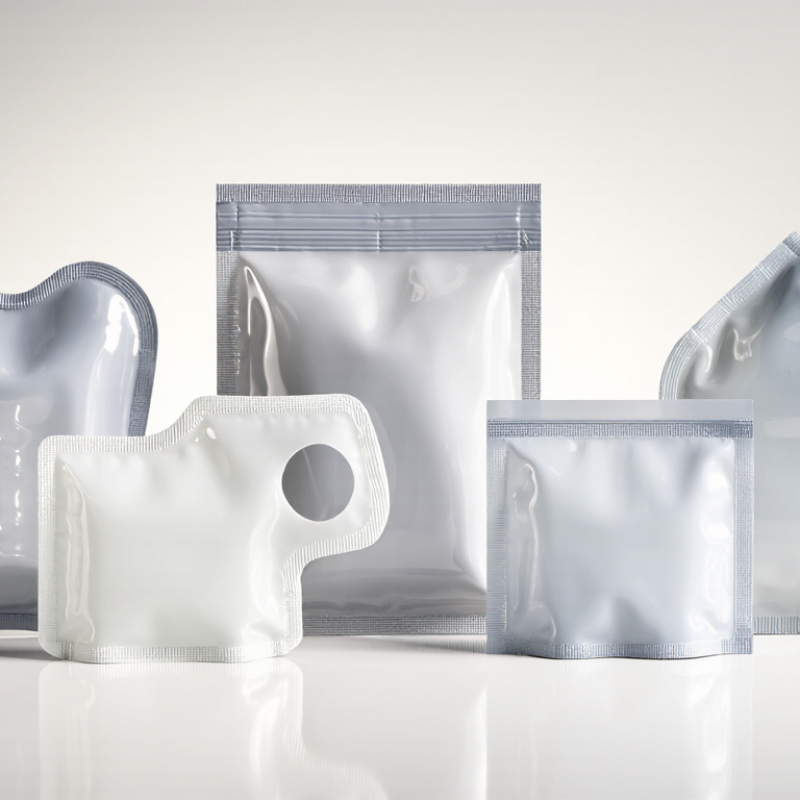
Table of Contents [Hide]
Stand-Up Shaped Pouches for Shelf-Ready Packaging
Stand-up shaped pouches pair a stable base with a distinctive outline, helping products face forward on retail shelves. Their bottom gusset opens as the pouch is filled, giving it room to stand without a separate carton. Contoured shoulders, angled sides, or a rounded top can make the pack easier to recognize at a glance. That matters.
The shape should suit both the product and the filling process. A pouch holding dry snacks may need a wide opening, while a thick product can require more space near the seal. Clear windows can show texture and color, but they also reduce the area available for printed information. The base needs enough depth to support the filled pouch, not just an attractive silhouette.
Shelf-ready performance depends on more than appearance. Check that the pouch stands steadily after filling, remains easy to open, and uses barrier materials suited to the product’s moisture, oxygen, and light sensitivities. These details are best assessed with filled samples and handling tests. A shaped edge can add visual character, but it may also reduce usable volume or complicate packing. There is no perfect outline for every shelf.





