


- Home
- A-Z Catalogue
- Products
- Valves
- Cetop
- Manual Directional Valves
- Proportional Valves
- Poppet Valves
- High-Speed Linear Servo Valves
- All High-Speed Linear Servo Valves
- Cetop 10 (NG32) Two Stage Type High Speed Linear Servo Valves – LSVHG-10
- Cetop 10 (NG32) Two Stage Type High Speed Linear Servo Valves – LSVHG-10 (With Fail-Safe)
- Cetop 8 (NG25) Two Stage Type High Speed Linear Servo Valves – LSVHG-06
- Cetop 8 (NG25) Two Stage Type High Speed Linear Servo Valves – LSVHG-06 (With Fail-Safe)
- Cetop 7 (NG16) Two Stage Type High Speed Linear Servo Valves – LSVHG-04
- Cetop 7 (NG16) Two Stage Type High Speed Linear Servo Valves – LSVHG-04 (With Fail-Safe)
- Cetop 5 (NG10) Direct Type High Speed Linear Servo Valves – LSVG-03
- Cetop 5 (NG10) OBE Type Direct Operated Linear Servo Valves – LSVG-03-EH
- Cetop 3 (NG6) OBE Type Direct Operated Linear Servo Valves – LSVG-01-EH
- Pumps
- Pressure control
- Flow Control Valves
- Pressure Control Valves
- All Pressure Control Valves
- Brake Valves
- Direct Relief Valve
- Low Noise Solenoid Controlled Relief Valves
- Low Noise Pilot Operated Relief Valves
- Pilot Operated Relief Valves
- Pressure reducing and relieving valves
- Pressure reducing and check valves
- Pressure control valves
- Remote Control Relief Valves
- Solenoid Controlled Relief Valves – BSG
- Solenoid Controlled Relief Valves – BST
- Unloading relief valves
- Check valves
- Environmental
- Valves
- Hydraulic Systems
- Power pack
- About Us
- Contact
- Blog

Why Choose Steel Mesh Manufacturers for Global Projects?
Global construction projects depend on reinforcement that arrives consistently, fits drawings, and performs inside concrete. Steel mesh can look simple on a pallet. Its reliability depends on wire grade, aperture accuracy, weld integrity, corrosion protection, and traceable production records. Small variations can complicate site placement or concrete cover.
The scale of steel supply matters. World Steel Association’s World Steel in Figures 2024 reports that global crude steel production reached 1,888.2 million tonnes in 2023. This figure covers steel overall, not welded mesh specifically, but it shows the breadth of the supply chain serving infrastructure. Worldsteel Director General Dr. Edwin Basson has emphasized steel’s role in durable infrastructure and its potential for recycling. That perspective supports a practical buyer’s question: can a supplier document both product performance and material origin?
Experienced Steel Mesh Manufacturers help answer it with mill certificates, welding and dimensional checks, consistent batch identification, and export-ready packaging. Buyers should verify the mesh specification against project drawings, including wire diameter, spacing, sheet size, and coating requirements. Confirm applicable standards with the project engineer; requirements vary by market and application. Ask about lead times and how damaged or nonconforming sheets are handled. Details matter.
A polished catalogue is not proof. Request sample inspection records and clarify tolerances before production begins. The less comfortable truth is that even a capable manufacturer cannot compensate for vague specifications or rushed approvals. Global projects benefit when supplier selection starts with evidence, not promises.
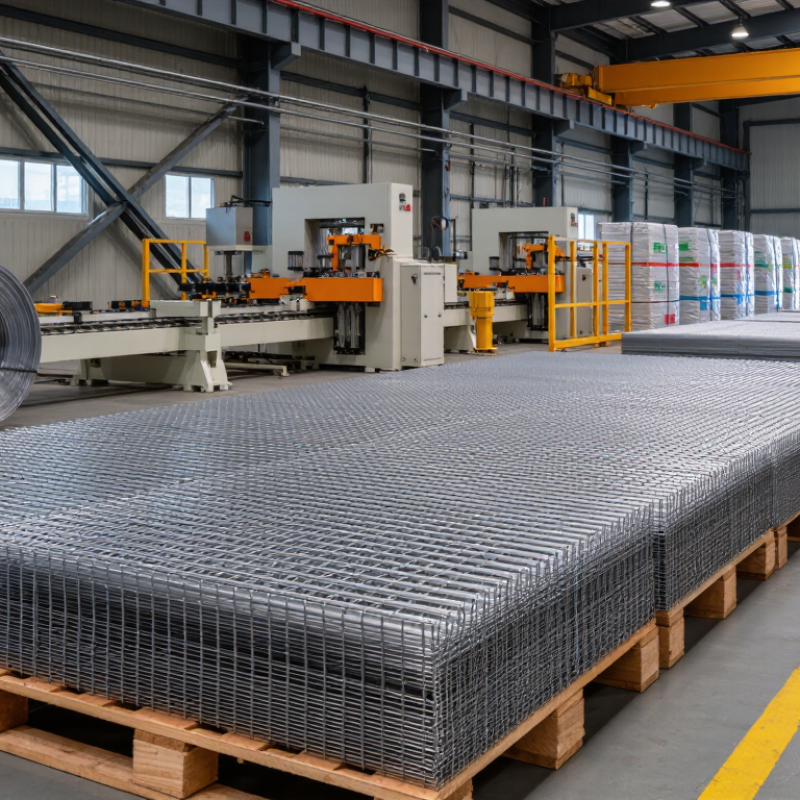
Table of Contents [Hide]
What Steel Mesh Manufacturers Produce and How Their Products Are Made
Why Choose Steel Mesh Manufacturers for Global Projects?
Steel mesh manufacturers convert wire rod or steel coil into products such as welded reinforcement mesh, woven screens, and bar grating. They draw wire to the required diameter, straighten and cut it, then weld or weave intersections into consistent openings. Some products receive a zinc coating for added corrosion resistance. The right mesh depends on load, opening size, exposure, and installation method—not appearance alone.
The scale of demand is substantial: the World Steel Association’s World Steel in Figures 2024 attributes about 52% of global steel use to building and infrastructure. Manufacturers support these projects by supplying mesh in specified sheet or roll sizes and checking dimensions, weld integrity, and coating thickness. Still, a clean-looking panel is not proof of consistent quality; buyers should review inspection records and confirm tolerances against project drawings.
Tips: Request a sample and a production inspection report before placing a large order. Check wire diameter, spacing, and coating requirements in writing. Small details matter. Even experienced teams can overlook packaging: bent edges or trapped moisture may cause problems during transport. Specify protective packing and clear bundle labels, then verify the first delivery before approving repeat shipments.





