


- Home
- A-Z Catalogue
- Products
- Valves
- Cetop
- Manual Directional Valves
- Proportional Valves
- Poppet Valves
- High-Speed Linear Servo Valves
- All High-Speed Linear Servo Valves
- Cetop 10 (NG32) Two Stage Type High Speed Linear Servo Valves – LSVHG-10
- Cetop 10 (NG32) Two Stage Type High Speed Linear Servo Valves – LSVHG-10 (With Fail-Safe)
- Cetop 8 (NG25) Two Stage Type High Speed Linear Servo Valves – LSVHG-06
- Cetop 8 (NG25) Two Stage Type High Speed Linear Servo Valves – LSVHG-06 (With Fail-Safe)
- Cetop 7 (NG16) Two Stage Type High Speed Linear Servo Valves – LSVHG-04
- Cetop 7 (NG16) Two Stage Type High Speed Linear Servo Valves – LSVHG-04 (With Fail-Safe)
- Cetop 5 (NG10) Direct Type High Speed Linear Servo Valves – LSVG-03
- Cetop 5 (NG10) OBE Type Direct Operated Linear Servo Valves – LSVG-03-EH
- Cetop 3 (NG6) OBE Type Direct Operated Linear Servo Valves – LSVG-01-EH
- Pumps
- Pressure control
- Flow Control Valves
- Pressure Control Valves
- All Pressure Control Valves
- Brake Valves
- Direct Relief Valve
- Low Noise Solenoid Controlled Relief Valves
- Low Noise Pilot Operated Relief Valves
- Pilot Operated Relief Valves
- Pressure reducing and relieving valves
- Pressure reducing and check valves
- Pressure control valves
- Remote Control Relief Valves
- Solenoid Controlled Relief Valves – BSG
- Solenoid Controlled Relief Valves – BST
- Unloading relief valves
- Check valves
- Environmental
- Valves
- Hydraulic Systems
- Power pack
- About Us
- Contact
- Blog

10 Best Safety Harnesses for Working at Height
Working at height leaves little room for guesswork. A loose strap, worn stitching, or poorly fitted chest buckle can change a worker’s safety in seconds. The right Safety Harness should fit the task, the person, and the rest of the fall-protection system. It should also be inspected and used by someone who understands its limits.
Dr. David Michaels, former Assistant Secretary of Labor for Occupational Safety and Health, has emphasized that worker protection must be part of everyday operations, not an afterthought. That principle applies directly to harness selection. A harness alone cannot prevent every fall or make an unsafe work area safe. Training, compatible equipment, proper fit, and a workable rescue plan matter too. Small details count.
This guide to the 10 best safety harnesses for working at height compares practical features, including adjustment points, padding, attachment locations, and intended applications. Those details can be easier to judge when you picture a real shift: gloves on, tools nearby, and a worker reaching across a steel beam. No single model suits every body or job. Even a promising product deserves a careful fit check. The best choice is the one workers can wear correctly, inspect consistently, and use as part of a complete fall-protection plan.
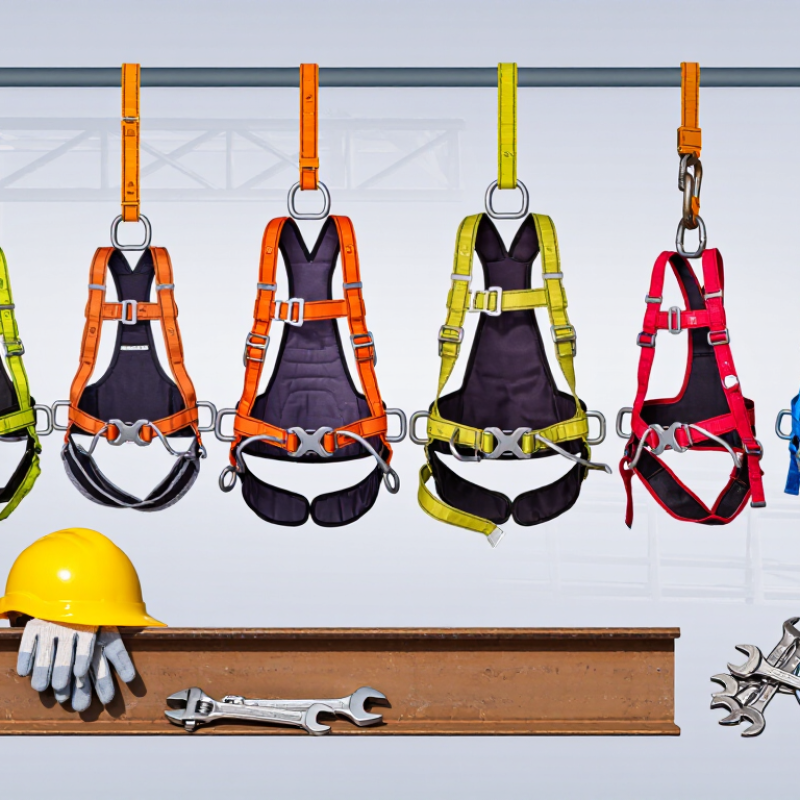
Table of Contents [Hide]
How Fall-Protection Harnesses Work at Height
A fall-protection harness works as part of a complete personal fall-arrest system. It connects the worker to an anchorage through a connector, such as a lanyard or self-retracting lifeline. During a fall, a properly fitted full-body harness spreads arrest forces across the thighs, pelvis, chest, and shoulders. Its dorsal attachment point should sit between the shoulder blades, not near the neck. The harness does not prevent a fall by itself. The anchorage, connector, clearance, and fit matter just as much.
The U.S. Bureau of Labor Statistics recorded 395 construction-worker deaths from falls, slips, trips, and jumps in 2022. That figure shows why equipment setup and work planning deserve attention. Near a roof edge, for example, a short connection may still allow a worker to strike a lower level. Check the fall distance, possible swing path, and obstacles below before choosing a connection. Small details matter.
Fit is personal. Before each use, inspect webbing for cuts, burns, fraying, or chemical damage, and check stitching, buckles, and attachment points. Put the harness on over the clothing worn for the task; snug straps should not twist or slide. A coworker can often spot a loose chest strap that the wearer misses. That helps, but it is not a rescue plan. Workers should know how to summon help and how a suspended coworker will be retrieved. Harness use gets overlooked when crews rush. That deserves a second look.





