


- Home
- A-Z Catalogue
- Products
- Valves
- Cetop
- Manual Directional Valves
- Proportional Valves
- Poppet Valves
- High-Speed Linear Servo Valves
- All High-Speed Linear Servo Valves
- Cetop 10 (NG32) Two Stage Type High Speed Linear Servo Valves – LSVHG-10
- Cetop 10 (NG32) Two Stage Type High Speed Linear Servo Valves – LSVHG-10 (With Fail-Safe)
- Cetop 8 (NG25) Two Stage Type High Speed Linear Servo Valves – LSVHG-06
- Cetop 8 (NG25) Two Stage Type High Speed Linear Servo Valves – LSVHG-06 (With Fail-Safe)
- Cetop 7 (NG16) Two Stage Type High Speed Linear Servo Valves – LSVHG-04
- Cetop 7 (NG16) Two Stage Type High Speed Linear Servo Valves – LSVHG-04 (With Fail-Safe)
- Cetop 5 (NG10) Direct Type High Speed Linear Servo Valves – LSVG-03
- Cetop 5 (NG10) OBE Type Direct Operated Linear Servo Valves – LSVG-03-EH
- Cetop 3 (NG6) OBE Type Direct Operated Linear Servo Valves – LSVG-01-EH
- Pumps
- Pressure control
- Flow Control Valves
- Pressure Control Valves
- All Pressure Control Valves
- Brake Valves
- Direct Relief Valve
- Low Noise Solenoid Controlled Relief Valves
- Low Noise Pilot Operated Relief Valves
- Pilot Operated Relief Valves
- Pressure reducing and relieving valves
- Pressure reducing and check valves
- Pressure control valves
- Remote Control Relief Valves
- Solenoid Controlled Relief Valves – BSG
- Solenoid Controlled Relief Valves – BST
- Unloading relief valves
- Check valves
- Environmental
- Valves
- Hydraulic Systems
- Power pack
- About Us
- Contact
- Blog

What Is Residential Lighting and How Does It Work?
Residential Lighting is the planned use of light inside homes for safety, comfort, and visual appeal. It includes ceiling fixtures, wall sconces, table lamps, under-cabinet strips, and smart controls. Each element serves a different purpose. A kitchen needs clear task lighting near worktops. A bedroom usually benefits from softer, warmer illumination. Hallways require even light that reduces shadows and trip risks.
The system begins at the electrical supply, where circuits deliver power to switches, dimmers, and fixtures. The fixture then converts electricity into visible light, often through energy-efficient LED technology. Brightness is measured in lumens, while color temperature describes whether light looks warm or cool. Good design combines ambient, task, and accent lighting instead of relying on one harsh ceiling lamp. Small changes matter. A dimmer can make a dining room feel calmer within seconds.
In practical projects, I have found that glare is often overlooked. A beautiful pendant may still shine directly into someone’s eyes. Placement, beam angle, surface color, and bulb quality all influence the result. Smart lighting can improve convenience, but it may also create compatibility problems between devices. That detail deserves attention.
Professional installation should follow local electrical codes and manufacturer instructions. A licensed electrician can assess wiring, load capacity, grounding, and moisture exposure. Residential Lighting is not simply decoration; it is a coordinated system involving technology, architecture, and human behavior. Even experienced planners make mistakes. Testing each scene at night remains one of the most reliable ways to refine the final design.
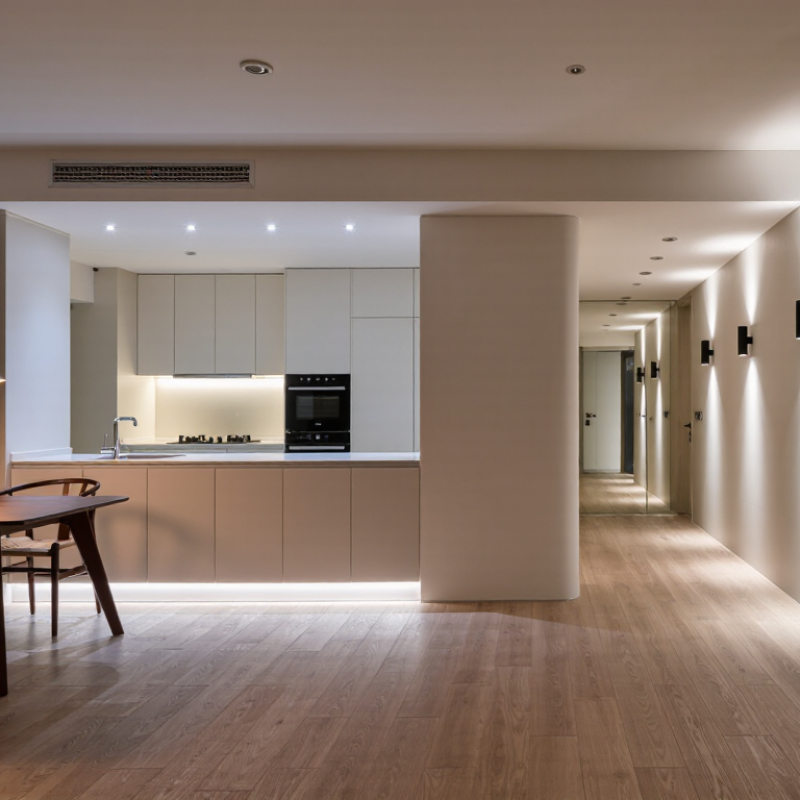
Table of Contents [Hide]
Definition and Purpose of Residential Lighting
Residential lighting is the planned use of electric or daylight sources inside a home. Its purpose is practical: helping people see, move safely, read, cook, and recognize surfaces. It also influences comfort, privacy, and sleep routines. A ceiling fixture, wall sconce, cabinet strip, or table lamp serves different visual tasks. The system works through a power source, wiring, controls, and a light source. Dimmers and occupancy sensors adjust output. Good design starts with the room, not the bulb.
The U.S. Department of Energy reports that LED lamps use at least 75% less energy and last up to 25 times longer than incandescent lamps (DOE Energy Saver, 2024).
The International Energy Agency estimates that lighting represents about 15% of global electricity use (IEA, Lighting Analysis, 2024).
This matters in homes where lights operate daily, especially in kitchens and hallways. Residential demand is only part of that figure, but it shows why efficient sources matter. In practice, replacing a lamp is not enough. Beam angle, color temperature, glare, and placement can change the result.
A 3,000-kelvin lamp may feel warm in a bedroom, while a cooler source can support detailed work. However, these labels are imperfect guides. A bright room can still have shadows beneath cabinets. Sensors may switch off when someone sits quietly.
Designers should check illuminance, contrast, and user behavior, then revise the plan after real use. Residential lighting remains both an electrical system and a human-centered environmental tool.





