


- Home
- A-Z Catalogue
- Products
- Valves
- Cetop
- Manual Directional Valves
- Proportional Valves
- Poppet Valves
- High-Speed Linear Servo Valves
- All High-Speed Linear Servo Valves
- Cetop 10 (NG32) Two Stage Type High Speed Linear Servo Valves – LSVHG-10
- Cetop 10 (NG32) Two Stage Type High Speed Linear Servo Valves – LSVHG-10 (With Fail-Safe)
- Cetop 8 (NG25) Two Stage Type High Speed Linear Servo Valves – LSVHG-06
- Cetop 8 (NG25) Two Stage Type High Speed Linear Servo Valves – LSVHG-06 (With Fail-Safe)
- Cetop 7 (NG16) Two Stage Type High Speed Linear Servo Valves – LSVHG-04
- Cetop 7 (NG16) Two Stage Type High Speed Linear Servo Valves – LSVHG-04 (With Fail-Safe)
- Cetop 5 (NG10) Direct Type High Speed Linear Servo Valves – LSVG-03
- Cetop 5 (NG10) OBE Type Direct Operated Linear Servo Valves – LSVG-03-EH
- Cetop 3 (NG6) OBE Type Direct Operated Linear Servo Valves – LSVG-01-EH
- Pumps
- Pressure control
- Flow Control Valves
- Pressure Control Valves
- All Pressure Control Valves
- Brake Valves
- Direct Relief Valve
- Low Noise Solenoid Controlled Relief Valves
- Low Noise Pilot Operated Relief Valves
- Pilot Operated Relief Valves
- Pressure reducing and relieving valves
- Pressure reducing and check valves
- Pressure control valves
- Remote Control Relief Valves
- Solenoid Controlled Relief Valves – BSG
- Solenoid Controlled Relief Valves – BST
- Unloading relief valves
- Check valves
- Environmental
- Valves
- Hydraulic Systems
- Power pack
- About Us
- Contact
- Blog

What Is an Oxygen Sensor Adapter and How Does It Work?
Modern vehicles depend on precise exhaust feedback, yet many drivers overlook the small parts supporting that process. One of them is the oxygen sensor adapter.
An oxygen sensor adapter is a threaded fitting, spacer, extension, or electronic interface designed to connect an oxygen sensor with a particular exhaust system. Its purpose depends on the vehicle and installation. A mechanical adapter may reposition the sensor inside the exhaust stream. It can also protect the sensing element from excessive contamination or turbulence. An electronic adapter may alter the sensor signal for a compatible control system. These functions are not interchangeable.
Dr. Günter Bauman, a respected oxygen-sensor researcher, described the principle clearly: “The oxygen sensor is the key element in the closed-loop control system.” That statement explains why adapter selection deserves care. The sensor must still measure exhaust oxygen accurately. A poorly sized adapter can delay readings, create leaks, or expose the sensor to damaging heat. Small errors matter.
Picture a sensor screwed into a steel adapter near a glowing exhaust manifold. Its threads must match. Its seal must remain stable during vibration and repeated heating. Installation experience shows that “universal” parts are not always universal. That label can be convenient, but it may hide important differences.
This guide examines how an oxygen sensor adapter works, where it is installed, and which design details affect performance. It also considers compatibility, sensor placement, materials, and common installation mistakes. Some explanations may seem straightforward. Real exhaust systems are less forgiving. Professional verification remains wise.
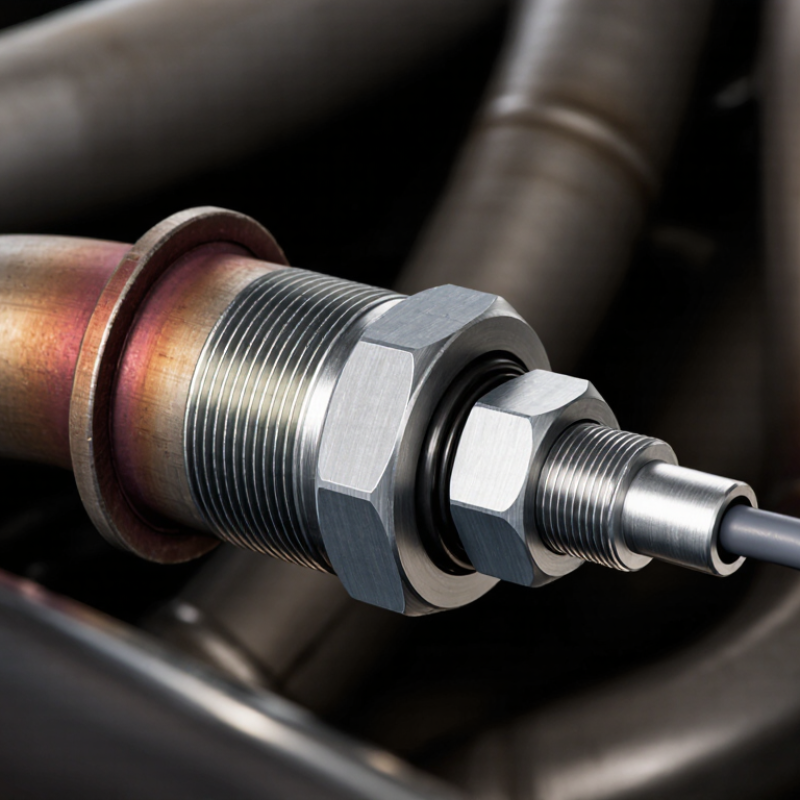
Table of Contents [Hide]
Oxygen Sensor Adapters: Definition and Purpose
An oxygen sensor adapter is a small fitting placed between an oxygen sensor and the exhaust system. Its purpose depends on its design. Some adapters provide extra clearance, while others reposition the sensor slightly within the exhaust stream. This can help when a sensor touches nearby components or when an exhaust modification changes available space.
The adapter does not measure oxygen itself. The sensor still produces a voltage or signal based on oxygen levels in the exhaust. The vehicle’s control module then uses that signal to adjust fuel delivery or monitor emissions performance. A typical adapter may include a short threaded body, a sealing surface, and an opening that guides exhaust gas toward the sensor tip. Small details matter. Poor threads can cause leaks.
In practical installation, technicians check thread size, sensor reach, exhaust temperature, and available clearance. They also inspect for carbon buildup and damaged sealing surfaces. An adapter is not a cure for a faulty sensor, wiring problem, or exhaust leak. That assumption can be wrong. A spacer may also change sensor readings and trigger a warning light, depending on the vehicle. For reliable results, verify compatibility with service documentation and local emissions requirements. Some installations seem successful at first, but later inspection can reveal inaccurate readings or poor sealing.