


- Home
- A-Z Catalogue
- Products
- Valves
- Cetop
- Manual Directional Valves
- Proportional Valves
- Poppet Valves
- High-Speed Linear Servo Valves
- All High-Speed Linear Servo Valves
- Cetop 10 (NG32) Two Stage Type High Speed Linear Servo Valves – LSVHG-10
- Cetop 10 (NG32) Two Stage Type High Speed Linear Servo Valves – LSVHG-10 (With Fail-Safe)
- Cetop 8 (NG25) Two Stage Type High Speed Linear Servo Valves – LSVHG-06
- Cetop 8 (NG25) Two Stage Type High Speed Linear Servo Valves – LSVHG-06 (With Fail-Safe)
- Cetop 7 (NG16) Two Stage Type High Speed Linear Servo Valves – LSVHG-04
- Cetop 7 (NG16) Two Stage Type High Speed Linear Servo Valves – LSVHG-04 (With Fail-Safe)
- Cetop 5 (NG10) Direct Type High Speed Linear Servo Valves – LSVG-03
- Cetop 5 (NG10) OBE Type Direct Operated Linear Servo Valves – LSVG-03-EH
- Cetop 3 (NG6) OBE Type Direct Operated Linear Servo Valves – LSVG-01-EH
- Pumps
- Pressure control
- Flow Control Valves
- Pressure Control Valves
- All Pressure Control Valves
- Brake Valves
- Direct Relief Valve
- Low Noise Solenoid Controlled Relief Valves
- Low Noise Pilot Operated Relief Valves
- Pilot Operated Relief Valves
- Pressure reducing and relieving valves
- Pressure reducing and check valves
- Pressure control valves
- Remote Control Relief Valves
- Solenoid Controlled Relief Valves – BSG
- Solenoid Controlled Relief Valves – BST
- Unloading relief valves
- Check valves
- Environmental
- Valves
- Hydraulic Systems
- Power pack
- About Us
- Contact
- Blog

10 Metal Railings Buying Tips for Global Buyers?
Metal Railings can look simple on a showroom floor: a few posts, rails, and a finish sample. On site, small decisions matter. A coastal project may need stronger corrosion resistance, while a busy public stair needs secure joints and comfortable hand clearance. Buyers also compare material grade, fabrication tolerances, packaging, installation support, and replacement-part availability. A low quotation can leave important details unanswered.
The supply chain is substantial, but broad steel figures do not tell buyers which railing will perform best. World Steel Association’s World Steel in Figures 2024 reports 1,892.2 million tonnes of crude steel production worldwide in 2023. That context makes supplier verification, traceable specifications, and clear quality records worth asking about. Architectural critic John Ruskin wrote, “Quality is never an accident; it is always the result of intelligent effort.” His remark is not railing-specific, but it captures a useful purchasing principle: inspect the details, not just the finish.
This guide presents ten practical checks for global buyers, from defining the site conditions to reviewing samples, drawings, and delivery terms. Ask for measurable answers: alloy or steel grade, coating system, weld-finish expectations, packing method, and inspection documents. Where local project requirements differ, confirm them with the project’s qualified design professional; a supplier’s standard brochure may not cover every condition. Even careful buyers can miss a detail. That is why written specifications and sample approval matter before production begins.
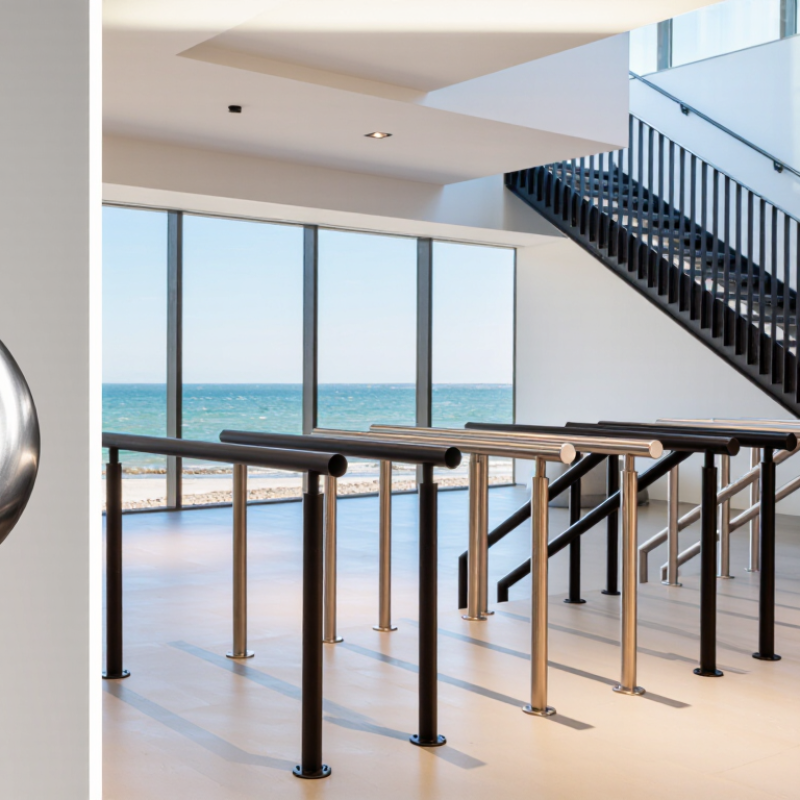
Table of Contents [Hide]
Define Project Requirements, Site Conditions, and Intended Use
Before requesting railing quotes, define the project, users, and intended use. Is the railing for a balcony, stairway, factory platform, or public walkway? Each setting changes priorities, from child safety to impact resistance and frequent handling. Record required lengths, heights, openings, finish, and expected loads. Also note whether people may lean on it or move equipment nearby. Small details matter. The World Health Organization’s 2021 falls fact sheet estimates 684,000 fatal falls worldwide each year, underscoring why edge protection deserves careful planning. This figure covers falls broadly, not railing failures, so it should not be treated as a product-performance measure.
Inspect the actual site before choosing materials or final dimensions. Measure slopes, slab edges, anchor locations, drainage paths, and clearance for doors or machinery. Photograph corners and transitions; these are easy to miss on a clean drawing. Check exposure to salt spray, rain, chemicals, temperature changes, and cleaning routines. The U.S. Bureau of Labor Statistics reported 885 fatal occupational injuries from falls, slips, and trips in 2023. That workplace data does not predict risk at every project, but it supports close attention to access and edge conditions. Share site measurements and intended use with the fabricator, then confirm applicable local design requirements. A neat plan can still overlook a drain or uneven surface.





