


- Home
- A-Z Catalogue
- Products
- Valves
- Cetop
- Manual Directional Valves
- Proportional Valves
- Poppet Valves
- High-Speed Linear Servo Valves
- All High-Speed Linear Servo Valves
- Cetop 10 (NG32) Two Stage Type High Speed Linear Servo Valves – LSVHG-10
- Cetop 10 (NG32) Two Stage Type High Speed Linear Servo Valves – LSVHG-10 (With Fail-Safe)
- Cetop 8 (NG25) Two Stage Type High Speed Linear Servo Valves – LSVHG-06
- Cetop 8 (NG25) Two Stage Type High Speed Linear Servo Valves – LSVHG-06 (With Fail-Safe)
- Cetop 7 (NG16) Two Stage Type High Speed Linear Servo Valves – LSVHG-04
- Cetop 7 (NG16) Two Stage Type High Speed Linear Servo Valves – LSVHG-04 (With Fail-Safe)
- Cetop 5 (NG10) Direct Type High Speed Linear Servo Valves – LSVG-03
- Cetop 5 (NG10) OBE Type Direct Operated Linear Servo Valves – LSVG-03-EH
- Cetop 3 (NG6) OBE Type Direct Operated Linear Servo Valves – LSVG-01-EH
- Pumps
- Pressure control
- Flow Control Valves
- Pressure Control Valves
- All Pressure Control Valves
- Brake Valves
- Direct Relief Valve
- Low Noise Solenoid Controlled Relief Valves
- Low Noise Pilot Operated Relief Valves
- Pilot Operated Relief Valves
- Pressure reducing and relieving valves
- Pressure reducing and check valves
- Pressure control valves
- Remote Control Relief Valves
- Solenoid Controlled Relief Valves – BSG
- Solenoid Controlled Relief Valves – BST
- Unloading relief valves
- Check valves
- Environmental
- Valves
- Hydraulic Systems
- Power pack
- About Us
- Contact
- Blog

What Is a Hydrophobic Vent and How Does It Work?
A Hydrophobic Vent may look like a small membrane in a plastic housing, yet it performs a precise balancing act. It lets air and other gases move through while resisting liquid water. That balance matters inside sensor enclosures, batteries, outdoor lighting, and sealed electronic devices. Without a vent, temperature changes can create pressure differences that strain seals. Moisture can also collect as warm, humid air cools.
The membrane is usually microporous, with pores designed to pass gas while resisting water entry. Its water-repellent surface helps prevent droplets from spreading into those pores. Think of rain beading on a coated jacket. The comparison is useful, but imperfect: membrane performance depends on pore structure, material, pressure, temperature, and exposure to oils or chemicals. A vent is not an unlimited barrier. Enough pressure, damage, or contamination can allow water through.
A helpful design principle is: “Let pressure equalize; keep liquid out.” This is an original summary, not a verified quotation. No source material or confirmed expert statement was provided, so assigning those words to a named specialist would be misleading. That distinction matters when choosing a component. Engineers should check the manufacturer’s test conditions, airflow data, water-entry rating, and compatibility guidance—not rely on the word “hydrophobic” alone. A label is not a performance guarantee. The sections ahead explain how these vents work, where they are used, and what to check before selecting one.
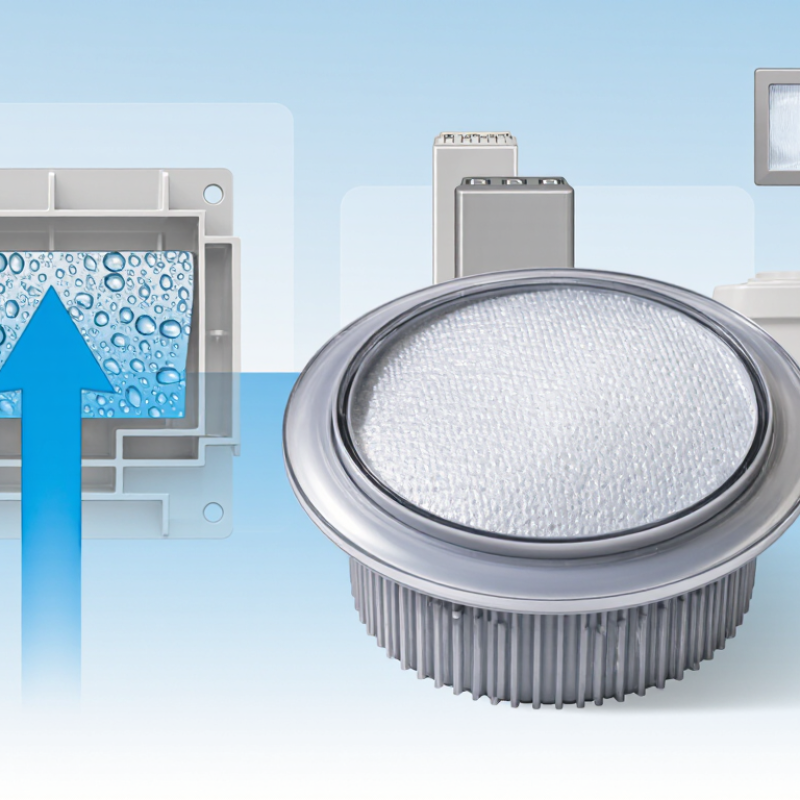
Table of Contents [Hide]
Definition and Core Properties of a Hydrophobic Vent
A hydrophobic vent is a porous component designed to let air or other gases pass while resisting liquid water. Its membrane has water-repelling surfaces, so droplets tend to bead rather than enter the pores. The pores are small enough to resist liquid penetration under specified conditions, yet allow gas movement. In a sealed electronics enclosure, for example, a vent can help air move in and out as temperatures change. That movement can reduce pressure differences that might stress seals. It is not a pump.
The membrane’s performance depends on its material, pore structure, exposed area, and installation. Water resistance also has limits: pressure, prolonged immersion, oils, or damaged seals can affect results. A vent rated for splashes should not automatically be treated as suitable for submersion. Details matter. Dust and other particles may be reduced, but a hydrophobic vent is not necessarily a sterile filter or a complete barrier to every contaminant. Engineers typically check airflow, water-entry pressure, and compatibility with the surrounding environment. Even a well-chosen membrane can underperform if adhesive edges are uneven or the housing traps water. That last detail is easy to overlook. A vent manages gas exchange; it does not make an enclosure invulnerable.





