


- Home
- A-Z Catalogue
- Products
- Valves
- Cetop
- Manual Directional Valves
- Proportional Valves
- Poppet Valves
- High-Speed Linear Servo Valves
- All High-Speed Linear Servo Valves
- Cetop 10 (NG32) Two Stage Type High Speed Linear Servo Valves – LSVHG-10
- Cetop 10 (NG32) Two Stage Type High Speed Linear Servo Valves – LSVHG-10 (With Fail-Safe)
- Cetop 8 (NG25) Two Stage Type High Speed Linear Servo Valves – LSVHG-06
- Cetop 8 (NG25) Two Stage Type High Speed Linear Servo Valves – LSVHG-06 (With Fail-Safe)
- Cetop 7 (NG16) Two Stage Type High Speed Linear Servo Valves – LSVHG-04
- Cetop 7 (NG16) Two Stage Type High Speed Linear Servo Valves – LSVHG-04 (With Fail-Safe)
- Cetop 5 (NG10) Direct Type High Speed Linear Servo Valves – LSVG-03
- Cetop 5 (NG10) OBE Type Direct Operated Linear Servo Valves – LSVG-03-EH
- Cetop 3 (NG6) OBE Type Direct Operated Linear Servo Valves – LSVG-01-EH
- Pumps
- Pressure control
- Flow Control Valves
- Pressure Control Valves
- All Pressure Control Valves
- Brake Valves
- Direct Relief Valve
- Low Noise Solenoid Controlled Relief Valves
- Low Noise Pilot Operated Relief Valves
- Pilot Operated Relief Valves
- Pressure reducing and relieving valves
- Pressure reducing and check valves
- Pressure control valves
- Remote Control Relief Valves
- Solenoid Controlled Relief Valves – BSG
- Solenoid Controlled Relief Valves – BST
- Unloading relief valves
- Check valves
- Environmental
- Valves
- Hydraulic Systems
- Power pack
- About Us
- Contact
- Blog

How to Choose the Right Standard Conveyor
Choosing a Standard Conveyor is less about buying the fastest machine and more about matching equipment to the work. Start with the product: its weight, dimensions, surface, and behavior at transfers. Then map the route, including bends, elevation changes, operator access, and cleaning points. A carton that glides across a showroom sample may skew or stall when its base is soft. Small details matter.
The U.S. Bureau of Labor Statistics reported 2.6 million nonfatal workplace injuries and illnesses in private industry during 2023. That figure is not conveyor-specific, but it underscores why guarding, accessible controls, and safe maintenance access belong in the selection discussion. Quality expert W. Edwards Deming said, “A bad system will beat a good person every time.” His warning applies here: a poorly matched conveyor can force workers to compensate for design flaws, shift after shift.
Compare capacity claims against your actual peak flow, not just an average-day estimate. Ask suppliers to explain belt or roller choices, drive sizing, controls, noise, spare parts, and service access. The Conveyor Equipment Manufacturers Association publishes industry standards and guidance that can help teams frame technical questions; confirm which documents apply to your application. A tidy specification sheet is useful, but it may miss a real bottleneck at a transfer or packing station. That is easy to overlook. Walk the proposed route with operators, test representative loads, and record what changes during busy periods. A sound choice is measurable, serviceable, and suited to the people who use it.
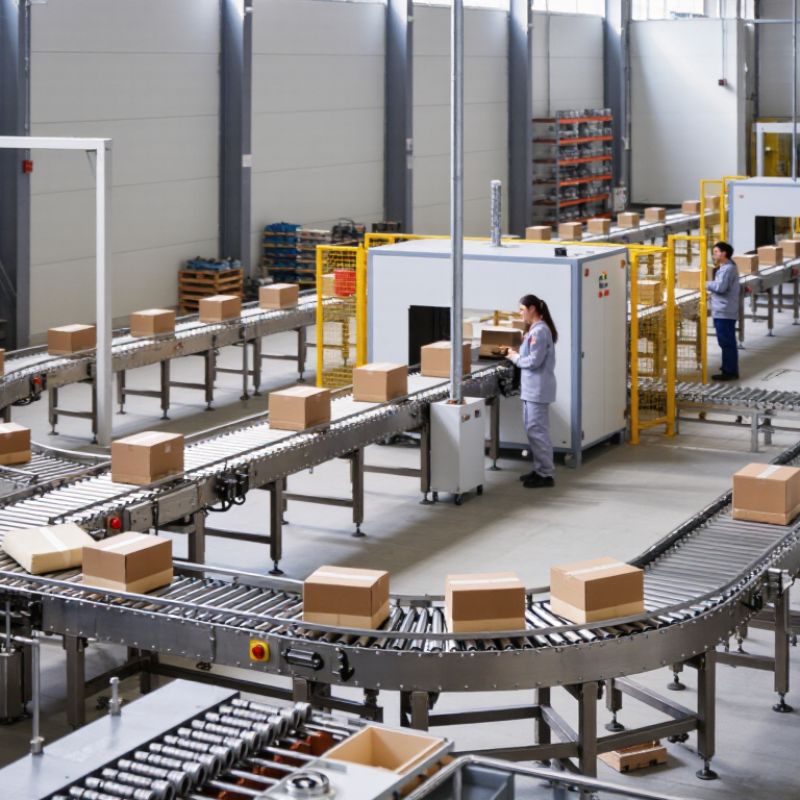
Table of Contents [Hide]
Define the Standard Conveyor and Its Core Components
A standard conveyor is a mechanical system that moves materials along a defined path at a steady, controlled pace. In many facilities, it carries cartons, components, or packaged goods between work areas. The basic arrangement is simple. A frame supports a moving belt or chain, while a drive unit supplies motion. Rollers or idlers support the belt and help it track correctly.
Those are the core components, but their details vary. The frame may be steel or aluminum, depending on the load and operating environment. The belt surface should suit the material: a smooth belt may work for boxes, while a textured surface can help prevent sliding.
A motor, gearbox, and drive pulley set the movement; a take-up mechanism keeps suitable tension. Sensors and controls may regulate starts, stops, or spacing. Small parts matter.
“Standard” does not mean one design fits every job. Conveyor width, speed, incline, and load capacity should match the actual materials and available floor space. Dust, moisture, and frequent cleaning can also affect component choices.
This simple model can mislead: a belt that runs well unloaded may wander under uneven loads. Checking alignment and tracking during operation is a practical step, not an optional detail.





