


- Home
- A-Z Catalogue
- Products
- Valves
- Cetop
- Manual Directional Valves
- Proportional Valves
- Poppet Valves
- High-Speed Linear Servo Valves
- All High-Speed Linear Servo Valves
- Cetop 10 (NG32) Two Stage Type High Speed Linear Servo Valves – LSVHG-10
- Cetop 10 (NG32) Two Stage Type High Speed Linear Servo Valves – LSVHG-10 (With Fail-Safe)
- Cetop 8 (NG25) Two Stage Type High Speed Linear Servo Valves – LSVHG-06
- Cetop 8 (NG25) Two Stage Type High Speed Linear Servo Valves – LSVHG-06 (With Fail-Safe)
- Cetop 7 (NG16) Two Stage Type High Speed Linear Servo Valves – LSVHG-04
- Cetop 7 (NG16) Two Stage Type High Speed Linear Servo Valves – LSVHG-04 (With Fail-Safe)
- Cetop 5 (NG10) Direct Type High Speed Linear Servo Valves – LSVG-03
- Cetop 5 (NG10) OBE Type Direct Operated Linear Servo Valves – LSVG-03-EH
- Cetop 3 (NG6) OBE Type Direct Operated Linear Servo Valves – LSVG-01-EH
- Pumps
- Pressure control
- Flow Control Valves
- Pressure Control Valves
- All Pressure Control Valves
- Brake Valves
- Direct Relief Valve
- Low Noise Solenoid Controlled Relief Valves
- Low Noise Pilot Operated Relief Valves
- Pilot Operated Relief Valves
- Pressure reducing and relieving valves
- Pressure reducing and check valves
- Pressure control valves
- Remote Control Relief Valves
- Solenoid Controlled Relief Valves – BSG
- Solenoid Controlled Relief Valves – BST
- Unloading relief valves
- Check valves
- Environmental
- Valves
- Hydraulic Systems
- Power pack
- About Us
- Contact
- Blog

How to Choose the Right Package Wrapper for Your Business?
A wrapper is not merely a layer around a product. It affects protection, shelf appeal, packing speed, shipping costs, and customer expectations. The right Package Wrapper must work in real conditions: on your filling line, in transit, and in a customer’s hands. Small details matter.
Industry data helps explain why the choice deserves care. The OECD’s Global Plastics Outlook (2022) estimated that packaging generated about 40% of global plastic waste in 2019. That figure does not mean every business should choose the same material. It does show why material use, end-of-life options, and clear disposal guidance belong in the decision. In the United States, the EPA’s 2018 Facts and Figures report counted containers and packaging as 28.1% of municipal solid waste. The data is useful, but it is not a current snapshot of every market.
A practical comparison should weigh product fragility, moisture and oxygen barriers, wrapper dimensions, print quality, minimum order quantities, and compatibility with existing equipment. Ask suppliers for technical specifications and samples, then test them on your own line. Check whether local recycling systems accept the material; a recyclable label alone is not enough. There is no universal winner. A lightweight film may cut shipping weight, while a paper-based option may better fit your brand or product needs. Even careful forecasts miss something: actual handling conditions. Start with evidence, test a small run, and revise your choice when performance falls short.
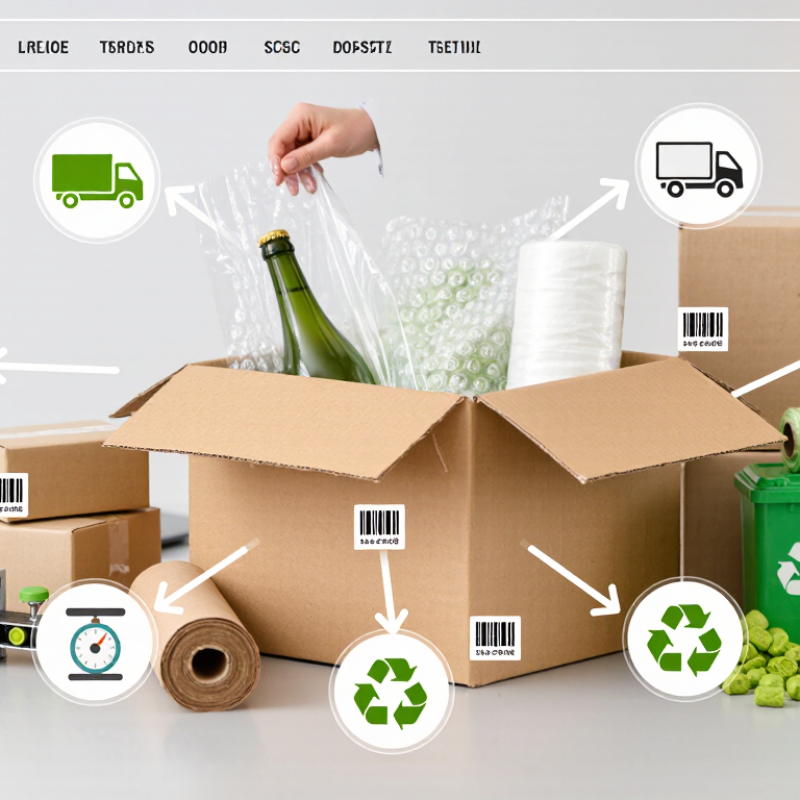
Table of Contents [Hide]
Define Your Product and Packaging Requirements
Define Your Product and Packaging Requirements
Start with the product, not the wrapper machine. Record its length, width, height, weight, and shape, including any uneven edges. A rigid bar, a soft bakery item, and a leaky bottle need different support and seals. Small details matter. Note whether the product is fragile, oily, moisture-sensitive, or shipped through hot and humid conditions. These factors help determine film strength, barrier needs, and whether a tight or loose wrap is appropriate. Test real samples. A specification based on one perfect sample may fail when product sizes vary slightly.
Next, set practical packaging targets: pack size, daily output, changeover frequency, and acceptable material use. Check that your chosen wrapper can handle the product dimensions and required line speed without crushing items or producing weak seals. End-of-life matters, too. The US Environmental Protection Agency reported that containers and packaging generated 82.2 million tons of municipal solid waste in 2018, or 28.1% of the total. Its report also found that 80.9% of paper and paperboard packaging was recycled, compared with 13.6% of plastic packaging. Those figures describe US waste management in 2018, not every local recycling system. Verify local collection options before specifying a material. And be honest about trade-offs: a lighter film can reduce material use, but may not protect a fragile product well enough.





