


- Home
- A-Z Catalogue
- Products
- Valves
- Cetop
- Manual Directional Valves
- Proportional Valves
- Poppet Valves
- High-Speed Linear Servo Valves
- All High-Speed Linear Servo Valves
- Cetop 10 (NG32) Two Stage Type High Speed Linear Servo Valves – LSVHG-10
- Cetop 10 (NG32) Two Stage Type High Speed Linear Servo Valves – LSVHG-10 (With Fail-Safe)
- Cetop 8 (NG25) Two Stage Type High Speed Linear Servo Valves – LSVHG-06
- Cetop 8 (NG25) Two Stage Type High Speed Linear Servo Valves – LSVHG-06 (With Fail-Safe)
- Cetop 7 (NG16) Two Stage Type High Speed Linear Servo Valves – LSVHG-04
- Cetop 7 (NG16) Two Stage Type High Speed Linear Servo Valves – LSVHG-04 (With Fail-Safe)
- Cetop 5 (NG10) Direct Type High Speed Linear Servo Valves – LSVG-03
- Cetop 5 (NG10) OBE Type Direct Operated Linear Servo Valves – LSVG-03-EH
- Cetop 3 (NG6) OBE Type Direct Operated Linear Servo Valves – LSVG-01-EH
- Pumps
- Pressure control
- Flow Control Valves
- Pressure Control Valves
- All Pressure Control Valves
- Brake Valves
- Direct Relief Valve
- Low Noise Solenoid Controlled Relief Valves
- Low Noise Pilot Operated Relief Valves
- Pilot Operated Relief Valves
- Pressure reducing and relieving valves
- Pressure reducing and check valves
- Pressure control valves
- Remote Control Relief Valves
- Solenoid Controlled Relief Valves – BSG
- Solenoid Controlled Relief Valves – BST
- Unloading relief valves
- Check valves
- Environmental
- Valves
- Hydraulic Systems
- Power pack
- About Us
- Contact
- Blog

How to Choose the Right Cement Mixer for Your Needs?
Choosing the right Cement Mixer can shape the speed, quality, and cost of a project. A small patio repair needs different equipment from a foundation pour. The wrong mixer may leave dry pockets, overload its motor, or waste valuable material. Size matters. So does the drum design.
This guide examines practical choices from a jobsite perspective. It considers batch capacity, power source, mixing speed, portability, and cleaning requirements. A 3.5-cubic-foot mixer may suit home repairs, while larger work often demands higher output. Electric models usually work well near reliable power. Gas-powered units offer more freedom outdoors, but they can be louder and require careful maintenance. Read the manufacturer’s specifications closely. Marketing claims do not replace verified capacity.
Safety deserves equal attention. Stable frames, guarded moving parts, emergency controls, and suitable electrical protection can reduce avoidable risks. Operators should also follow the equipment manual and applicable workplace requirements. Experience teaches a simple lesson: a mixer that looks affordable may cost more after repeated repairs. Still, no single recommendation fits every buyer. Budget, transport limits, batch size, and working conditions can change the answer.
Expect a few compromises. Perfect equipment rarely exists. Before purchasing, compare realistic output rather than maximum advertised capacity. Check whether replacement parts are available and whether the drum can be washed easily after use. A reliable decision comes from matching the machine to actual tasks, not from choosing the biggest model.
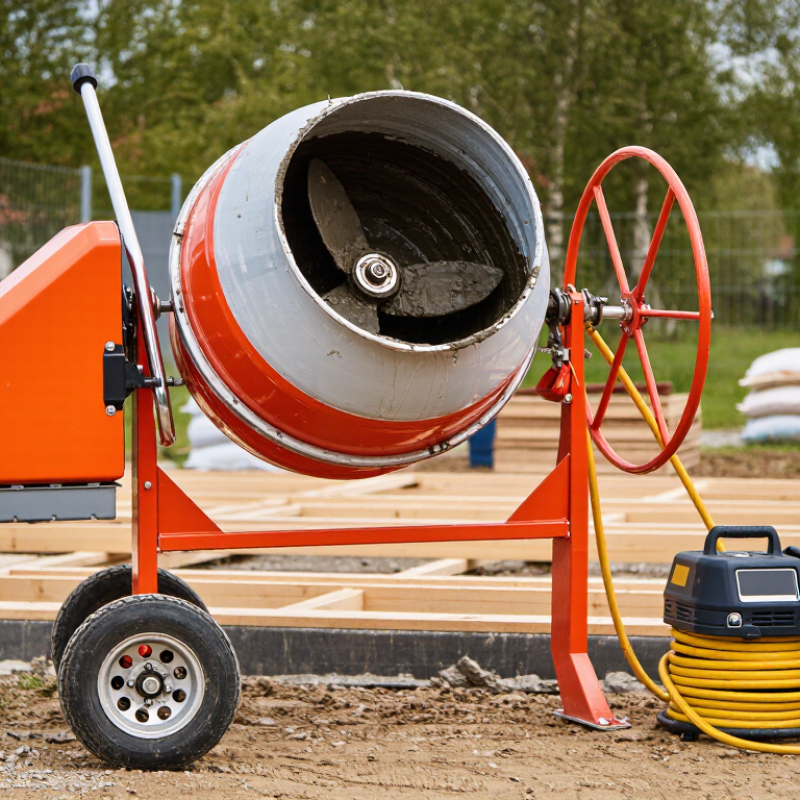
Table of Contents [Hide]
Define Your Concrete Mixing Requirements
Before choosing a cement mixer, define exactly what your concrete work demands. Estimate each batch by volume, not by the mixer’s advertised capacity. A practical load should leave space for cement, sand, stone, and water to turn freely. Overfilling often creates dry pockets and uneven strength.
Consider the worksite carefully. A small backyard path may need a portable electric mixer, while repeated foundation pours require greater output and stronger construction. Measure the distance from the mixer to the pouring area. Check doorway widths, ground conditions, available power, and cleanup access. These details can matter more than raw mixing speed. Also identify your aggregate size and preferred concrete consistency. Heavy stone can strain a light-duty drum.
I once chose equipment based only on batch size, and my estimate was wrong. The mixer struggled on sloped ground, and moving wet concrete became the real problem. Now I record the expected daily volume, mixing frequency, crew size, and maximum lifting distance. I also allow extra capacity for delays and small mistakes. Do not ignore noise, water access, or drum height. Ask whether the mixer can maintain a consistent blend for the entire job, because convenience should never replace reliable concrete quality.