


- Home
- A-Z Catalogue
- Products
- Valves
- Cetop
- Manual Directional Valves
- Proportional Valves
- Poppet Valves
- High-Speed Linear Servo Valves
- All High-Speed Linear Servo Valves
- Cetop 10 (NG32) Two Stage Type High Speed Linear Servo Valves – LSVHG-10
- Cetop 10 (NG32) Two Stage Type High Speed Linear Servo Valves – LSVHG-10 (With Fail-Safe)
- Cetop 8 (NG25) Two Stage Type High Speed Linear Servo Valves – LSVHG-06
- Cetop 8 (NG25) Two Stage Type High Speed Linear Servo Valves – LSVHG-06 (With Fail-Safe)
- Cetop 7 (NG16) Two Stage Type High Speed Linear Servo Valves – LSVHG-04
- Cetop 7 (NG16) Two Stage Type High Speed Linear Servo Valves – LSVHG-04 (With Fail-Safe)
- Cetop 5 (NG10) Direct Type High Speed Linear Servo Valves – LSVG-03
- Cetop 5 (NG10) OBE Type Direct Operated Linear Servo Valves – LSVG-03-EH
- Cetop 3 (NG6) OBE Type Direct Operated Linear Servo Valves – LSVG-01-EH
- Pumps
- Pressure control
- Flow Control Valves
- Pressure Control Valves
- All Pressure Control Valves
- Brake Valves
- Direct Relief Valve
- Low Noise Solenoid Controlled Relief Valves
- Low Noise Pilot Operated Relief Valves
- Pilot Operated Relief Valves
- Pressure reducing and relieving valves
- Pressure reducing and check valves
- Pressure control valves
- Remote Control Relief Valves
- Solenoid Controlled Relief Valves – BSG
- Solenoid Controlled Relief Valves – BST
- Unloading relief valves
- Check valves
- Environmental
- Valves
- Hydraulic Systems
- Power pack
- About Us
- Contact
- Blog

How to Choose the Right Alloy Powder for Your Needs?
Choosing the right Alloy Powder begins with understanding the process, not simply comparing prices. A powder designed for additive manufacturing may perform poorly in thermal spraying or powder metallurgy. Particle size, chemical composition, morphology, flowability, and oxygen content can change the final result. Small differences matter.
Start with the application. Will the powder face high heat, corrosion, repeated stress, or electrical demand? Nickel alloys suit many heat-resistant components, while aluminum alloys support lightweight designs. Stainless steel powders offer useful strength and corrosion resistance in suitable environments. These examples are only starting points. Material selection depends on the complete operating condition.
Experienced engineers usually request a current certificate of analysis and review test methods carefully. Reliable suppliers should explain production routes, particle-size distribution, lot traceability, and storage requirements. Independent testing can confirm chemistry, density, and flow behavior when performance is critical. A powder may look consistent under a microscope, yet behave differently during feeding. That assumption can fail. Even experienced teams get this wrong.
Practical trials remain valuable. Record powder loading, machine settings, humidity, and surface results. Compare those observations with the supplier’s technical data and recognized standards, such as relevant ASTM or ISO methods. Avoid choosing an alloy from a single specification or a familiar brand name. The best Alloy Powder balances performance, processing stability, availability, and total cost. It may also require compromise. A careful review, supported by qualified technical advice, helps turn a promising powder into a dependable production material.
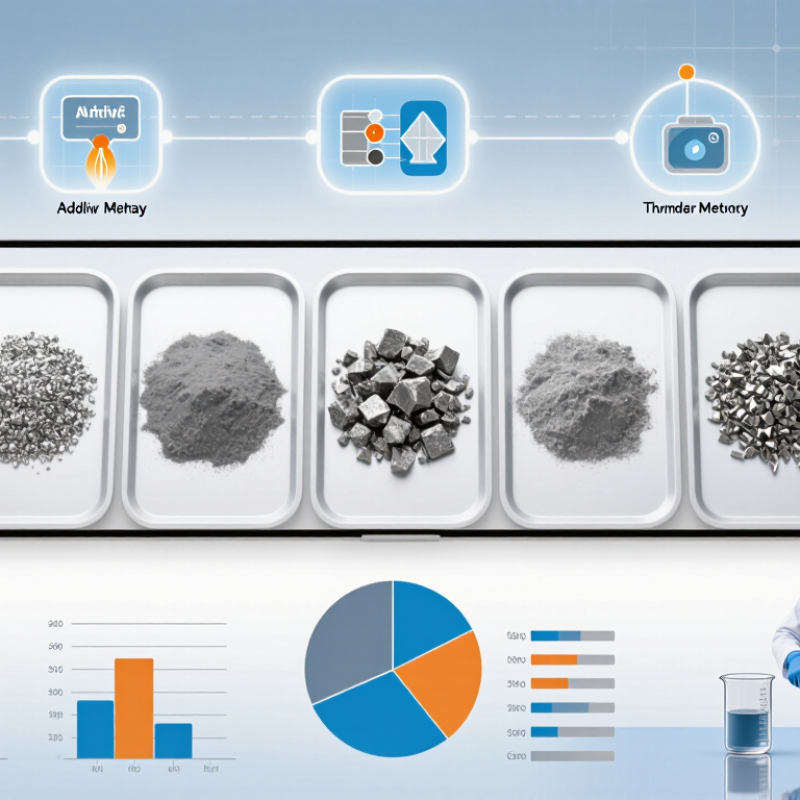
Table of Contents [Hide]
Define the Application Requirements for the Alloy Powder
How to Choose the Right Alloy Powder for Your Needs?
Define the application before comparing alloy powders. Identify the operating temperature, mechanical load, wear conditions, and exposure to moisture or chemicals. A powder for a lightweight structural part may fail in a hot, abrasive environment. Record the required strength, hardness, density, and corrosion resistance. Also define the manufacturing route, such as additive manufacturing, thermal spraying, or powder metallurgy. Each process needs different particle sizes, shapes, flow rates, and packing behavior. Small details matter here.
Tips: Prepare a simple requirement sheet. Include temperature ranges, expected service hours, part dimensions, and surface finish. Ask for particle-size data, chemical composition, flowability results, and contamination controls. Request a representative sample when possible. Testing is more reliable than assumptions.
Do not choose an alloy from strength data alone. Check how the powder behaves during feeding, spreading, melting, sintering, or spraying. Irregular particles may improve packing, but they can reduce flow. Fine particles may create a smoother surface, yet they can increase handling challenges. The first specification is rarely perfect. Review early test results and adjust the alloy or particle size if defects appear. Independent laboratory testing can confirm density, microstructure, and final mechanical performance. Supplier documentation helps, but application-specific validation remains essential.





