


- Home
- A-Z Catalogue
- Products
- Valves
- Cetop
- Manual Directional Valves
- Proportional Valves
- Poppet Valves
- High-Speed Linear Servo Valves
- All High-Speed Linear Servo Valves
- Cetop 10 (NG32) Two Stage Type High Speed Linear Servo Valves – LSVHG-10
- Cetop 10 (NG32) Two Stage Type High Speed Linear Servo Valves – LSVHG-10 (With Fail-Safe)
- Cetop 8 (NG25) Two Stage Type High Speed Linear Servo Valves – LSVHG-06
- Cetop 8 (NG25) Two Stage Type High Speed Linear Servo Valves – LSVHG-06 (With Fail-Safe)
- Cetop 7 (NG16) Two Stage Type High Speed Linear Servo Valves – LSVHG-04
- Cetop 7 (NG16) Two Stage Type High Speed Linear Servo Valves – LSVHG-04 (With Fail-Safe)
- Cetop 5 (NG10) Direct Type High Speed Linear Servo Valves – LSVG-03
- Cetop 5 (NG10) OBE Type Direct Operated Linear Servo Valves – LSVG-03-EH
- Cetop 3 (NG6) OBE Type Direct Operated Linear Servo Valves – LSVG-01-EH
- Pumps
- Pressure control
- Flow Control Valves
- Pressure Control Valves
- All Pressure Control Valves
- Brake Valves
- Direct Relief Valve
- Low Noise Solenoid Controlled Relief Valves
- Low Noise Pilot Operated Relief Valves
- Pilot Operated Relief Valves
- Pressure reducing and relieving valves
- Pressure reducing and check valves
- Pressure control valves
- Remote Control Relief Valves
- Solenoid Controlled Relief Valves – BSG
- Solenoid Controlled Relief Valves – BST
- Unloading relief valves
- Check valves
- Environmental
- Valves
- Hydraulic Systems
- Power pack
- About Us
- Contact
- Blog

How to Choose the Best Car Film PPF Supplier?
Choosing the right Car Film Ppf supplier requires more than comparing glossy brochures or the lowest quotation. Industry forecasts show why this decision matters. Grand View Research identifies rising demand for paint protection film, driven by premium vehicle ownership and growing concern about stone chips, road debris, and resale appearance. MarketsandMarkets also reports continued expansion in automotive films, supported by improved polyurethane technology and professional installation services. However, market estimates differ between reports. That uncertainty deserves attention.
A dependable supplier should provide measurable evidence, not impressive claims. Ask for the film’s thickness, optical clarity, adhesive structure, self-healing performance, and yellowing resistance. Request technical data sheets and independent test results. Inspect a sample under bright workshop lighting. Watch for silvering, edge lift, trapped dust, or uneven orange peel. Small defects become obvious on a black hood.
Experience matters here. A supplier serving experienced installers should explain climate storage, surface preparation, plotter patterns, and warranty exclusions. The warranty should identify coverage periods, discoloration limits, installation responsibilities, and claim procedures. S&P Global Mobility’s vehicle ownership research repeatedly highlights the importance of long-term vehicle condition and consumer value retention. PPF supports that goal, but it cannot prevent every scratch or maintenance mistake. No supplier is flawless. That point is easy to miss.
A practical evaluation should compare proven performance, technical support, production consistency, and after-sales accountability. Choose evidence over confidence.
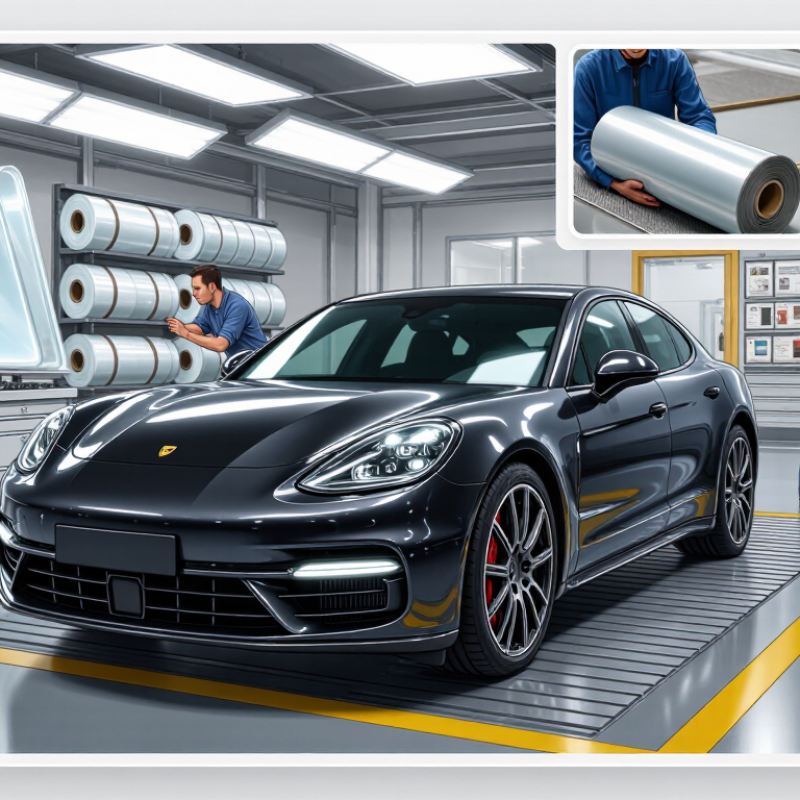
Table of Contents [Hide]
Define Your Car Film PPF Requirements and Protection Goals
Choosing the best car film PPF supplier starts with defining your protection goals. A daily commuter may need strong coverage for the hood, bumper, mirrors, and door edges. A performance car may require fuller coverage against stone chips and track debris. City parking creates different risks, including scratches from tight spaces and careless loading.
Consider your local weather, driving habits, and paint finish. Frequent highway travel demands resistance to gravel impact. Coastal air may increase cleaning needs, while dusty roads can expose weak adhesive edges. Decide whether you prefer a gloss, matte, or color-enhancing finish. The choice should match your vehicle, not just current styling trends.
Ask suppliers for measurable details. Request film thickness, self-healing performance, stain resistance, clarity, and expected service life. Installation quality matters as much as the film. Inspect sample edges around sensors, badges, and curved panels. Gaps should look deliberate, not accidental. Confirm how the supplier handles lifting, bubbling, yellowing, and replacement claims. A clear written warranty is more reliable than a confident promise.
Budget honestly. The cheapest quote may exclude difficult panels or proper surface preparation. I once underestimated preparation time when comparing installation prices. That mistake changed my view of “good value.” Ask how the paint is cleaned, corrected, and protected before application. Also ask about maintenance products and washing limits. Some advice sounds professional but remains vague. Keep questioning until the protection plan feels specific to your car and your driving conditions.
How to Choose the Best Car Film PPF Supplier? - Define Your Car Film PPF Requirements and Protection Goals
| Requirement Area | Protection Goal | Recommended PPF Specification | Supplier Information to Request | Key Evaluation Criteria | Priority |
|---|---|---|---|---|---|
| Paint Protection Level | Reduce damage from stone chips, road debris, minor abrasions, and everyday contact. | Automotive-grade polyurethane paint protection film with a consistent protective layer and suitable flexibility for vehicle contours. | Technical data sheet, layer structure, intended automotive application, and test documentation. | Film should be designed specifically for exterior vehicle paint rather than general-purpose surface protection. | High |
| Film Thickness | Balance impact resistance with clean installation and minimal visual bulk. | Common finished-film thickness is approximately 6–10 mil, including the protective top layer and adhesive system. | Exact thickness measurement method, tolerance range, and whether the stated value includes adhesive and liner. | Compare specifications using the same measurement standard; thicker does not automatically mean better installation performance. | High |
| Surface Finish | Preserve the vehicle’s original appearance while improving surface uniformity. | Choose gloss, matte, or satin according to the vehicle finish and the desired visual effect. | Physical samples, finish options, optical clarity data, and sample panels applied to painted surfaces. | Check for haze, orange peel, distortion, uneven texture, and visible edge contrast under different lighting. | High |
| Self-Healing Performance | Minimize the appearance of light surface scratches caused by washing and routine contact. | Top-coat technology that can reduce minor marks when activated by suitable heat or warm water, where specified. | Activation conditions, test method, limitations, and examples of scratches covered by the claim. | Self-healing generally applies to light top-surface marks and does not repair cuts, punctures, deep scratches, or damaged paint. | Medium |
| Stain and Chemical Resistance | Help protect the paint from road film, insects, bird droppings, tree sap, and common automotive contaminants. | Clear coat with documented resistance to relevant automotive chemicals and environmental contamination. | Resistance testing, recommended cleaning products, dwell-time guidance, and care limitations. | Evaluate resistance to staining, yellowing, water spotting, and degradation from normal vehicle-care chemicals. | High |
| UV and Color Stability | Maintain film clarity and help reduce exposure-related deterioration of the protected finish. | UV-stable film construction with documented aging or weathering test results. | Accelerated weathering method, test duration, color-change criteria, and regional suitability. | Look for evidence addressing yellowing, hazing, cracking, shrinkage, and loss of surface performance. | High |
| Adhesive and Installation | Achieve smooth application, reliable bonding, and reduced installation risk on complex panels. | Pressure-sensitive automotive adhesive with controlled initial tack and sufficient repositioning capability during installation. | Installation temperature range, recommended slip solution, tack time, removal guidance, and installer instructions. | Assess stretch behavior, repositionability, edge lift resistance, adhesive residue, and compatibility with repainted panels. | High |
| Coverage and Pattern Support | Reduce material waste and achieve consistent coverage on different vehicle body shapes. | Available roll widths and professionally prepared digital patterns for common vehicle panels, when applicable. | Roll dimensions, pattern library coverage, pattern update frequency, software compatibility, and custom pattern support. | Check whether patterns allow adequate edge wrapping without excessive seams or unnecessary material consumption. | Medium |
| Durability and Service Life | Obtain long-term protection under the vehicle’s actual climate, mileage, and maintenance routine. | Durability claims supported by written conditions covering climate, cleaning, installation quality, and maintenance. | Expected service period, accelerated aging data, exclusion terms, and recommended maintenance schedule. | Do not compare service-life claims without reviewing the environmental conditions and warranty requirements behind them. | High |
| Warranty Conditions | Ensure product support is clear if premature yellowing, cracking, delamination, or adhesive failure occurs. | Written warranty with defined coverage period, eligible defects, claim procedure, and responsibilities of the installer and vehicle owner. | Complete warranty document, registration process, proof-of-purchase requirements, and geographic limitations. | Review exclusions for improper installation, harsh chemicals, neglected maintenance, repainted surfaces, and mechanical damage. | High |
| Climate Suitability | Maintain reliable appearance and adhesion in the vehicle’s operating environment. | Film selected for local exposure such as intense sunlight, high humidity, freezing temperatures, road salt, dust, or sand. | Regional weathering data, recommended storage conditions, and application temperature limits. | Choose based on actual climate and parking conditions rather than relying only on a general durability statement. | High |
| Maintenance Requirements | Keep the film clear, smooth, and functional without shortening its service life. | Documented washing, drying, polishing, and chemical-care instructions compatible with the film’s top coat. | Approved and restricted products, washing frequency guidance, stain-removal procedure, and care checklist. | Maintenance should be practical for the owner and should not require unusually specialized equipment or procedures. | Medium |
| Quality Control | Receive consistent rolls with predictable optical, dimensional, and adhesive performance. | Controlled manufacturing process with batch identification and inspection of thickness, clarity, surface, and adhesion. | Batch records, inspection standards, conformity documents, and sample approval process. | Consistent quality across different production batches is essential for professional installation and repeat purchasing. | High |
| Supply and Logistics | Maintain stable project scheduling and avoid installation delays caused by stock shortages. | Clearly defined roll availability, lead time, packaging standards, and shipment tracking process. | Minimum order quantity, standard lead time, production capacity, packaging details, and replacement policy for transport damage. | Consider total landed cost, delivery reliability, inventory continuity, and the supplier’s ability to support future orders. | Medium |
| Technical Support | Reduce installation errors and improve the final appearance of completed projects. | Clear installation manuals, troubleshooting guidance, training resources, and access to qualified technical assistance. | Installer training, technical response time, application videos, repair guidance, and documentation language options. | A responsive technical team can be as important as the film specification when handling complex installations. | Medium |
| Total Cost of Ownership | Achieve the required protection without selecting a product based only on the lowest purchase price. | Evaluate film cost together with installation time, material waste, pattern efficiency, maintenance, warranty support, and replacement risk. | Full quotation, sample-roll policy, shipping charges, training costs, warranty-related costs, and payment terms. | The best supplier should provide a balanced combination of performance, consistency, support, and predictable long-term cost. | High |