


- Home
- A-Z Catalogue
- Products
- Valves
- Cetop
- Manual Directional Valves
- Proportional Valves
- Poppet Valves
- High-Speed Linear Servo Valves
- All High-Speed Linear Servo Valves
- Cetop 10 (NG32) Two Stage Type High Speed Linear Servo Valves – LSVHG-10
- Cetop 10 (NG32) Two Stage Type High Speed Linear Servo Valves – LSVHG-10 (With Fail-Safe)
- Cetop 8 (NG25) Two Stage Type High Speed Linear Servo Valves – LSVHG-06
- Cetop 8 (NG25) Two Stage Type High Speed Linear Servo Valves – LSVHG-06 (With Fail-Safe)
- Cetop 7 (NG16) Two Stage Type High Speed Linear Servo Valves – LSVHG-04
- Cetop 7 (NG16) Two Stage Type High Speed Linear Servo Valves – LSVHG-04 (With Fail-Safe)
- Cetop 5 (NG10) Direct Type High Speed Linear Servo Valves – LSVG-03
- Cetop 5 (NG10) OBE Type Direct Operated Linear Servo Valves – LSVG-03-EH
- Cetop 3 (NG6) OBE Type Direct Operated Linear Servo Valves – LSVG-01-EH
- Pumps
- Pressure control
- Flow Control Valves
- Pressure Control Valves
- All Pressure Control Valves
- Brake Valves
- Direct Relief Valve
- Low Noise Solenoid Controlled Relief Valves
- Low Noise Pilot Operated Relief Valves
- Pilot Operated Relief Valves
- Pressure reducing and relieving valves
- Pressure reducing and check valves
- Pressure control valves
- Remote Control Relief Valves
- Solenoid Controlled Relief Valves – BSG
- Solenoid Controlled Relief Valves – BST
- Unloading relief valves
- Check valves
- Environmental
- Valves
- Hydraulic Systems
- Power pack
- About Us
- Contact
- Blog

How to Choose Multi Pair Instrumentation Cable?
Choosing a Multi Pair Instrumentation Cable is not simply a matter of picking the right number of pairs. The cable must carry control or measurement signals reliably through its actual installation environment. A mismatch in conductor size, insulation, or shielding can create noise, complicate termination, or shorten service life. Small details matter.
Start by identifying the signal type, pair count, conductor gauge, and required electrical ratings. Then check the shielding design. Individual pair shields can help limit interference between circuits, while an overall shield may protect the cable from external electrical noise. Neither choice is automatically best. Nearby motors, variable-speed drives, and long cable runs can all affect signal quality, so consider the route as well as the equipment.
The outer jacket deserves equal attention. Temperature, moisture, sunlight, chemicals, and mechanical wear may influence which material is suitable. Review the manufacturer’s datasheet for operating limits and construction details, and confirm that they fit the site conditions. A specification can look complete yet leave practical questions unanswered.
Before ordering, compare the cable’s dimensions with available conduit, glands, and termination space. Check bend radius and installation requirements, too. These details are easy to overlook. They can still cause delays.
A careful selection balances electrical performance, environmental protection, and installation needs. This guide explains how to assess those factors and compare options. Not every project has a perfect answer; documenting assumptions can make the final choice more dependable.
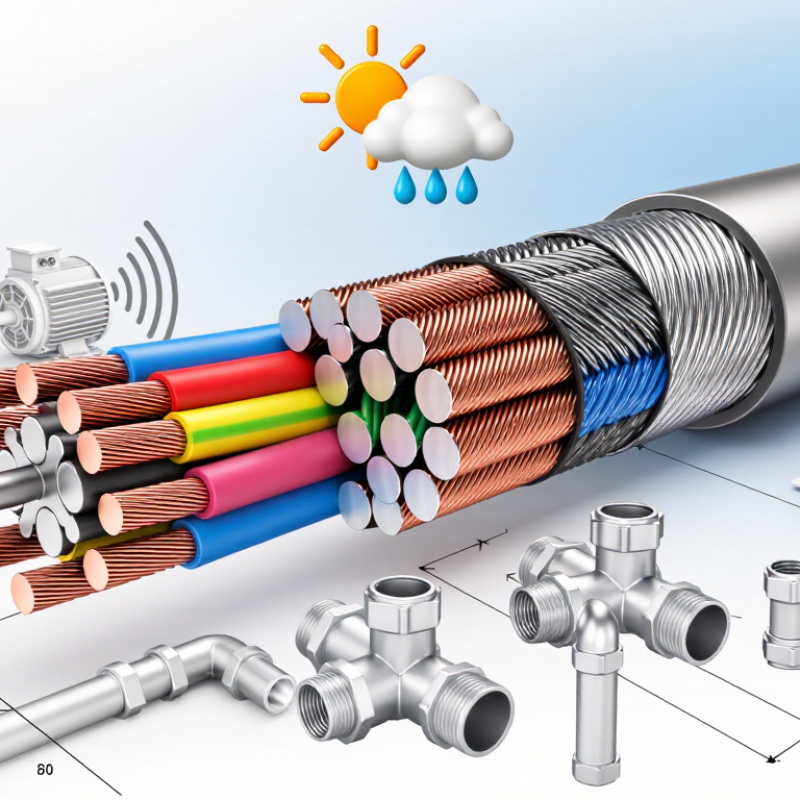
Table of Contents [Hide]
Define the Application and Operating Environment
Before choosing a multi-pair instrumentation cable, define what it will carry and where it will run. Low-level sensor signals may need stronger protection from electrical noise than ordinary control circuits. A cable beside variable-speed drives, motors, or fluorescent lighting can pick up interference. Damp areas, outdoor trays, and washdown zones add different concerns. Match the cable jacket and construction to the actual exposure, not just the room’s average temperature.
Check the number of pairs, conductor size, and total cable distance against the instrument and control-system requirements. Long runs can increase signal loss, while tight bends and repeated movement can damage conductors or shielding. A shield may help reduce noise, but its grounding method should match the system design. Do not assume every installation needs the same shield arrangement. Review the equipment documentation and site wiring practices, then confirm that the cable’s temperature rating covers both normal operation and nearby heat sources.
Tips: Walk the planned route before specifying the cable. Look for sharp edges, standing water, and power cables sharing the tray. Record these details. It is easy to miss one awkward bend, and that small oversight can complicate installation later.





