


- Home
- A-Z Catalogue
- Products
- Valves
- Cetop
- Manual Directional Valves
- Proportional Valves
- Poppet Valves
- High-Speed Linear Servo Valves
- All High-Speed Linear Servo Valves
- Cetop 10 (NG32) Two Stage Type High Speed Linear Servo Valves – LSVHG-10
- Cetop 10 (NG32) Two Stage Type High Speed Linear Servo Valves – LSVHG-10 (With Fail-Safe)
- Cetop 8 (NG25) Two Stage Type High Speed Linear Servo Valves – LSVHG-06
- Cetop 8 (NG25) Two Stage Type High Speed Linear Servo Valves – LSVHG-06 (With Fail-Safe)
- Cetop 7 (NG16) Two Stage Type High Speed Linear Servo Valves – LSVHG-04
- Cetop 7 (NG16) Two Stage Type High Speed Linear Servo Valves – LSVHG-04 (With Fail-Safe)
- Cetop 5 (NG10) Direct Type High Speed Linear Servo Valves – LSVG-03
- Cetop 5 (NG10) OBE Type Direct Operated Linear Servo Valves – LSVG-03-EH
- Cetop 3 (NG6) OBE Type Direct Operated Linear Servo Valves – LSVG-01-EH
- Pumps
- Pressure control
- Flow Control Valves
- Pressure Control Valves
- All Pressure Control Valves
- Brake Valves
- Direct Relief Valve
- Low Noise Solenoid Controlled Relief Valves
- Low Noise Pilot Operated Relief Valves
- Pilot Operated Relief Valves
- Pressure reducing and relieving valves
- Pressure reducing and check valves
- Pressure control valves
- Remote Control Relief Valves
- Solenoid Controlled Relief Valves – BSG
- Solenoid Controlled Relief Valves – BST
- Unloading relief valves
- Check valves
- Environmental
- Valves
- Hydraulic Systems
- Power pack
- About Us
- Contact
- Blog

How to Choose Color Coated Steel Coil for Your Project?
Choosing the right Color Coated Steel Coil can shape a project’s durability, appearance, and maintenance cost. The decision is not simply about selecting a popular color. It involves substrate strength, coating thickness, paint chemistry, forming requirements, and exposure conditions. A roofing panel near a humid coastline faces salt, wind, and strong sunlight. An indoor partition may need far less protection.
Materials expert Dr. J. R. Davis has stated, “The performance of a coating depends on the substrate, the environment, and the application.” This principle remains practical. A coil with a thicker paint layer may look safer, but thickness alone does not guarantee service life. Galvanizing quality, surface preparation, resin type, curing control, and edge protection also matter. Small details matter.
This guide explains how to compare Color Coated Steel Coil options before placing an order. It examines steel grade, zinc or aluminum-zinc coating, paint system, gloss, color consistency, and minimum bending radius. It also considers climate, building use, fabrication methods, and supplier documentation. Request technical data sheets, test reports, and sample pieces. Touch the surface. Check the reverse side. Inspect cut edges after forming.
A perfect specification on paper can still fail during installation. That uncomfortable possibility deserves attention. Some buyers focus heavily on price and underestimate repainting, replacement, or premature corrosion. Others select a premium coating without confirming whether it suits their forming process. The better choice balances performance, budget, appearance, and realistic site conditions. This is where careful questioning becomes more valuable than a quick quotation.
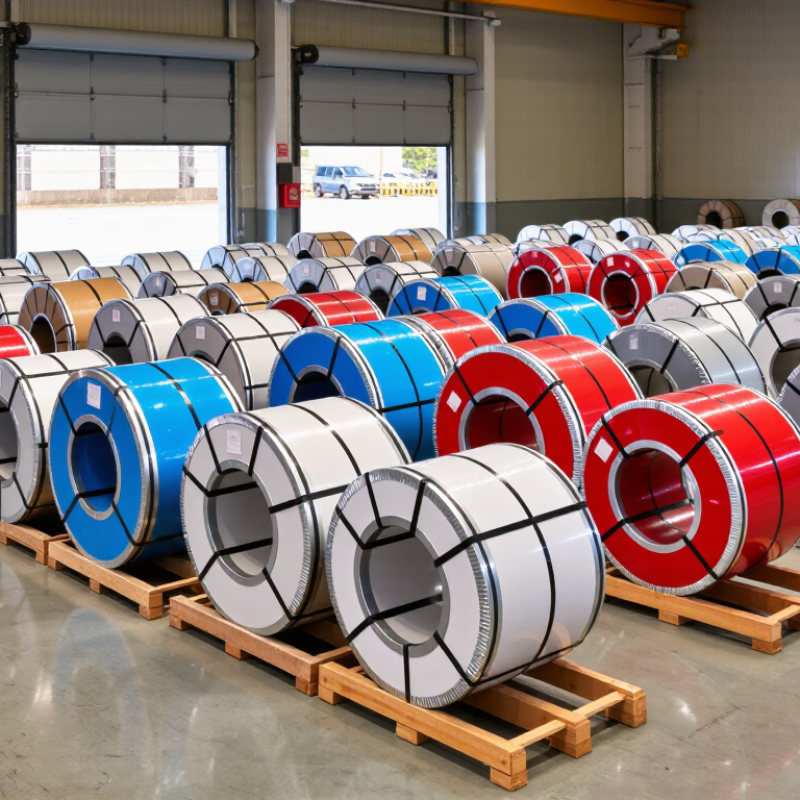
Table of Contents [Hide]
Project Requirements That Shape Your Steel Coil Choice
How to Choose Color Coated Steel Coil for Your Project?
Project Requirements That Shape Your Steel Coil Choice
Your project conditions should guide every steel coil decision. Start with the building’s location, purpose, and expected service life. Coastal sites need stronger corrosion protection because salt air attacks exposed edges quickly. Industrial areas may require coatings that resist chemicals, moisture, and frequent cleaning.
The substrate also matters. Galvanized steel suits many construction applications, while heavier zinc coatings can provide additional protection. Check the required yield strength before ordering. A coil for roofing may need different forming performance than one for wall panels or equipment housings. Confirm the coating thickness, paint system, color tolerance, gloss level, and surface finish with the supplier. Small differences can affect appearance across large panels.
I once underestimated edge exposure on a warehouse project. The main surface performed well, but cut edges needed better protection. That mistake changed our inspection checklist. Requirements are not always obvious.
Tips: Measure the intended bend radius before selecting the coil. Ask for technical data, coating test results, and sample panels. Compare the coil width with your cutting plan to reduce waste. Record batch numbers during delivery. Inspect the surface under natural light, not only under bright warehouse lamps. Also check packaging carefully. Damp storage can damage even a suitable coating. Consider local weather records, fabrication equipment, maintenance access, and transport conditions before final approval.





