


- Home
- A-Z Catalogue
- Products
- Valves
- Cetop
- Manual Directional Valves
- Proportional Valves
- Poppet Valves
- High-Speed Linear Servo Valves
- All High-Speed Linear Servo Valves
- Cetop 10 (NG32) Two Stage Type High Speed Linear Servo Valves – LSVHG-10
- Cetop 10 (NG32) Two Stage Type High Speed Linear Servo Valves – LSVHG-10 (With Fail-Safe)
- Cetop 8 (NG25) Two Stage Type High Speed Linear Servo Valves – LSVHG-06
- Cetop 8 (NG25) Two Stage Type High Speed Linear Servo Valves – LSVHG-06 (With Fail-Safe)
- Cetop 7 (NG16) Two Stage Type High Speed Linear Servo Valves – LSVHG-04
- Cetop 7 (NG16) Two Stage Type High Speed Linear Servo Valves – LSVHG-04 (With Fail-Safe)
- Cetop 5 (NG10) Direct Type High Speed Linear Servo Valves – LSVG-03
- Cetop 5 (NG10) OBE Type Direct Operated Linear Servo Valves – LSVG-03-EH
- Cetop 3 (NG6) OBE Type Direct Operated Linear Servo Valves – LSVG-01-EH
- Pumps
- Pressure control
- Flow Control Valves
- Pressure Control Valves
- All Pressure Control Valves
- Brake Valves
- Direct Relief Valve
- Low Noise Solenoid Controlled Relief Valves
- Low Noise Pilot Operated Relief Valves
- Pilot Operated Relief Valves
- Pressure reducing and relieving valves
- Pressure reducing and check valves
- Pressure control valves
- Remote Control Relief Valves
- Solenoid Controlled Relief Valves – BSG
- Solenoid Controlled Relief Valves – BST
- Unloading relief valves
- Check valves
- Environmental
- Valves
- Hydraulic Systems
- Power pack
- About Us
- Contact
- Blog

How to Choose an Electric Gate Valve in 2026?
Choosing an Electric Gate Valve in 2026 requires more than comparing connection sizes or purchase prices. The correct choice must match pressure, temperature, media, operating frequency, and emergency requirements. A valve installed on a muddy water line faces different risks from one controlling steam, chemicals, or chilled water. Field experience shows that small errors in torque calculation can cause slow travel, actuator overheating, or incomplete closure.
Industry reports provide useful context. The UN World Water Development Report 2024 states that agriculture represents roughly 70% of global freshwater withdrawals. This increases demand for dependable flow control across irrigation and treatment systems. The International Energy Agency has also reported that electric motor systems consume about 53% of global electricity. Efficient actuators, suitable duty cycles, and accurate torque sizing therefore deserve serious attention. Market studies from Grand View Research and MarketsandMarkets indicate continuing investment in industrial valves, automation, and water infrastructure. Their forecasts differ, however, because market definitions and regional assumptions are not identical. That is worth remembering.
A practical evaluation should examine body material, wedge design, stem protection, enclosure rating, control signal, and maintenance access. Check whether the actuator supports local control, remote feedback, and manual override. In outdoor installations, moisture can enter through neglected cable glands. In dusty plants, a weak enclosure may fail earlier than expected. ISO 5210 or ISO 5211 compatibility can simplify actuator mounting, but standards alone do not guarantee suitability. This guide explains how to select an Electric Gate Valve with evidence, caution, and realistic operating details. The perfect specification does not exist. The safest decision usually comes from matching the valve to its actual service conditions.
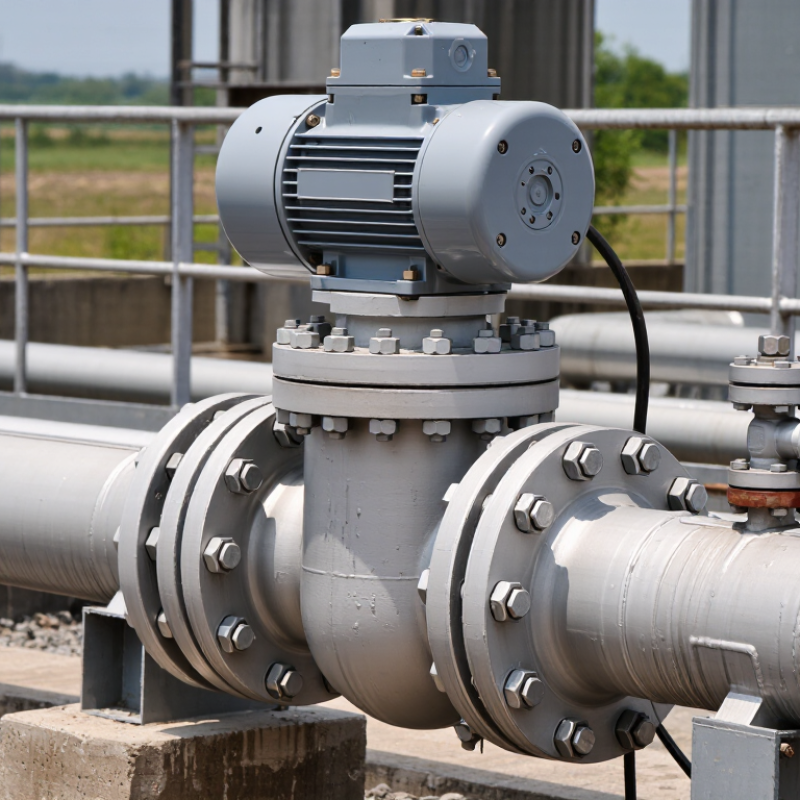
Table of Contents [Hide]
What Is an Electric Gate Valve and How Does It Work?
An electric gate valve controls fluid flow by raising or lowering a gate inside the valve body. An electric actuator turns the stem, moving the gate perpendicular to the pipeline. When fully open, the gate leaves a broad passage for low pressure loss. When fully closed, it blocks the line firmly. It is not designed for frequent throttling. Partial opening can damage the gate and sealing surfaces.
During field inspections, technicians often check the actuator, stem, limit switches, and enclosure condition. The actuator stops when the gate reaches its open or closed position. Torque protection can also stop movement when debris or excessive pressure creates resistance. This detail matters. A valve may fit the pipe but still fail if its actuator lacks enough torque. Power supply, control signals, ambient temperature, and emergency operating requirements also need careful review.
For a 2026 installation, consider position feedback and basic diagnostic data. These features can reveal stalled travel, unusual torque, or repeated operating cycles. Select body materials and seals for the actual medium, pressure, temperature, and pipe size. A weatherproof enclosure suits outdoor service, but corrosion protection may still be necessary near saltwater. Electric operation is convenient, yet it depends on reliable power. That weakness is easy to overlook. In some systems, manual override or backup operation deserves more attention than advanced connectivity. Calibration should be tested after installation, because a small limit-switch error can leave the gate partly open.