


- Home
- A-Z Catalogue
- Products
- Valves
- Cetop
- Manual Directional Valves
- Proportional Valves
- Poppet Valves
- High-Speed Linear Servo Valves
- All High-Speed Linear Servo Valves
- Cetop 10 (NG32) Two Stage Type High Speed Linear Servo Valves – LSVHG-10
- Cetop 10 (NG32) Two Stage Type High Speed Linear Servo Valves – LSVHG-10 (With Fail-Safe)
- Cetop 8 (NG25) Two Stage Type High Speed Linear Servo Valves – LSVHG-06
- Cetop 8 (NG25) Two Stage Type High Speed Linear Servo Valves – LSVHG-06 (With Fail-Safe)
- Cetop 7 (NG16) Two Stage Type High Speed Linear Servo Valves – LSVHG-04
- Cetop 7 (NG16) Two Stage Type High Speed Linear Servo Valves – LSVHG-04 (With Fail-Safe)
- Cetop 5 (NG10) Direct Type High Speed Linear Servo Valves – LSVG-03
- Cetop 5 (NG10) OBE Type Direct Operated Linear Servo Valves – LSVG-03-EH
- Cetop 3 (NG6) OBE Type Direct Operated Linear Servo Valves – LSVG-01-EH
- Pumps
- Pressure control
- Flow Control Valves
- Pressure Control Valves
- All Pressure Control Valves
- Brake Valves
- Direct Relief Valve
- Low Noise Solenoid Controlled Relief Valves
- Low Noise Pilot Operated Relief Valves
- Pilot Operated Relief Valves
- Pressure reducing and relieving valves
- Pressure reducing and check valves
- Pressure control valves
- Remote Control Relief Valves
- Solenoid Controlled Relief Valves – BSG
- Solenoid Controlled Relief Valves – BST
- Unloading relief valves
- Check valves
- Environmental
- Valves
- Hydraulic Systems
- Power pack
- About Us
- Contact
- Blog

How to Choose a Stone Hammer Crusher in 2026?
Choosing a Stone Hammer Crusher in 2026 requires more than comparing catalog prices. Quarry owners must match equipment with rock hardness, feed size, moisture, and required product grading. A machine that performs well on limestone may struggle with abrasive granite.
The U.S. Geological Survey reported approximately 1.5 billion tons of crushed stone production in the United States during 2024. This figure highlights the scale of aggregate demand and the pressure placed on reliable crushing equipment. The USGS Mineral Commodity Summaries 2025 also identifies construction activity, infrastructure investment, and transportation projects as major demand drivers. These conditions make uptime, wear resistance, and maintainability practical purchasing priorities.
Real experience matters here. A 30-millimeter discharge setting can produce useful aggregate, but only when rotor speed, screen size, and feed consistency work together. Operators should examine hammer material, liner thickness, bearing protection, motor efficiency, and access for daily inspection. Safety guarding and dust-control provisions deserve equal attention. European Commission guidance on machinery safety and ISO 21873 principles for mobile crushing equipment provide useful reference points, although local requirements still apply.
No report can predict every quarry. Field testing remains essential. A spreadsheet may also mislead when it ignores downtime, replacement hammers, or blocked screens. This guide compares Stone Hammer Crusher options through capacity, lifecycle cost, product quality, service support, and operating conditions. The best choice is rarely the cheapest machine. It is the machine that delivers consistent output without exhausting the people who operate it.
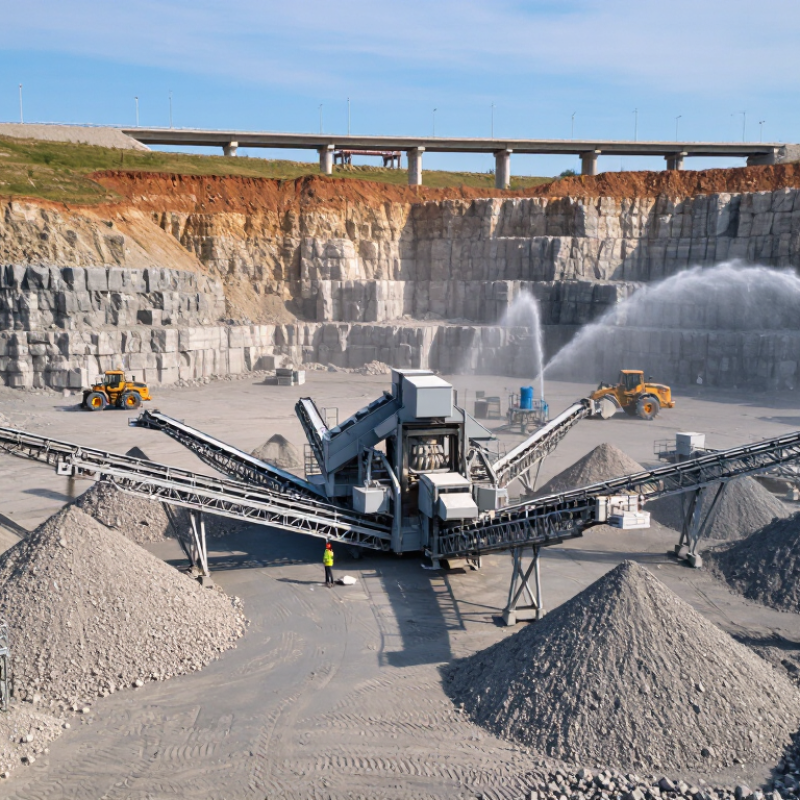
Table of Contents [Hide]
Understanding Stone Hammer Crusher Types and Working Principles
Choosing a stone hammer crusher begins with its working principle, not its appearance.
A high-speed rotor drives hammers against incoming stone. Impact breaks the material, while the grate controls the final size. In a reversible model, the rotor can change direction. This may balance hammer wear. Ring-hammer designs suit softer feed and controlled reduction. Heavy hammer crushers handle larger, harder pieces, but they demand stronger foundations and careful maintenance.
The feed type matters greatly. Limestone behaves differently from granite, especially when moisture rises. Check compressive strength, maximum feed size, and required output before selecting equipment.
The USGS Mineral Commodity Summaries 2024 estimated about 1.9 billion tons of crushed stone production in the United States during 2023.
Such scale shows why stable throughput and wear control matter. It does not mean every site needs the largest machine.
From field inspections, uneven feeding often causes more trouble than low motor power. A vibrating feeder can keep the rotor loaded steadily.
Inspect hammer edges, rotor balance, bearings, and grate openings each shift. The machine should stop before inspection. The European Commission’s Best Available Techniques reference stresses energy efficiency, dust control, and preventive maintenance in mineral processing.
Actual results still depend on stone quality and operator habits. One overlooked detail remains important: a smaller discharge gap can improve grading, but it can also increase wear and energy use. There is no perfect setting.





