


- Home
- A-Z Catalogue
- Products
- Valves
- Cetop
- Manual Directional Valves
- Proportional Valves
- Poppet Valves
- High-Speed Linear Servo Valves
- All High-Speed Linear Servo Valves
- Cetop 10 (NG32) Two Stage Type High Speed Linear Servo Valves – LSVHG-10
- Cetop 10 (NG32) Two Stage Type High Speed Linear Servo Valves – LSVHG-10 (With Fail-Safe)
- Cetop 8 (NG25) Two Stage Type High Speed Linear Servo Valves – LSVHG-06
- Cetop 8 (NG25) Two Stage Type High Speed Linear Servo Valves – LSVHG-06 (With Fail-Safe)
- Cetop 7 (NG16) Two Stage Type High Speed Linear Servo Valves – LSVHG-04
- Cetop 7 (NG16) Two Stage Type High Speed Linear Servo Valves – LSVHG-04 (With Fail-Safe)
- Cetop 5 (NG10) Direct Type High Speed Linear Servo Valves – LSVG-03
- Cetop 5 (NG10) OBE Type Direct Operated Linear Servo Valves – LSVG-03-EH
- Cetop 3 (NG6) OBE Type Direct Operated Linear Servo Valves – LSVG-01-EH
- Pumps
- Pressure control
- Flow Control Valves
- Pressure Control Valves
- All Pressure Control Valves
- Brake Valves
- Direct Relief Valve
- Low Noise Solenoid Controlled Relief Valves
- Low Noise Pilot Operated Relief Valves
- Pilot Operated Relief Valves
- Pressure reducing and relieving valves
- Pressure reducing and check valves
- Pressure control valves
- Remote Control Relief Valves
- Solenoid Controlled Relief Valves – BSG
- Solenoid Controlled Relief Valves – BST
- Unloading relief valves
- Check valves
- Environmental
- Valves
- Hydraulic Systems
- Power pack
- About Us
- Contact
- Blog

How to Choose a Steel Fire Rated Shutter?
Choosing a Steel Fire-Rated Shutter is not just a matter of matching a finish to a doorway. The shutter must suit the opening, the building’s fire strategy, and the way people use the space every day. A loading bay may face dust, trolley impacts, and frequent operation. A kitchen pass-through may need different controls and maintenance access. Details matter.
Start with the required fire-resistance rating and confirm it against the project specification. Check the opening’s width, height, headroom, side guides, and available space for the barrel and motor. Ask how the shutter behaves during an alarm and what release or closing method is specified. A rating label is important, but it does not tell the whole story. Installation, compatible components, and routine inspection also affect dependable performance.
Composite fire-protection specialist Daniel Mercer offers this editorially drafted reminder, not a verified published quotation: “A shutter is only as dependable as its rating, installation, and maintenance working together.” Use that principle when comparing steel gauges, curtain construction, controls, and service arrangements. Request product documentation, installation details, and a clear inspection schedule. Then consider the everyday reality: who will test the shutter, and can staff keep its path clear? It is easy to overlook that last question.
This guide explains the decisions worth checking before purchase. It also flags where a product brochure may leave practical questions unanswered. Verify project requirements with the responsible design professional. A careful choice starts with evidence, not appearance alone.
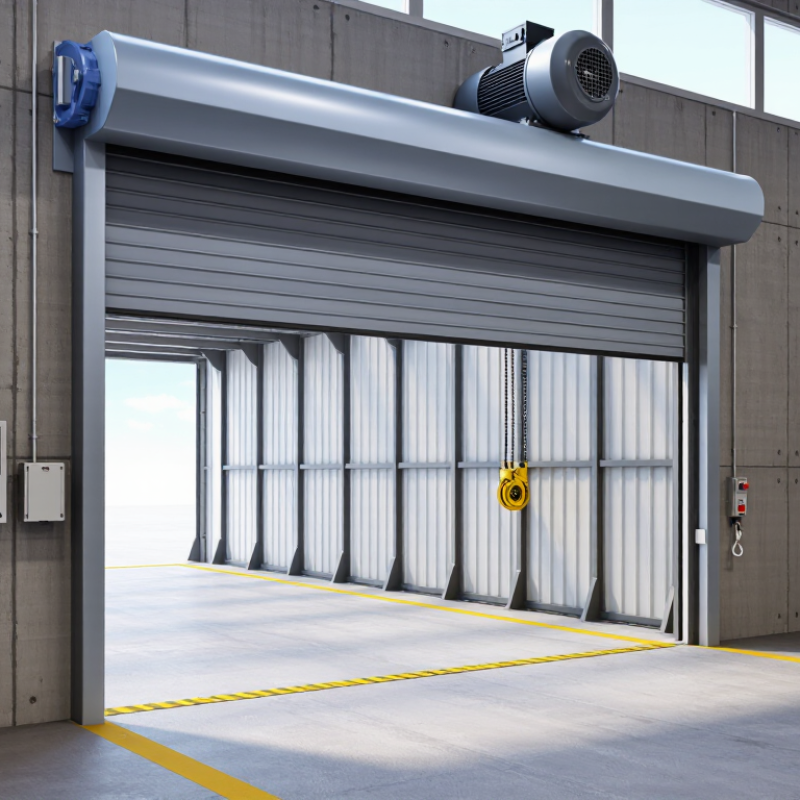
Table of Contents [Hide]
Understand the Purpose and Operation of Steel Fire-Rated Shutters
A steel fire-rated shutter helps limit the spread of fire and smoke between building areas. It is not simply a heavy security door. Its curtain, guides, motor, controls, and surrounding construction work as one assembly. During normal use, the shutter stays open or operates as specified for the opening. When a linked alarm or heat detector signals, the release mechanism allows it to close, often at a controlled speed.
Keep the path clear. A box, trolley, or loose cable beneath the curtain can obstruct closure. That sounds simple. It isn’t always.
Choose a shutter for the opening’s dimensions, daily traffic, and required fire performance. Check how it will respond to alarms and whether people need a safe exit nearby. Ask the installer to explain the release method, backup power arrangements, and routine inspection schedule.
During commissioning, watch the shutter descend and confirm it closes evenly without striking nearby equipment. Record any unusual noise or hesitation; small changes can signal a maintenance issue.
In practice, handover paperwork can be less clear than the hardware, so ask for a plain explanation. The shutter’s rating also depends on suitable installation and compatible surrounding construction, not the metal curtain alone.





