


- Home
- A-Z Catalogue
- Products
- Valves
- Cetop
- Manual Directional Valves
- Proportional Valves
- Poppet Valves
- High-Speed Linear Servo Valves
- All High-Speed Linear Servo Valves
- Cetop 10 (NG32) Two Stage Type High Speed Linear Servo Valves – LSVHG-10
- Cetop 10 (NG32) Two Stage Type High Speed Linear Servo Valves – LSVHG-10 (With Fail-Safe)
- Cetop 8 (NG25) Two Stage Type High Speed Linear Servo Valves – LSVHG-06
- Cetop 8 (NG25) Two Stage Type High Speed Linear Servo Valves – LSVHG-06 (With Fail-Safe)
- Cetop 7 (NG16) Two Stage Type High Speed Linear Servo Valves – LSVHG-04
- Cetop 7 (NG16) Two Stage Type High Speed Linear Servo Valves – LSVHG-04 (With Fail-Safe)
- Cetop 5 (NG10) Direct Type High Speed Linear Servo Valves – LSVG-03
- Cetop 5 (NG10) OBE Type Direct Operated Linear Servo Valves – LSVG-03-EH
- Cetop 3 (NG6) OBE Type Direct Operated Linear Servo Valves – LSVG-01-EH
- Pumps
- Pressure control
- Flow Control Valves
- Pressure Control Valves
- All Pressure Control Valves
- Brake Valves
- Direct Relief Valve
- Low Noise Solenoid Controlled Relief Valves
- Low Noise Pilot Operated Relief Valves
- Pilot Operated Relief Valves
- Pressure reducing and relieving valves
- Pressure reducing and check valves
- Pressure control valves
- Remote Control Relief Valves
- Solenoid Controlled Relief Valves – BSG
- Solenoid Controlled Relief Valves – BST
- Unloading relief valves
- Check valves
- Environmental
- Valves
- Hydraulic Systems
- Power pack
- About Us
- Contact
- Blog

What Is an HDPE Liner and What Is It Used For?
An Hdpe Liner is a flexible sheet made from high-density polyethylene, designed to limit liquid movement through soil. It is used in landfills, mining facilities, reservoirs, and wastewater ponds, where leakage control protects nearby soil and water. The material offers low permeability and strong chemical resistance, but performance depends on more than the polymer itself. Seams, subgrade preparation, and installation quality matter.
Technical standards help put liner specifications in context. The U.S. Environmental Protection Agency’s municipal solid waste landfill criteria, in 40 CFR §258.40, specify a composite liner system and require an HDPE geomembrane component at least 60 mils thick. The Geosynthetic Institute’s GRI-GM13 specification provides quality-control criteria and test methods for HDPE geomembranes. These references show why buyers should compare documented properties, not just advertised thickness. Small details matter.
In the field, a liner may sit beneath drainage layers, protective geotextiles, or compacted soil. A single puncture or poorly tested seam can undermine an otherwise suitable system. That distinction matters. Engineers typically evaluate chemical exposure, temperature, ground movement, and installation conditions before selecting a product. No liner fits every site. Even strong materials have limits, and a product sheet cannot replace careful design or independent inspection. This guide explains what an Hdpe Liner is, how it works, and where its strengths and limitations matter most.
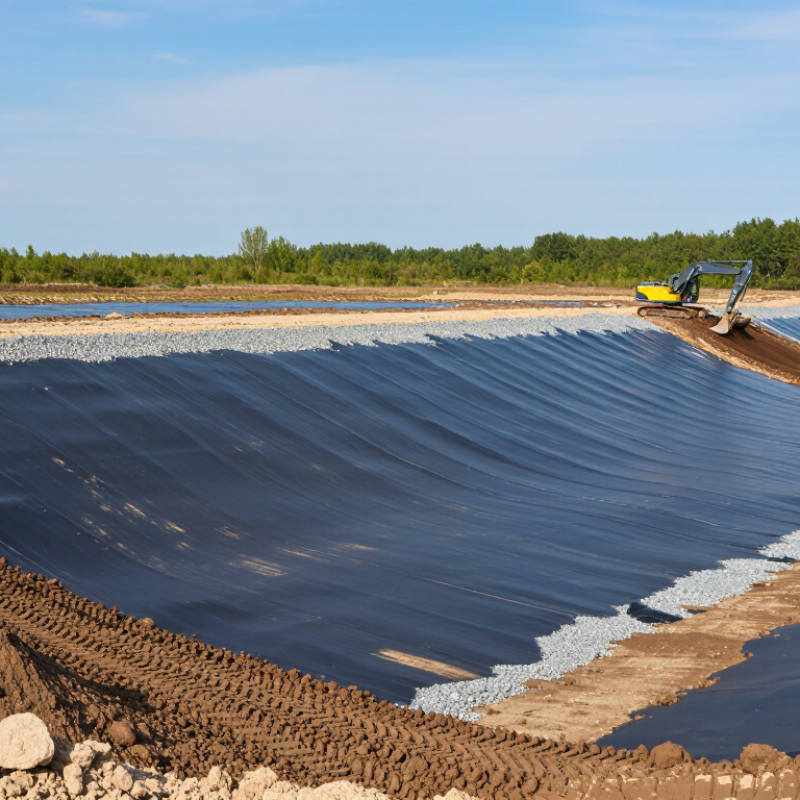
Table of Contents [Hide]
What an HDPE Liner Is
An HDPE liner is a flexible geomembrane made from high-density polyethylene resin. It usually arrives in rolls or large panels, then is placed over prepared ground or inside a structure. The material has low permeability, helping limit water and many liquids from moving through soil. It also resists numerous chemicals and sunlight, though performance varies with the specific material and exposure conditions. It is not a magic shield. Seams, edges, and punctures can become weak points if installation or inspection is poor.
These liners are used as barriers in ponds, reservoirs, landfills, and containment areas. For example, a pond liner separates stored water from the underlying soil. The sheet itself is tough but not inflexible; sharp stones or uneven ground can cause damage during placement. Heat-welded seams join panels, and careful testing helps confirm that those joins are sound.
Tips: Check the ground for roots, stones, and abrupt dips before laying the liner. Match the liner’s thickness and chemical resistance to the project conditions, and ask a qualified installer how seams will be checked. Small details matter. Even a durable liner can fail when its base is poorly prepared.





