


- Home
- A-Z Catalogue
- Products
- Valves
- Cetop
- Manual Directional Valves
- Proportional Valves
- Poppet Valves
- High-Speed Linear Servo Valves
- All High-Speed Linear Servo Valves
- Cetop 10 (NG32) Two Stage Type High Speed Linear Servo Valves – LSVHG-10
- Cetop 10 (NG32) Two Stage Type High Speed Linear Servo Valves – LSVHG-10 (With Fail-Safe)
- Cetop 8 (NG25) Two Stage Type High Speed Linear Servo Valves – LSVHG-06
- Cetop 8 (NG25) Two Stage Type High Speed Linear Servo Valves – LSVHG-06 (With Fail-Safe)
- Cetop 7 (NG16) Two Stage Type High Speed Linear Servo Valves – LSVHG-04
- Cetop 7 (NG16) Two Stage Type High Speed Linear Servo Valves – LSVHG-04 (With Fail-Safe)
- Cetop 5 (NG10) Direct Type High Speed Linear Servo Valves – LSVG-03
- Cetop 5 (NG10) OBE Type Direct Operated Linear Servo Valves – LSVG-03-EH
- Cetop 3 (NG6) OBE Type Direct Operated Linear Servo Valves – LSVG-01-EH
- Pumps
- Pressure control
- Flow Control Valves
- Pressure Control Valves
- All Pressure Control Valves
- Brake Valves
- Direct Relief Valve
- Low Noise Solenoid Controlled Relief Valves
- Low Noise Pilot Operated Relief Valves
- Pilot Operated Relief Valves
- Pressure reducing and relieving valves
- Pressure reducing and check valves
- Pressure control valves
- Remote Control Relief Valves
- Solenoid Controlled Relief Valves – BSG
- Solenoid Controlled Relief Valves – BST
- Unloading relief valves
- Check valves
- Environmental
- Valves
- Hydraulic Systems
- Power pack
- About Us
- Contact
- Blog

How to Find the Right Tokimec Equivalent Pump?
When a Tokimec pump needs replacement, a similar-looking unit can be misleading. A reliable match begins with the pump’s model number and the machine’s actual operating conditions. The right Tokimec Equivalent Pump should be checked against displacement, pressure rating, shaft rotation, mounting dimensions, and port layout. Flow and pressure matter. So do fluid type, operating speed, and control style. A shaft that appears close may not fit the coupling, while reversed rotation can affect system operation. Check whether the original assembly includes tandem sections or special options. Small details matter.
Catalog descriptions are useful, but they rarely tell the whole story. Compare manufacturer data sheets and verify dimensions against the pump and installation, not just a product photo. Record the nameplate information, measure the shaft and mounting points, and note the hose or pipe connections. Ask the supplier to confirm any unclear specifications in writing. If the pump supports critical equipment, have a qualified hydraulic technician review the match before installation. Even careful checks may leave uncertainty when an old model has limited documentation. That is worth acknowledging. A proposed equivalent is not automatically a guaranteed drop-in replacement. Clear specifications, documented comparisons, and a practical fit check can help reduce avoidable downtime and make the replacement decision more dependable.
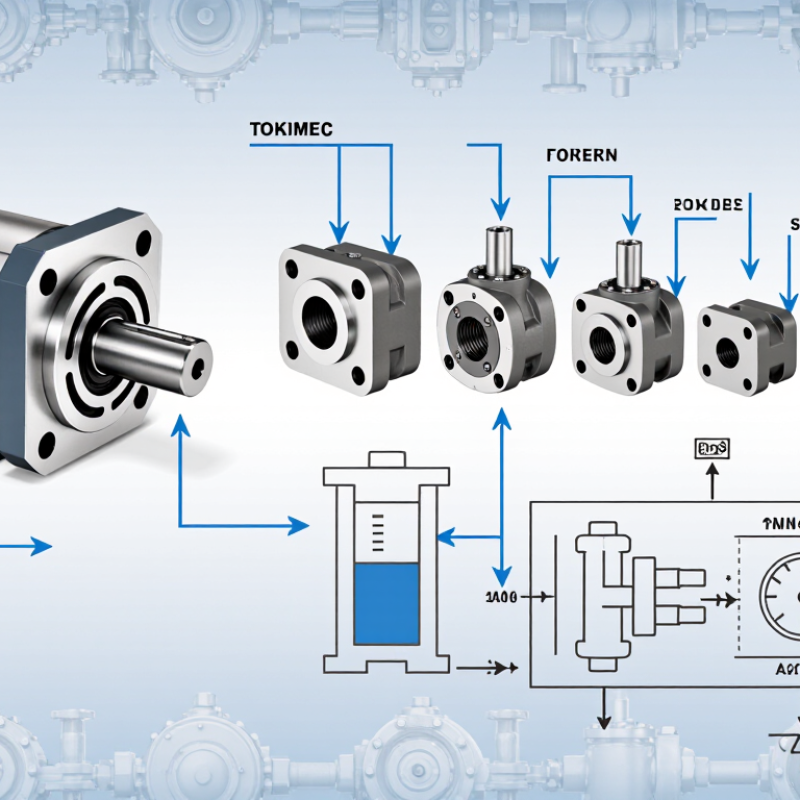
Table of Contents [Hide]
Identify the Tokimec Pump Model and Its Application
Identifying the pump model is the first step toward a reliable equivalent. Check the nameplate for the model code, displacement, rated pressure, and rotation direction. A clear photo can help preserve details when the plate is scratched or faded. Don’t guess from the housing shape alone. Similar-looking pumps may have different shaft dimensions or port layouts. Note the mounting pattern, shaft type, and inlet and outlet positions, then compare them with the service manual or a supplier’s technical drawings.
Application matters just as much as the model code. Record the machine’s operating pressure, flow needs, fluid type, and typical working temperature. A pump used for steady conveyor movement may need different control characteristics from one serving a fast-cycling press. Check the system, too: worn hoses or a restricted inlet can make a suitable replacement seem faulty. Field measurements are useful, but they are not always precise; verify critical dimensions before ordering.
Tips: Photograph the nameplate and ports, measure the shaft and mounting face, and write down the machine’s symptoms. Share those details with a qualified pump specialist. Small differences matter. A rushed match can lead to noise, heat, or poor performance, and the original specifications may not tell the whole story.





