


- Home
- A-Z Catalogue
- Products
- Valves
- Cetop
- Manual Directional Valves
- Proportional Valves
- Poppet Valves
- High-Speed Linear Servo Valves
- All High-Speed Linear Servo Valves
- Cetop 10 (NG32) Two Stage Type High Speed Linear Servo Valves – LSVHG-10
- Cetop 10 (NG32) Two Stage Type High Speed Linear Servo Valves – LSVHG-10 (With Fail-Safe)
- Cetop 8 (NG25) Two Stage Type High Speed Linear Servo Valves – LSVHG-06
- Cetop 8 (NG25) Two Stage Type High Speed Linear Servo Valves – LSVHG-06 (With Fail-Safe)
- Cetop 7 (NG16) Two Stage Type High Speed Linear Servo Valves – LSVHG-04
- Cetop 7 (NG16) Two Stage Type High Speed Linear Servo Valves – LSVHG-04 (With Fail-Safe)
- Cetop 5 (NG10) Direct Type High Speed Linear Servo Valves – LSVG-03
- Cetop 5 (NG10) OBE Type Direct Operated Linear Servo Valves – LSVG-03-EH
- Cetop 3 (NG6) OBE Type Direct Operated Linear Servo Valves – LSVG-01-EH
- Pumps
- Pressure control
- Flow Control Valves
- Pressure Control Valves
- All Pressure Control Valves
- Brake Valves
- Direct Relief Valve
- Low Noise Solenoid Controlled Relief Valves
- Low Noise Pilot Operated Relief Valves
- Pilot Operated Relief Valves
- Pressure reducing and relieving valves
- Pressure reducing and check valves
- Pressure control valves
- Remote Control Relief Valves
- Solenoid Controlled Relief Valves – BSG
- Solenoid Controlled Relief Valves – BST
- Unloading relief valves
- Check valves
- Environmental
- Valves
- Hydraulic Systems
- Power pack
- About Us
- Contact
- Blog

How to Find the Best Metal Stamping Parts in China?
Finding reliable Metal Stamping Parts in China requires more than comparing prices on a supplier website. The right partner must understand your material, drawing tolerances, production volume, and delivery expectations. Steel thickness, burr limits, hole accuracy, and surface finish can affect both performance and total cost. A professional supplier should explain these details clearly before quoting. They should also recommend suitable presses, dies, and inspection methods for your application. Ask for relevant samples, manufacturing photos, and quality records. Details matter.
A careful evaluation should include factory capability, engineering support, tooling experience, and communication speed. Look for evidence such as ISO certification, documented inspection procedures, and traceable material certificates. These documents help, but they do not prove everything. A factory visit, video audit, or independent inspection can reveal practical conditions, including machine maintenance and packing quality. Request a prototype or small trial order before approving full production. Test the parts under real operating conditions. That step may expose weaknesses early.
Price deserves attention, but the lowest quotation is rarely the safest choice. Tooling fees, material substitutions, rework, freight, and delayed shipments can change the final cost. A written agreement should define tolerances, acceptable defects, packaging, payment stages, and corrective action. No checklist is perfect. Even experienced buyers can overlook communication gaps or unclear drawings. Review the supplier’s questions carefully; thoughtful questions often show genuine technical understanding. With evidence, testing, and realistic expectations, you can select Metal Stamping Parts that remain consistent from the first batch to long-term production.
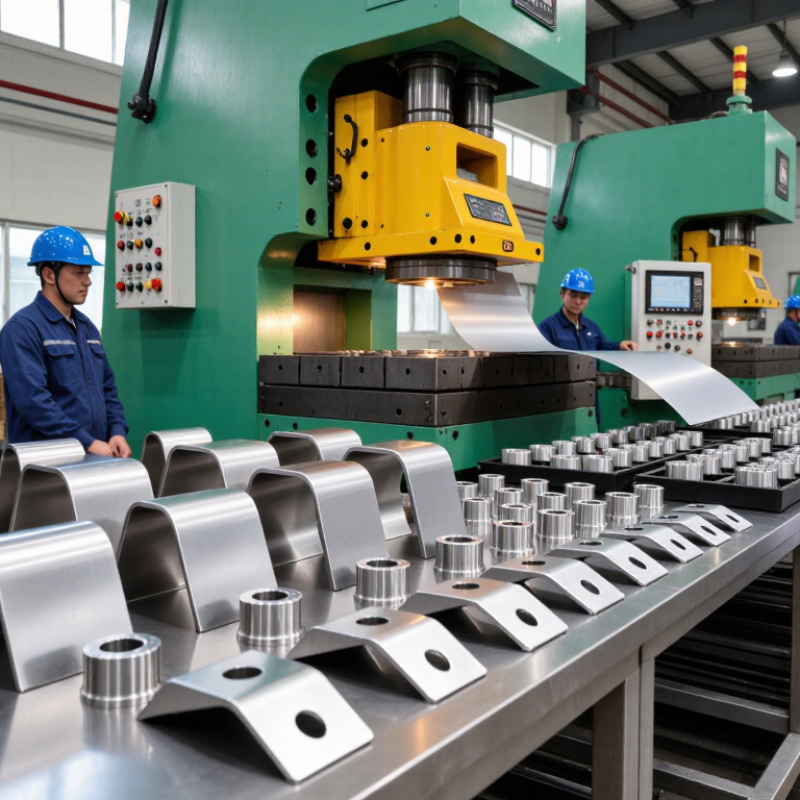
Table of Contents [Hide]
Define Your Metal Stamping Part Requirements
Define Your Metal Stamping Part Requirements
Finding suitable metal stamping parts in China starts with a precise requirement sheet. A clear drawing helps, but it rarely answers every production question. Specify the material grade, thickness, part dimensions, tolerances, and expected annual volume. Include the working environment, such as moisture, heat, vibration, or contact with other metals.
Small details matter. State the required surface finish, coating, edge condition, and acceptable burr height. If the part includes holes, bends, or deep draws, identify their critical measurements. A tolerance of ±0.05 mm may require different tooling from ±0.20 mm. Confirm whether the tolerance applies before or after surface treatment. This point is often missed.
Experienced engineers also define inspection requirements before requesting quotations. Ask for dimensional reports, material certificates, sample approval, and packaging details. Clarify who owns the tooling and how future maintenance will be handled. A supplier should explain the press capacity, die structure, production steps, and quality checkpoints in practical terms.
Leave room for testing. Initial prototypes may reveal springback, distortion, or unexpected scratches. That is useful feedback. A specification can be technically correct yet difficult to manufacture efficiently. Review it with a stamping engineer and revise unclear areas before mass production. One overlooked radius can increase tooling costs. Keep communication in writing, with revision numbers and signed drawings, so every change remains traceable.