


- Home
- A-Z Catalogue
- Products
- Valves
- Cetop
- Manual Directional Valves
- Proportional Valves
- Poppet Valves
- High-Speed Linear Servo Valves
- All High-Speed Linear Servo Valves
- Cetop 10 (NG32) Two Stage Type High Speed Linear Servo Valves – LSVHG-10
- Cetop 10 (NG32) Two Stage Type High Speed Linear Servo Valves – LSVHG-10 (With Fail-Safe)
- Cetop 8 (NG25) Two Stage Type High Speed Linear Servo Valves – LSVHG-06
- Cetop 8 (NG25) Two Stage Type High Speed Linear Servo Valves – LSVHG-06 (With Fail-Safe)
- Cetop 7 (NG16) Two Stage Type High Speed Linear Servo Valves – LSVHG-04
- Cetop 7 (NG16) Two Stage Type High Speed Linear Servo Valves – LSVHG-04 (With Fail-Safe)
- Cetop 5 (NG10) Direct Type High Speed Linear Servo Valves – LSVG-03
- Cetop 5 (NG10) OBE Type Direct Operated Linear Servo Valves – LSVG-03-EH
- Cetop 3 (NG6) OBE Type Direct Operated Linear Servo Valves – LSVG-01-EH
- Pumps
- Pressure control
- Flow Control Valves
- Pressure Control Valves
- All Pressure Control Valves
- Brake Valves
- Direct Relief Valve
- Low Noise Solenoid Controlled Relief Valves
- Low Noise Pilot Operated Relief Valves
- Pilot Operated Relief Valves
- Pressure reducing and relieving valves
- Pressure reducing and check valves
- Pressure control valves
- Remote Control Relief Valves
- Solenoid Controlled Relief Valves – BSG
- Solenoid Controlled Relief Valves – BST
- Unloading relief valves
- Check valves
- Environmental
- Valves
- Hydraulic Systems
- Power pack
- About Us
- Contact
- Blog

Essential Tips for Choosing the Best Water Rubber Hose?
Choosing the right Water Rubber Hose is crucial for various applications. A quality hose offers durability and flexibility. It can handle different tasks, from gardening to industrial use. Selecting the best one can be challenging, given the many options available.
Consider the material and construction of the Water Rubber Hose. High-quality rubber ensures longevity and resistance to wear. Look for hoses that can withstand extreme temperatures and pressures. Pay attention to the inner diameter, which affects water flow and pressure.
Moreover, think about the hose's weight. A lightweight hose is easier to maneuver but might sacrifice some durability. Also, not all hoses are created equal. Some may not perform well under harsh conditions. Prioritize hoses from reputable manufacturers, as they often provide detailed specifications and warranties. Reflect on your needs to make an informed choice.
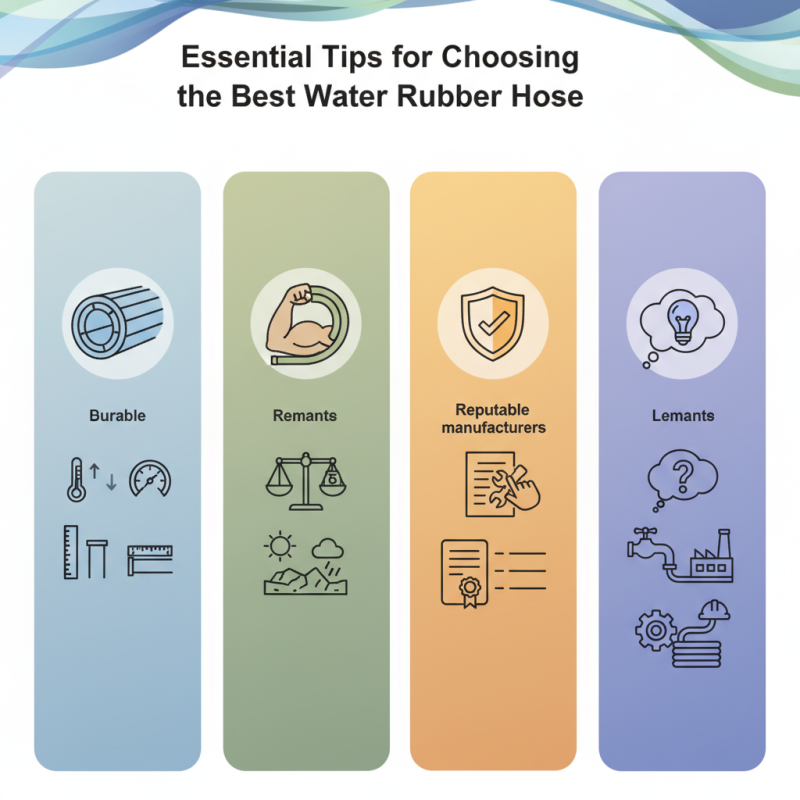
Table of Contents [Hide]
Factors to Consider When Selecting a Water Rubber Hose for Durability
When selecting a water rubber hose, consider the material. High-quality rubber ensures flexibility and durability. A hose that is too rigid can become a hassle. Look for hoses that resist wear and tear. Thicker walls typically indicate better durability. Check for UV resistance if you leave your hose outdoors.
Another factor is the size of the hose. A wider diameter allows for better water flow, but it may be heavier. Lightweight options may be easier to handle but could compromise on durability. Pay attention to fittings. Brass or stainless-steel fittings often last longer than plastic ones.
Think about the intended use. A hose meant for gardening should differ from one used for car washing. Consider the need for extra features like kink resistance. Test the hose in your hands; it should feel sturdy. If it kinks easily, it’s likely not the best choice. Reflect on your needs, and choose wisely.
Essential Tips for Choosing the Best Water Rubber Hose
| Factors | Description | Importance Level |
|---|---|---|
| Material Quality | Look for hoses made from high-quality rubber for better durability and flexibility. | High |
| Pressure Rating | Ensure the hose can withstand the pressure levels you will be using it for. | Medium |
| Diameter | Choose an appropriate diameter that fits your needs, whether for watering plants or filling pools. | Medium |
| Weight | Consider the weight of the hose for ease of handling and storage. | Low |
| Flexibility | A flexible hose is easier to maneuver and less likely to kink. | High |
| UV Resistance | UV resistant materials will help prevent degradation from sunlight exposure. | Medium |