


- Home
- A-Z Catalogue
- Products
- Valves
- Cetop
- Manual Directional Valves
- Proportional Valves
- Poppet Valves
- High-Speed Linear Servo Valves
- All High-Speed Linear Servo Valves
- Cetop 10 (NG32) Two Stage Type High Speed Linear Servo Valves – LSVHG-10
- Cetop 10 (NG32) Two Stage Type High Speed Linear Servo Valves – LSVHG-10 (With Fail-Safe)
- Cetop 8 (NG25) Two Stage Type High Speed Linear Servo Valves – LSVHG-06
- Cetop 8 (NG25) Two Stage Type High Speed Linear Servo Valves – LSVHG-06 (With Fail-Safe)
- Cetop 7 (NG16) Two Stage Type High Speed Linear Servo Valves – LSVHG-04
- Cetop 7 (NG16) Two Stage Type High Speed Linear Servo Valves – LSVHG-04 (With Fail-Safe)
- Cetop 5 (NG10) Direct Type High Speed Linear Servo Valves – LSVG-03
- Cetop 5 (NG10) OBE Type Direct Operated Linear Servo Valves – LSVG-03-EH
- Cetop 3 (NG6) OBE Type Direct Operated Linear Servo Valves – LSVG-01-EH
- Pumps
- Pressure control
- Flow Control Valves
- Pressure Control Valves
- All Pressure Control Valves
- Brake Valves
- Direct Relief Valve
- Low Noise Solenoid Controlled Relief Valves
- Low Noise Pilot Operated Relief Valves
- Pilot Operated Relief Valves
- Pressure reducing and relieving valves
- Pressure reducing and check valves
- Pressure control valves
- Remote Control Relief Valves
- Solenoid Controlled Relief Valves – BSG
- Solenoid Controlled Relief Valves – BST
- Unloading relief valves
- Check valves
- Environmental
- Valves
- Hydraulic Systems
- Power pack
- About Us
- Contact
- Blog

10 Essential Tips for Choosing the Right Hydraulic Relief Valve
Choosing the right hydraulic relief valve is crucial for maintaining system safety and efficiency. A hydraulic relief valve plays a vital role in preventing pressure build-up. It protects equipment and operators from potential hazards. However, selecting the right one can be challenging.
Consider factors like flow rate, response time, and the materials used. Different applications may require different specifications. High-pressure systems need reliable valves that can withstand extreme conditions. Inadequate choices can lead to failures, affecting productivity. Even small mistakes can have significant impacts on performance.
Investing time in research will yield better results. Consult with engineers or manufacturers for insights. Understand the specific requirements of your hydraulic system. Making informed choices is essential, yet many overlook this step. Reflect on past experiences and learn from them, to improve future decision-making.
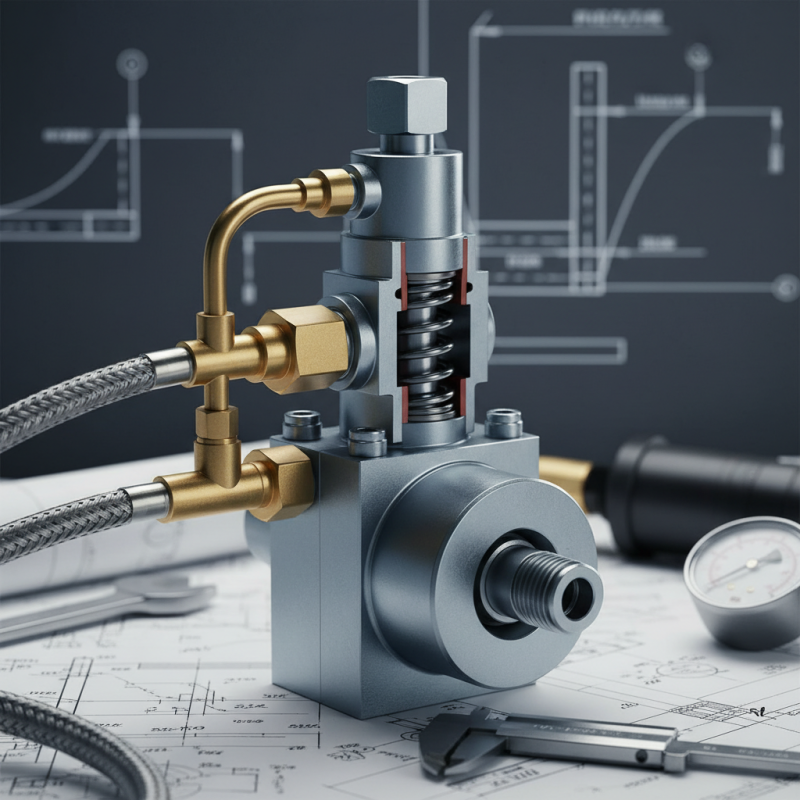
Table of Contents
[Hide]
Understanding the Role of Hydraulic Relief Valves in Systems
Hydraulic relief valves play a critical role in maintaining system safety and performance. They protect hydraulic systems from excessive pressure, which can lead to catastrophic failures. According to data from the Fluid Power Society, nearly 30% of hydraulic system failures are directly linked to improper pressure regulation. This highlights the importance of choosing the right relief valve.
Selecting the appropriate valve involves understanding its set pressure, flow capacity, and response time. A valve that doesn’t react swiftly can cause system pressure to exceed safe limits. Interestingly, a study by the National Fluid Power Association found that up to 25% of hydraulic accidents could be prevented with the correct valve selection. Users often overlook specifications like pressure drop and fluid characteristics, which can lead to inefficiencies.
Moreover, proper maintenance is essential. Even the best valves will fail if they aren’t regularly inspected. Contaminants can clog valves, affecting their operation. Statistics show that 15% of valve-related failures were caused by poor maintenance practices. Users should reflect on their maintenance routines and consider how these might impact valve performance. This awareness can result in safer and more efficient hydraulic systems.
Related Posts
-
Understanding the Importance of Hydraulic Pressure Control Valves in Modern Industrial Applications
-
7 Essential Tips for Choosing the Right Hydraulic Valve for Your Application
-
2026 Best Hydraulic Valve Innovations for Enhanced Performance?
-

Exploring the Benefits of Advanced Hydraulic Directional Valves for Efficient Fluid Control
-

Understanding the Importance of Hydraulic Flow Control Valves in Modern Industrial Applications
-
Understanding the Role of Hydraulic Valves in Modern Industrial Applications