Top Electric Stacker Lift Manufacturers in China

Choosing an Electric Stacker Lift is not just a matter of comparing lifting heights or quoted prices. Buyers must consider load capacity, aisle width, battery type, service support, and how often the machine will work each shift. A compact warehouse may need a narrow turning radius; a busy loading area may need durable wheels and dependable braking. Small details matter.

Quality expert W. Edwards Deming is widely associated with the reminder, “Quality is everyone’s responsibility.” His principle is relevant here: consistent equipment depends on design, production, inspection, and after-sales support—not one impressive specification. It is not a stacker-specific quotation, but it offers a useful way to assess manufacturers.

This guide examines leading Chinese Electric Stacker Lift manufacturers through practical criteria, including product range, customization, manufacturing capability, and support for overseas buyers. It also considers what product pages may leave unclear, such as parts availability, warranty terms, and actual operating performance. A polished brochure is not proof. Ask for clear specifications, operating videos, and references where possible.

No single supplier suits every warehouse. Some buyers prioritize a low initial cost; others need dependable service and equipment built for daily use. The comparison ahead aims to help readers ask better questions and shortlist suppliers carefully. One caveat remains: supplier information can change, so verify current details directly before making a purchase.
Top Electric Stacker Lift Manufacturers in China

What Electric Stacker Lifts Are and How They Work

Top Electric Stacker Lift Manufacturers in China

What Electric Stacker Lifts Are and How They Work

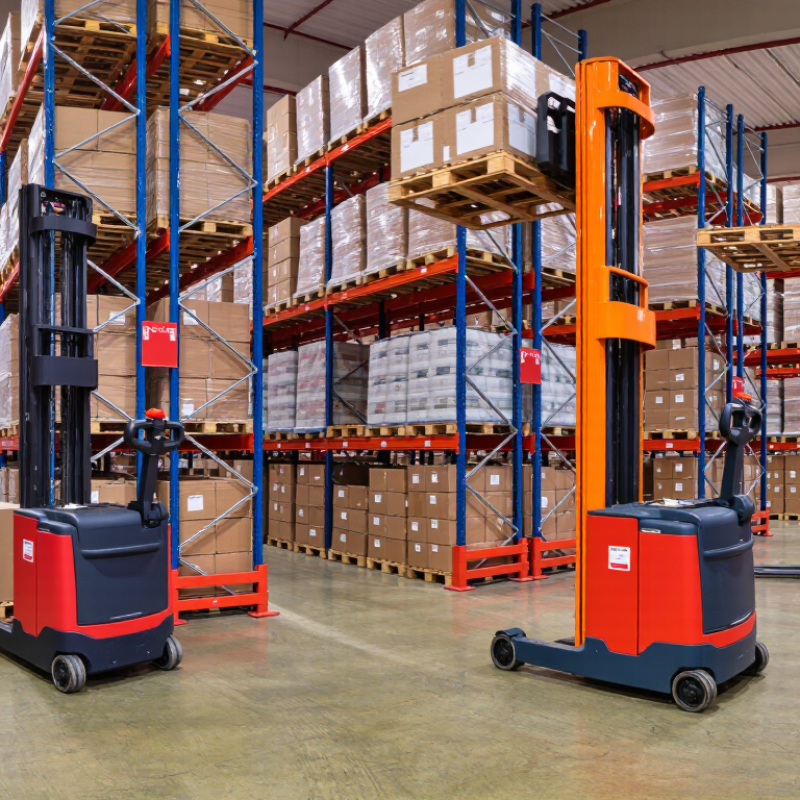
An electric stacker lift is a powered warehouse truck that raises and moves palletized goods. Its compact frame suits narrow aisles, stockrooms, and loading areas where a larger forklift may be difficult to maneuver. The operator guides the unit using a tiller, while an electric motor drives the wheels and lifting mechanism. Models differ in capacity, lift height, and steering design, so the right choice depends on the actual workplace.

To lift a load, the forks slide beneath the pallet. A hydraulic system, powered by the battery, raises the mast and forks; the drive motor moves the stacker across the floor. Controls usually let the operator lift, lower, and travel at a manageable pace. The principle is simple. Safe performance is not automatic. Uneven floors, damaged pallets, or an off-center load can affect stability. Check the rated capacity and load position, and follow the equipment instructions. A quick glance at the floor is easy to skip, but it matters.

Tips: Keep the load low while traveling, and raise it only when placing or retrieving goods. Check the forks, wheels, controls, and battery before use. Leave room to turn, and avoid sudden starts or stops. If the steering feels inconsistent, pause and report it rather than guessing.


China’s Electric Stacker Lift Manufacturing Landscape

China’s electric stacker lift manufacturing landscape combines metal fabrication, hydraulic systems, electric drives, and control components. Factories may produce compact walk-behind models for narrow aisles, alongside units with higher lift heights for busy warehouses. A typical stacker’s performance depends on more than its rated capacity. Mast rigidity, fork dimensions, turning radius, and battery access all affect daily use.

Manufacturers commonly adapt designs for different floor conditions and operating shifts. Buyers should compare rated load at specific lift heights, not just headline capacity. Ask for details on battery chemistry, charging time, service intervals, and replacement-part availability. Practical checks help. A test on the actual floor can reveal turning limits or uneven lowering that a brochure may not show.

Production quality varies between facilities, and customization can make direct comparisons difficult. Still, consistent welding, protected wiring, and clear inspection records are useful signs of process control. Not every specification tells the whole story. For procurement teams, sample testing and documented acceptance criteria can reduce uncertainty, especially when equipment will work across multiple shifts. Even small differences in mast deflection or control response may matter over a long workday.

Leading Electric Stacker Lift Manufacturers in China

Leading electric stacker lift manufacturers in China should demonstrate more than a broad product catalogue. Buyers can compare rated capacity, maximum lift height, turning radius, and battery specifications against the actual warehouse layout. A 1.2-tonne load behaves differently on a smooth aisle than on a sloped loading area. Ask how the manufacturer tests load stability and braking, and request clear operating limits for each model. Details matter.

A dependable supplier should provide drawings, manuals, spare-parts information, and practical operator training. Check whether the fork dimensions fit your pallets and whether the mast can pass through doorways and low-clearance areas. Ask about battery charging time and expected service intervals under your operating schedule. A factory visit or live product inspection can help verify assembly quality, but photographs alone are not enough. Even a careful checklist can miss a mismatch between the machine and daily workflow; that deserves a second look.

Tips: Share your pallet size, aisle width, floor condition, and shift pattern before requesting a quotation. Compare written specifications, not just headline capacity. Ask who handles troubleshooting and how replacement parts are identified.

Top Electric Stacker Lift Manufacturers in China - Leading Electric Stacker Lift Manufacturers in China

Typical product specifications and manufacturing considerations for electric stackers available from Chinese suppliers. Ranges are indicative; specifications vary by model and configuration.

Comparison Dimension Typical Market Specification Why It Matters
Rated load capacity Approximately 1,000–2,000 kg for many walk-behind models The rated capacity must meet the load requirement at the specified load center and lift height.
Maximum lift height Common configurations range from about 1.6 m to 5.5 m Confirm both the required rack height and the capacity available at that height.
Power system Battery-electric drive and lift; 24 V systems are common Battery voltage, capacity, and charging arrangements affect runtime and operating schedules.
Battery type Lead-acid and lithium-ion options are available, depending on model Compare charging time, maintenance needs, battery replacement, and compatibility with the charger.
Fork dimensions Fork length around 1,070–1,150 mm is common; other sizes depend on pallet requirements Check fork length, width, and spacing against the pallets and loads in use.
Travel speed Often approximately 4–6 km/h, depending on model and operating condition Actual speed may vary with load, floor conditions, and safety settings.
Turning radius Approximately 1,350–1,700 mm for many compact walk-behind designs Use the model-specific turning radius to assess maneuverability in aisles and work areas.
Working aisle width Frequently around 2,200–2,600 mm, depending on pallet size and truck design Confirm the aisle calculation for the actual pallet orientation and required clearance.
Safety and control features Common options include emergency stop, anti-roll-back protection, and controlled lowering Verify which features are standard, optional, and appropriate for the operating environment.
Customization and support Configurations may be available for mast height, battery, forks, and regional electrical requirements Before ordering, confirm drawings, spare-parts availability, warranty terms, and applicable compliance documents.

Note: Figures are general indicative ranges, not specifications for any particular manufacturer or model. Always verify the current datasheet and rated-capacity chart before purchase.

How Chinese Electric Stacker Models Compare by Key Specifications

Chinese electric stacker models are best compared by working limits, not headline capacity alone. Many compact units are rated around 1–2 tonnes, but capacity can fall as the forks rise. Check the load chart at the height you actually use. A 1,500-kilogram rating at low lift may not apply near the top of the mast. That matters.

Lift heights often span roughly 1.6 to 5.5 metres, depending on mast design. Measure the lowest doorway and highest rack beam before comparing models. Then check collapsed mast height, fork length, and outside fork width against your pallets. Turning radius and overall width affect whether a unit can work in narrow aisles. Small differences show up quickly on a busy floor.

Battery type and capacity shape daily operating time and charging needs. Lead-acid batteries may suit predictable shifts, while lithium options can support shorter charging breaks; verify charger compatibility and runtime under load. Travel speed, lift speed, and gradeability also deserve attention, but published figures may come from ideal test conditions. Ask for the rated load center and a configuration-specific specification sheet. A neat table can still miss a real floor’s uneven joints, tight corners, or long travel routes. Recheck those details before choosing.

Top Electric Stacker Lift Manufacturers in China: Comparing Common Specifications

Representative electric stacker configurations compared by rated load capacity and maximum lift height. Values describe commonly offered specifications, not manufacturer averages; actual specifications vary by model and configuration.

Walkie, straddle-leg, counterbalanced, and reach-type stackers cover different operating needs. Compare both capacity and lift height against your load, aisle width, and storage-rack requirements.

How to Evaluate and Select an Electric Stacker Supplier in China

Top Electric Stacker Lift Manufacturers in China

How to Evaluate and Select an Electric Stacker Supplier in China

Choosing a supplier starts with the actual load, not the brochure headline. Check rated capacity at your required lift height, load center, aisle width, and floor condition. Ask for the residual-capacity chart and a witnessed load test. Numbers matter. China’s 2023 logistics report from the China Federation of Logistics & Purchasing recorded total social logistics value of 352.4 trillion yuan, up 5.2% year on year. That broad growth is not a stacker-demand forecast, but it underlines why warehouse uptime and dependable service deserve scrutiny.

Compare battery type, charging time, expected operating shifts, and warranty exclusions. Request written details on spare-parts availability and typical service response times in your region. For pedestrian-operated trucks, ask how the model is designed to meet relevant safety requirements, including ISO 3691-5. Review manuals, inspection records, and test documentation; polished paperwork alone is not proof of consistent production quality.

Visit the factory or arrange a live inspection when possible. Watch a unit lift and lower a real load, turn in a representative aisle, and brake on your floor surface. Check welds, mast movement, controls, and charger compatibility. Get the delivery configuration and after-sales commitments in writing. A supplier may answer quickly before the order; that does not guarantee quick support afterward. I would verify it.




