


- Home
- A-Z Catalogue
- Products
- Valves
- Cetop
- Manual Directional Valves
- Proportional Valves
- Poppet Valves
- High-Speed Linear Servo Valves
- All High-Speed Linear Servo Valves
- Cetop 10 (NG32) Two Stage Type High Speed Linear Servo Valves – LSVHG-10
- Cetop 10 (NG32) Two Stage Type High Speed Linear Servo Valves – LSVHG-10 (With Fail-Safe)
- Cetop 8 (NG25) Two Stage Type High Speed Linear Servo Valves – LSVHG-06
- Cetop 8 (NG25) Two Stage Type High Speed Linear Servo Valves – LSVHG-06 (With Fail-Safe)
- Cetop 7 (NG16) Two Stage Type High Speed Linear Servo Valves – LSVHG-04
- Cetop 7 (NG16) Two Stage Type High Speed Linear Servo Valves – LSVHG-04 (With Fail-Safe)
- Cetop 5 (NG10) Direct Type High Speed Linear Servo Valves – LSVG-03
- Cetop 5 (NG10) OBE Type Direct Operated Linear Servo Valves – LSVG-03-EH
- Cetop 3 (NG6) OBE Type Direct Operated Linear Servo Valves – LSVG-01-EH
- Pumps
- Pressure control
- Flow Control Valves
- Pressure Control Valves
- All Pressure Control Valves
- Brake Valves
- Direct Relief Valve
- Low Noise Solenoid Controlled Relief Valves
- Low Noise Pilot Operated Relief Valves
- Pilot Operated Relief Valves
- Pressure reducing and relieving valves
- Pressure reducing and check valves
- Pressure control valves
- Remote Control Relief Valves
- Solenoid Controlled Relief Valves – BSG
- Solenoid Controlled Relief Valves – BST
- Unloading relief valves
- Check valves
- Environmental
- Valves
- Hydraulic Systems
- Power pack
- About Us
- Contact
- Blog

What Is Drone Jamming and Is It Legal?
Drone Jamming refers to disrupting the radio signals a drone uses for control, communication, or navigation. In simple terms, interference may interrupt a connection or affect a drone’s ability to respond. The outcome is not always predictable. A drone might hover, land, continue on its route, or behave differently depending on its design and conditions. The risks are real. A disrupted aircraft could endanger people, damage property, or interfere with nearby communications.
Whether Drone Jamming is legal depends on the country, the circumstances, and who is using the equipment. In many places, transmitting interference is tightly restricted, even when the intention is to protect a home or event. Context matters. Permission to manage a site does not necessarily include permission to interfere with radio signals. Rules can also differ for public agencies and authorized operators, so broad claims about legality are unreliable. This article introduces the technology, explains why its effects deserve careful attention, and outlines the legal questions readers should check with relevant authorities. It also distinguishes signal jamming from safer, lawful responses, such as documenting a concern, contacting local officials, or using approved site-security procedures. The distinction can feel frustrating when a drone seems intrusive. Still, acting on an assumption can create greater risks than the original problem.
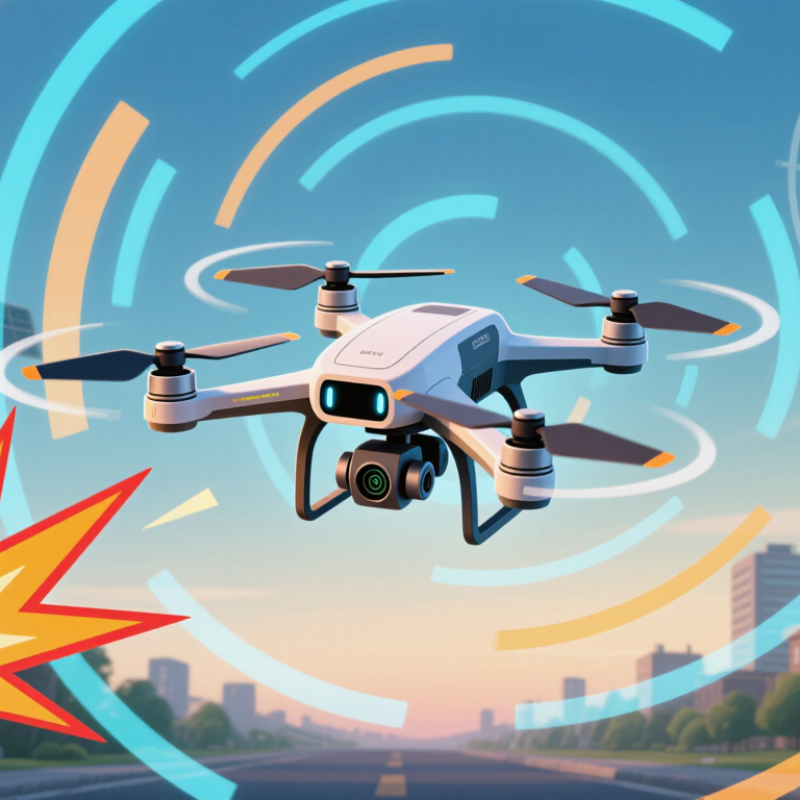
Table of Contents [Hide]
What Drone Jamming Means
Drone jamming means disrupting the radio signals a drone uses to communicate or navigate. A pilot may see a lost-link warning while the aircraft stops responding to commands. Some drones may hover, return, or land, depending on their design and settings. Others may behave differently. The outcome is not always predictable.
Jamming is different from simply detecting a drone. Detection observes or identifies activity; jamming interferes with a signal. That distinction matters. A device that appears to affect one aircraft could also disrupt nearby communications or navigation systems. In a controlled safety test, trained professionals assess those risks and follow applicable authorization requirements. Ordinary users should not attempt to interfere with drone signals. The phrase can sound simple, but the real-world effects are not. Even careful explanations can miss an important detail: signal conditions, aircraft design, and surroundings all influence what happens.





