


- Home
- A-Z Catalogue
- Products
- Valves
- Cetop
- Manual Directional Valves
- Proportional Valves
- Poppet Valves
- High-Speed Linear Servo Valves
- All High-Speed Linear Servo Valves
- Cetop 10 (NG32) Two Stage Type High Speed Linear Servo Valves – LSVHG-10
- Cetop 10 (NG32) Two Stage Type High Speed Linear Servo Valves – LSVHG-10 (With Fail-Safe)
- Cetop 8 (NG25) Two Stage Type High Speed Linear Servo Valves – LSVHG-06
- Cetop 8 (NG25) Two Stage Type High Speed Linear Servo Valves – LSVHG-06 (With Fail-Safe)
- Cetop 7 (NG16) Two Stage Type High Speed Linear Servo Valves – LSVHG-04
- Cetop 7 (NG16) Two Stage Type High Speed Linear Servo Valves – LSVHG-04 (With Fail-Safe)
- Cetop 5 (NG10) Direct Type High Speed Linear Servo Valves – LSVG-03
- Cetop 5 (NG10) OBE Type Direct Operated Linear Servo Valves – LSVG-03-EH
- Cetop 3 (NG6) OBE Type Direct Operated Linear Servo Valves – LSVG-01-EH
- Pumps
- Pressure control
- Flow Control Valves
- Pressure Control Valves
- All Pressure Control Valves
- Brake Valves
- Direct Relief Valve
- Low Noise Solenoid Controlled Relief Valves
- Low Noise Pilot Operated Relief Valves
- Pilot Operated Relief Valves
- Pressure reducing and relieving valves
- Pressure reducing and check valves
- Pressure control valves
- Remote Control Relief Valves
- Solenoid Controlled Relief Valves – BSG
- Solenoid Controlled Relief Valves – BST
- Unloading relief valves
- Check valves
- Environmental
- Valves
- Hydraulic Systems
- Power pack
- About Us
- Contact
- Blog

What Is a CNC Multifunctional Side Hole Drill?
A CNC Multifunctional Side Hole Drill is a specialized machine for drilling accurate holes along the edges and sides of furniture panels. It is commonly used in cabinet, wardrobe, office furniture, and modular woodworking production. Unlike a basic vertical drilling machine, it can process several hole directions within one programmed setup.
The machine uses computer-controlled movement, drilling units, clamps, and positioning systems. Operators can create repeatable dowel holes, confirmat holes, connector holes, and other side-hole patterns. A typical panel enters the working area, is positioned against reference points, and is secured before drilling begins. The spindle then follows the programmed coordinates with controlled speed and depth.
This improves consistency.
In practical production, accuracy depends on more than the CNC system. Tool sharpness, panel thickness, clamping pressure, and software settings all influence the final result. Experienced operators check the first panel carefully. They measure hole spacing, inspect the edge surface, and compare the result with the technical drawing. A small setup error may affect an entire batch.
Some descriptions make these machines sound completely automatic. That explanation is too simple. Material variation, dust, worn drills, and incorrect data can still create defects. Regular maintenance and sensible quality checks remain necessary. A reliable CNC Multifunctional Side Hole Drill should support skilled work, not replace careful judgment. Its real value appears when precision, repeatability, and efficient workflow must operate together.
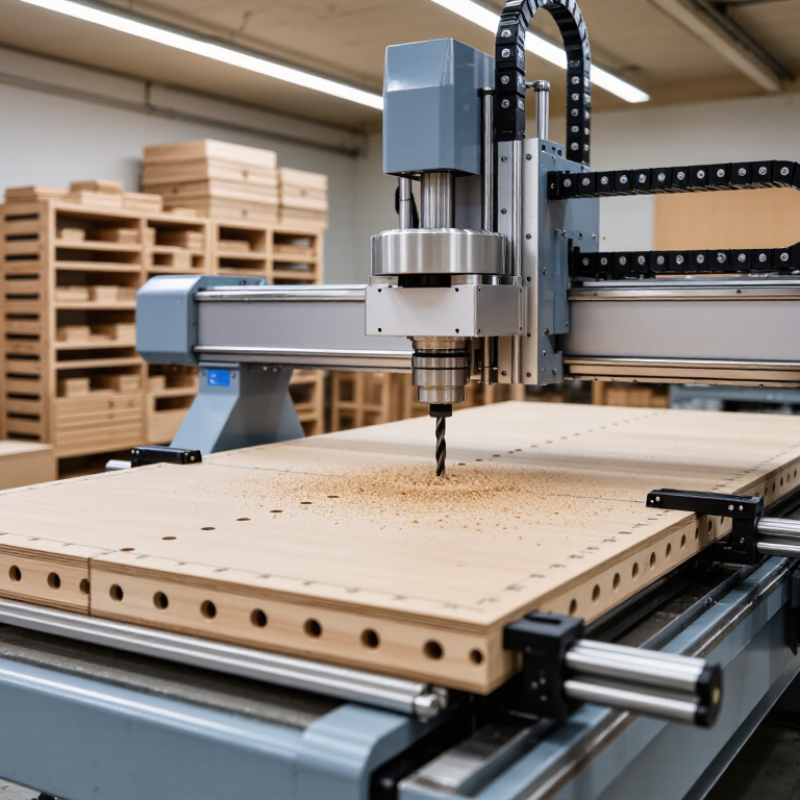
Table of Contents [Hide]
Definition and Core Purpose of a CNC Multifunctional Side Hole Drill
What Is a CNC Multifunctional Side Hole Drill?
Definition and Core Purpose of a CNC Multifunctional Side Hole Drill
A CNC multifunctional side hole drill is a computer-controlled machine for drilling holes into the edges or sides of panels. It follows programmed coordinates instead of relying on manual measurement. The machine may also perform grooving, routing, or simple shaping, depending on its configuration. Its core purpose is accurate lateral processing in furniture panels, cabinets, doors, and engineered boards.
In practical production, an operator loads a panel onto the support table and secures it with clamps. The control system reads the designed toolpath, while sensors help confirm positioning and workpiece presence. A drilling unit then creates horizontal holes for dowels, connectors, or concealed fittings. Correct speed, feed rate, and tool selection reduce tear-out around the hole. Clean edges matter.
The machine improves repeatability and reduces physical marking work. It also helps maintain consistent hole depth across multiple panels. However, it does not remove every production risk. A poorly calibrated spindle can shift the hole position by a small but costly amount. Dust buildup may also affect sensors and clamping surfaces. Regular cleaning, tool inspection, and test drilling remain essential. I would not trust the first finished panel without checking its dimensions manually. That small delay often prevents a larger batch error.
What Is a CNC Multifunctional Side Hole Drill? - Definition and Core Purpose of a CNC Multifunctional Side Hole Drill
| Data Dimension | Typical Definition or Value | Practical Meaning |
|---|---|---|
| Equipment Definition | A computer numerical control machine designed to drill holes into the side, edge, or end faces of a workpiece. | It uses programmed tool paths to position the workpiece and drilling unit accurately without relying on manual layout and repeated hand drilling. |
| Core Purpose | To produce accurate side holes and related connection holes efficiently and consistently. | Side holes are commonly required for dowels, screws, shelf pins, connector fittings, and other assembly components. |
| Typical Workpieces | Flat panels, cabinet components, furniture boards, doors, drawer parts, and selected solid-wood components. | The machine is especially useful when holes must be positioned on panel edges or vertical faces that are difficult to process on a standard top-surface drilling machine. |
| Common Materials | Particleboard, MDF, plywood, laminated panels, solid wood, and certain engineered wood products. | Tool selection, cutting speed, clamping force, and drilling parameters should be adjusted according to material density and surface finish. |
| Typical Drilling Operations | Side drilling, end-face drilling, horizontal drilling, through-hole drilling, blind-hole drilling, and repeated hole-pattern processing. | Several operations can be completed in one programmed cycle, reducing manual repositioning between processes. |
| Multifunctional Capability | Depending on its configuration, the machine may combine vertical drilling, horizontal drilling, grooving, routing, or saw-cutting functions. | The exact functions depend on the spindle arrangement, tool stations, software, and optional processing units installed on the machine. |
| Numerical Control | Computer-controlled movement based on digital coordinates, machining programs, and selected drilling parameters. | Digital control enables repeatable hole locations and makes it easier to reproduce the same design across multiple workpieces. |
| Typical Hole Diameter Range | Approximately 3–15 mm for many furniture and panel-processing applications, subject to tooling and spindle configuration. | Smaller diameters are often used for shelf pins and dowels, while larger diameters may be used for fittings or specialized connections. |
| Hole Depth Control | Blind-hole depth is controlled through programmed drilling depth and tool movement. | Accurate depth control helps prevent breakthrough on thin panels and ensures proper seating of dowels, screws, and hardware. |
| Positioning Accuracy | Common industrial configurations may achieve positioning accuracy in the approximate range of ±0.05–0.15 mm, depending on machine design, calibration, and operating conditions. | Actual results depend on mechanical structure, servo systems, tool condition, workpiece stability, temperature, and maintenance. |
| Workpiece Clamping | Pneumatic or mechanical clamping is commonly used to hold panels securely during drilling. | Stable clamping minimizes movement, vibration, hole-position errors, and surface damage during horizontal drilling. |
| Tooling | Common tools include twist drills, dowel drills, brad-point drills, router bits, and specialized boring tools. | The tool type and cutting geometry should match the material, hole diameter, hole depth, and required edge quality. |
| Production Benefit | Automated positioning and repeatable drilling reduce manual marking, setup time, and operator-dependent variation. | This is valuable for batch production, modular furniture, and components with multiple hole patterns. |
| Quality Factors | Hole location, diameter, depth, perpendicularity, edge breakout, and surface finish are the main quality indicators. | Consistent quality requires correct tool selection, suitable feed and speed settings, secure clamping, and regular calibration. |
| Typical Workflow | Prepare the digital drawing, set the workpiece reference, load tools, clamp the panel, run the program, and inspect the processed holes. | A standardized workflow improves production consistency and reduces errors caused by manual measurement or repeated repositioning. |
| Suitable Production Scale | Suitable for prototypes, small batches, customized furniture, and continuous production, depending on automation level. | Machines with automatic loading, unloading, tool changing, or barcode-based program selection are better suited to higher production volumes. |
| Main Limitations | Performance is affected by workpiece size, material variation, tool wear, clamping quality, programming accuracy, and machine configuration. | A multifunctional side hole drill is not a universal replacement for every machining center; its capabilities must match the required workpiece and operations. |
| Safety Requirements | Operators should use guarding, emergency-stop systems, dust extraction, correct workholding, and appropriate personal protective equipment. | Safe operation reduces risks from rotating tools, flying chips, dust, unexpected movement, and unsecured workpieces. |
| Best Application | Furniture and panel components requiring accurate, repeated holes on edges, sides, or end faces. | The machine is most effective when the same or similar hole patterns must be produced quickly with consistent assembly results. |
Note: Performance ranges are typical reference values for this category of equipment rather than universal specifications. Actual drilling diameter, accuracy, speed, workpiece size, and available functions depend on the machine configuration, tooling, material, software, and production requirements.