


- Home
- A-Z Catalogue
- Products
- Valves
- Cetop
- Manual Directional Valves
- Proportional Valves
- Poppet Valves
- High-Speed Linear Servo Valves
- All High-Speed Linear Servo Valves
- Cetop 10 (NG32) Two Stage Type High Speed Linear Servo Valves – LSVHG-10
- Cetop 10 (NG32) Two Stage Type High Speed Linear Servo Valves – LSVHG-10 (With Fail-Safe)
- Cetop 8 (NG25) Two Stage Type High Speed Linear Servo Valves – LSVHG-06
- Cetop 8 (NG25) Two Stage Type High Speed Linear Servo Valves – LSVHG-06 (With Fail-Safe)
- Cetop 7 (NG16) Two Stage Type High Speed Linear Servo Valves – LSVHG-04
- Cetop 7 (NG16) Two Stage Type High Speed Linear Servo Valves – LSVHG-04 (With Fail-Safe)
- Cetop 5 (NG10) Direct Type High Speed Linear Servo Valves – LSVG-03
- Cetop 5 (NG10) OBE Type Direct Operated Linear Servo Valves – LSVG-03-EH
- Cetop 3 (NG6) OBE Type Direct Operated Linear Servo Valves – LSVG-01-EH
- Pumps
- Pressure control
- Flow Control Valves
- Pressure Control Valves
- All Pressure Control Valves
- Brake Valves
- Direct Relief Valve
- Low Noise Solenoid Controlled Relief Valves
- Low Noise Pilot Operated Relief Valves
- Pilot Operated Relief Valves
- Pressure reducing and relieving valves
- Pressure reducing and check valves
- Pressure control valves
- Remote Control Relief Valves
- Solenoid Controlled Relief Valves – BSG
- Solenoid Controlled Relief Valves – BST
- Unloading relief valves
- Check valves
- Environmental
- Valves
- Hydraulic Systems
- Power pack
- About Us
- Contact
- Blog

How to Choose Vacuum Insulated Panels for Walls in 2026?
Choosing Vacuum Insulated Panels For Walls in 2026 starts with the wall itself, not a product brochure. Climate, available space, framing, and the building’s moisture strategy all affect whether a panel is suitable. Vacuum insulation can provide strong thermal resistance in a relatively thin profile, but performance depends on the complete wall assembly. A panel’s laboratory rating does not automatically describe how the finished wall will perform.
Small details matter. Compare declared thermal performance, dimensions, edge conditions, facing materials, and installation requirements. Check whether product data reflects the panel’s age and expected service conditions; the vacuum barrier can be vulnerable to punctures during handling or construction. Ask suppliers how damaged panels are identified and replaced. Also confirm compatibility with the chosen cladding, air-control layers, and fire-safety design. A low quoted price may not include careful packaging, specialist installation, or replacement panels. That matters.
Before selecting a system, review project drawings with a qualified building professional and request current technical documentation from the manufacturer. Consider thermal bridges at joints, corners, windows, and fixings, since these can reduce whole-wall performance. Installation quality is not a footnote. It is part of the insulation strategy. This guide will help compare the practical trade-offs, questions, and evidence behind different options. No panel suits every wall. A careful decision may still involve compromises, and it is worth recording why a chosen solution fits the project.
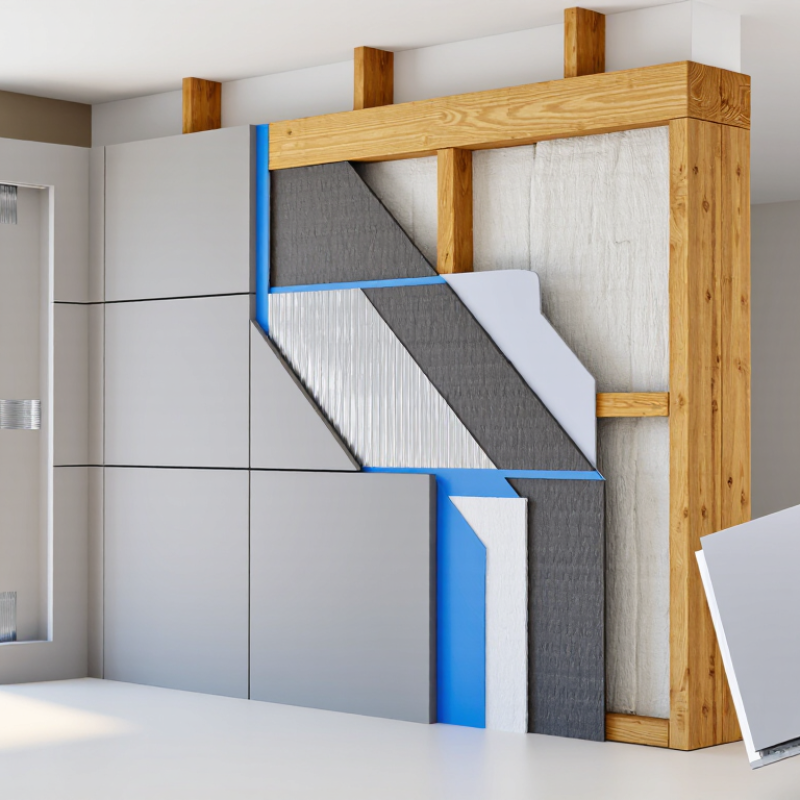
Table of Contents [Hide]
Define the Wall’s Thermal and Structural Requirements
Begin with the wall’s performance target, not the panel thickness. Identify the required U-value or R-value for the whole assembly, then account for climate, framing, windows, and junctions. A panel’s center value can look reassuring. Edges and joints may still create heat-loss paths.
Next, define what the wall must physically support. Note cladding weight, wind pressure, impact exposure, and fixing locations. Vacuum insulated panels are not automatically structural elements. Confirm documented pressure limits and support details with the supplier and project engineer. Keep fasteners clear of the panel core; one puncture can sharply reduce its insulating performance. Small detail. Big consequence.
Check practical constraints before choosing a panel size. Measure cavity depth, corners, and openings carefully, since panels are difficult to cut on site. Review edge details, installation tolerances, and how the assembly controls moisture and condensation. Request aged thermal-performance data, not just a best-case center value. A neat spreadsheet can still miss a cold bridge at a window reveal. I would pause there, even if the schedule feels tight.





