


- Home
- A-Z Catalogue
- Products
- Valves
- Cetop
- Manual Directional Valves
- Proportional Valves
- Poppet Valves
- High-Speed Linear Servo Valves
- All High-Speed Linear Servo Valves
- Cetop 10 (NG32) Two Stage Type High Speed Linear Servo Valves – LSVHG-10
- Cetop 10 (NG32) Two Stage Type High Speed Linear Servo Valves – LSVHG-10 (With Fail-Safe)
- Cetop 8 (NG25) Two Stage Type High Speed Linear Servo Valves – LSVHG-06
- Cetop 8 (NG25) Two Stage Type High Speed Linear Servo Valves – LSVHG-06 (With Fail-Safe)
- Cetop 7 (NG16) Two Stage Type High Speed Linear Servo Valves – LSVHG-04
- Cetop 7 (NG16) Two Stage Type High Speed Linear Servo Valves – LSVHG-04 (With Fail-Safe)
- Cetop 5 (NG10) Direct Type High Speed Linear Servo Valves – LSVG-03
- Cetop 5 (NG10) OBE Type Direct Operated Linear Servo Valves – LSVG-03-EH
- Cetop 3 (NG6) OBE Type Direct Operated Linear Servo Valves – LSVG-01-EH
- Pumps
- Pressure control
- Flow Control Valves
- Pressure Control Valves
- All Pressure Control Valves
- Brake Valves
- Direct Relief Valve
- Low Noise Solenoid Controlled Relief Valves
- Low Noise Pilot Operated Relief Valves
- Pilot Operated Relief Valves
- Pressure reducing and relieving valves
- Pressure reducing and check valves
- Pressure control valves
- Remote Control Relief Valves
- Solenoid Controlled Relief Valves – BSG
- Solenoid Controlled Relief Valves – BST
- Unloading relief valves
- Check valves
- Environmental
- Valves
- Hydraulic Systems
- Power pack
- About Us
- Contact
- Blog

How to Choose Tungsten Tiles for Industrial Use?
Choosing Tungsten Tiles for industrial use is not simply a matter of selecting the heaviest or hardest option. Their high density and useful wear resistance can make them suitable for demanding equipment, shielding assemblies, and high-temperature applications. Yet performance depends on the job. A tile that works well in a compact fixture may be unsuitable where impact, vibration, or repeated thermal cycling is present.
Start with the operating conditions. Record the expected temperature, contact forces, exposure to wear, and available installation space. Then compare tile dimensions, thickness, flatness, and tolerance requirements with the equipment drawing. Small variations matter. A tile that is slightly oversized may not fit; one that is too thin may not provide the intended service life. Tungsten grades and compositions also differ, so ask suppliers for material specifications rather than relying on a product name alone.
Mounting deserves equal attention. Consider whether the tiles will be bonded, mechanically retained, or integrated into a larger assembly. Check edge quality and surface finish, especially where tiles must sit closely together. Request inspection records and relevant test data, and confirm that the documentation matches the supplied batch. These checks do not guarantee perfect performance. They do make comparisons more reliable.
There is no universal best choice. Sometimes the practical answer is less obvious than the catalog suggests. A thoughtful selection balances material properties, fit, installation method, and service conditions. This guide explains how to assess those factors and ask better questions before specifying Tungsten Tiles for industrial use.
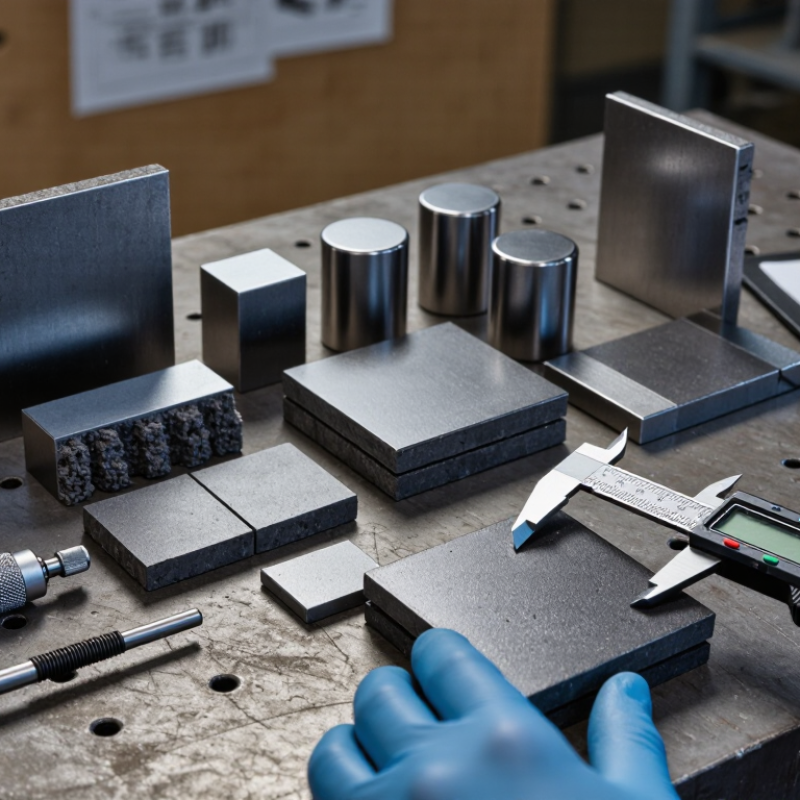
Table of Contents [Hide]
Industrial Applications and Performance Requirements for Tungsten Tiles
Industrial tungsten tiles serve demanding roles in furnace zones, high-density shielding assemblies, and equipment exposed to concentrated heat or wear. Selection should start with the real operating conditions: temperature cycles, contact pressure, impact, and chemical exposure. Tungsten’s high density and heat tolerance are useful, but they do not make every tile suitable for every process. That matters.
Tile thickness, dimensions, and mounting method affect performance as much as the material itself. In a hot chamber, uneven heating can stress joints and create local gaps. For shielding installations, seams and tile placement need careful review because small openings can reduce coverage. Tungsten can also be brittle, so unsupported edges or rough handling may lead to chipping. Heavy, too.
Check material composition, tolerances, and test documentation against the application’s requirements. A supplier’s data sheet is a starting point, not proof that a design will work under your exact cycle. A small trial installation can reveal fit or thermal problems before a full build. I would not assume a thicker tile is automatically safer; added mass can increase support loads and complicate installation. Revisit the design after inspecting worn surfaces and joints. Industrial conditions rarely match the neat version on paper.





