


- Home
- A-Z Catalogue
- Products
- Valves
- Cetop
- Manual Directional Valves
- Proportional Valves
- Poppet Valves
- High-Speed Linear Servo Valves
- All High-Speed Linear Servo Valves
- Cetop 10 (NG32) Two Stage Type High Speed Linear Servo Valves – LSVHG-10
- Cetop 10 (NG32) Two Stage Type High Speed Linear Servo Valves – LSVHG-10 (With Fail-Safe)
- Cetop 8 (NG25) Two Stage Type High Speed Linear Servo Valves – LSVHG-06
- Cetop 8 (NG25) Two Stage Type High Speed Linear Servo Valves – LSVHG-06 (With Fail-Safe)
- Cetop 7 (NG16) Two Stage Type High Speed Linear Servo Valves – LSVHG-04
- Cetop 7 (NG16) Two Stage Type High Speed Linear Servo Valves – LSVHG-04 (With Fail-Safe)
- Cetop 5 (NG10) Direct Type High Speed Linear Servo Valves – LSVG-03
- Cetop 5 (NG10) OBE Type Direct Operated Linear Servo Valves – LSVG-03-EH
- Cetop 3 (NG6) OBE Type Direct Operated Linear Servo Valves – LSVG-01-EH
- Pumps
- Pressure control
- Flow Control Valves
- Pressure Control Valves
- All Pressure Control Valves
- Brake Valves
- Direct Relief Valve
- Low Noise Solenoid Controlled Relief Valves
- Low Noise Pilot Operated Relief Valves
- Pilot Operated Relief Valves
- Pressure reducing and relieving valves
- Pressure reducing and check valves
- Pressure control valves
- Remote Control Relief Valves
- Solenoid Controlled Relief Valves – BSG
- Solenoid Controlled Relief Valves – BST
- Unloading relief valves
- Check valves
- Environmental
- Valves
- Hydraulic Systems
- Power pack
- About Us
- Contact
- Blog

How to Choose Thermal Break Aluminum System Windows?
Choosing Thermal Break Aluminum System Windows is not just a matter of picking a frame color or comparing prices. The right system must suit the building’s climate, glazing, opening style, and installation details. A thermal break—a low-conductivity barrier between the inner and outer aluminum profiles—helps reduce heat transfer through the frame. But it cannot compensate for poor glass or careless fitting.
Dr. Stephen Selkowitz, a building-energy researcher known for his work on high-performance windows, has studied how window components affect energy performance. A practical paraphrase of his research is: “A window performs as a system, not as a frame alone.” That distinction matters. A slim profile may look elegant, yet its thermal performance depends on the break material, frame geometry, seals, glazing, and the quality of installation. Ask for tested whole-window performance data, not just a claim about the frame.
Look closely. Request the U-factor, air-leakage results, and relevant test reports for the exact configuration you plan to buy. Check whether the product uses polyamide strips, how corners are joined, and how the sash seals against the frame. Then consider your actual site: a windy upper-floor apartment and a shaded ground-level home may need different specifications. Even a strong product can underperform when installers leave gaps around the perimeter.
There is no perfect specification for every project. I would also question unusually bold performance claims unless the supplier can show supporting test data. This guide explains what to compare, what to ask, and where a lower price may conceal a costly compromise.
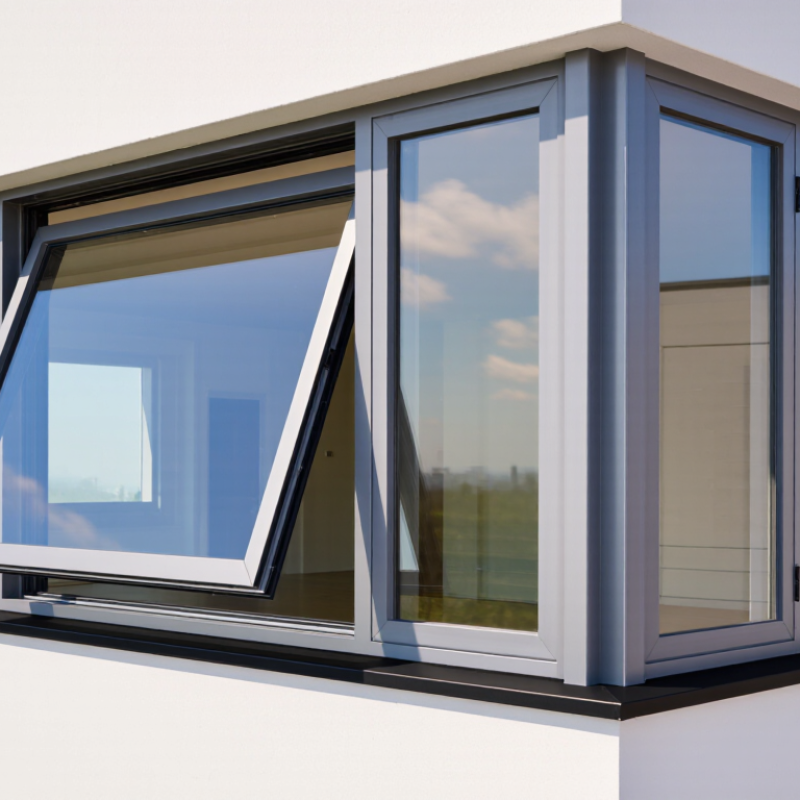
Table of Contents [Hide]
Define Thermal Break Aluminum Windows and Their Core Components
How to Choose Thermal Break Aluminum System Windows?
Define Thermal Break Aluminum Windows and Their Core Components
A thermal break aluminum window uses two aluminum sections separated by a low-conductivity barrier. The barrier interrupts the direct path for heat through the frame. It is often a reinforced polyamide strip, mechanically locked between the interior and exterior aluminum profiles. The metal remains strong; the connection conducts less heat. A small detail, with real consequences.
The frame is only one part of the system. Look for the thermal barrier, insulated glass unit, perimeter gaskets, glazing seals, hardware, and drainage paths. Together, these parts affect heat flow, air leakage, water management, and sash operation. A weak gasket can undermine an otherwise well-designed frame. That distinction is easy to miss when comparing profile drawings alone.
The U.S. Department of Energy’s Energy Saver guidance estimates that windows account for about 25–30% of residential heating and cooling energy use. This is a broad estimate, not a promise of savings from any one window. Compare tested whole-window U-factor and solar heat gain coefficient values, rather than judging insulation by the aluminum frame alone. NFRC ratings provide a consistent way to compare these performance measures. Ask for the rating of the complete window, including its glass and frame. I would also check installation details; a good product cannot correct a poorly sealed opening.





