


- Home
- A-Z Catalogue
- Products
- Valves
- Cetop
- Manual Directional Valves
- Proportional Valves
- Poppet Valves
- High-Speed Linear Servo Valves
- All High-Speed Linear Servo Valves
- Cetop 10 (NG32) Two Stage Type High Speed Linear Servo Valves – LSVHG-10
- Cetop 10 (NG32) Two Stage Type High Speed Linear Servo Valves – LSVHG-10 (With Fail-Safe)
- Cetop 8 (NG25) Two Stage Type High Speed Linear Servo Valves – LSVHG-06
- Cetop 8 (NG25) Two Stage Type High Speed Linear Servo Valves – LSVHG-06 (With Fail-Safe)
- Cetop 7 (NG16) Two Stage Type High Speed Linear Servo Valves – LSVHG-04
- Cetop 7 (NG16) Two Stage Type High Speed Linear Servo Valves – LSVHG-04 (With Fail-Safe)
- Cetop 5 (NG10) Direct Type High Speed Linear Servo Valves – LSVG-03
- Cetop 5 (NG10) OBE Type Direct Operated Linear Servo Valves – LSVG-03-EH
- Cetop 3 (NG6) OBE Type Direct Operated Linear Servo Valves – LSVG-01-EH
- Pumps
- Pressure control
- Flow Control Valves
- Pressure Control Valves
- All Pressure Control Valves
- Brake Valves
- Direct Relief Valve
- Low Noise Solenoid Controlled Relief Valves
- Low Noise Pilot Operated Relief Valves
- Pilot Operated Relief Valves
- Pressure reducing and relieving valves
- Pressure reducing and check valves
- Pressure control valves
- Remote Control Relief Valves
- Solenoid Controlled Relief Valves – BSG
- Solenoid Controlled Relief Valves – BST
- Unloading relief valves
- Check valves
- Environmental
- Valves
- Hydraulic Systems
- Power pack
- About Us
- Contact
- Blog

7 Tips for Choosing the Right Zeolite Rotor
Choosing the right Zeolite Rotor is rarely a simple equipment comparison. It affects VOC removal, energy use, pressure drop, maintenance, and long-term operating stability. A rotor may look efficient on paper, yet perform poorly when humidity, dust, or changing airflow enters the process.
Dr. David M. Ruthven, a respected adsorption researcher, emphasized a practical principle: “Adsorbent performance depends on both capacity and mass-transfer rate.” This idea remains important when evaluating rotor materials, wheel speed, desiccant structure, and regeneration conditions. Capacity alone does not guarantee reliable treatment. Airflow distribution matters. So does the distance between laboratory data and a factory floor.
These seven tips focus on the details that are easy to overlook. Start with the target pollutants, inlet concentration, temperature, humidity, and required outlet level. Then examine rotor size, zeolite formulation, sealing quality, purge-air demand, and control response. A compact rotor may save space. It may also create higher pressure loss if selected without sufficient airflow analysis.
Real operating experience should guide the decision. Inspect the maintenance history of similar systems, not only the brochure values. Ask how the rotor behaves after months of dust exposure. Ask whether replacement segments are available locally. Some assumptions will be wrong. That is normal, but ignoring them is costly.
The best Zeolite Rotor is not always the largest or most advanced model. It is the one that matches the process, survives its environment, and delivers measurable performance over time.
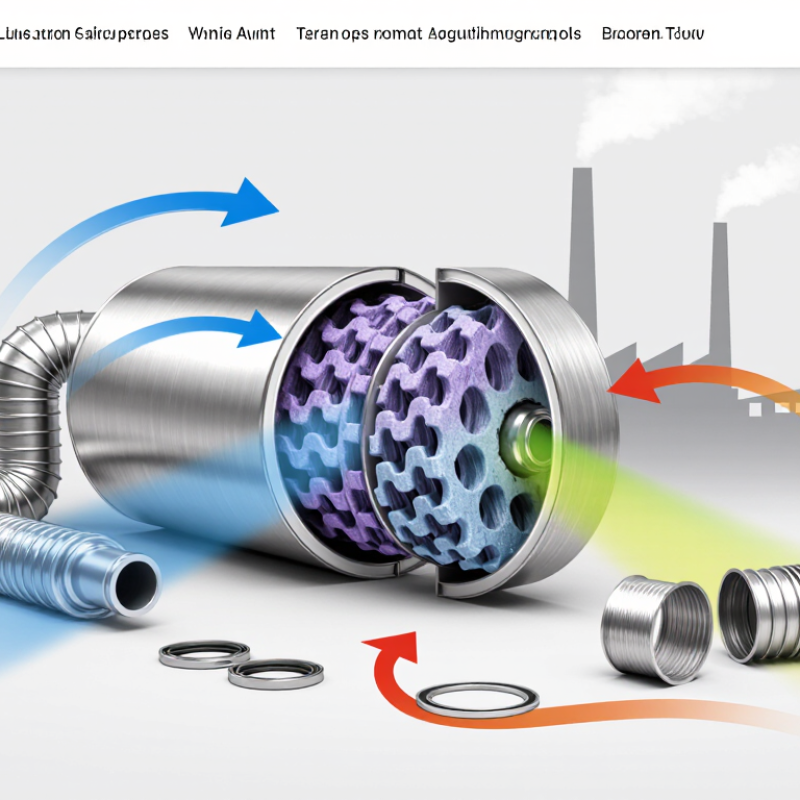
Table of Contents [Hide]
Define Zeolite Rotor Function and Performance Requirements
Before comparing zeolite rotors, define the job they must perform.
A rotor is not simply an air-cleaning wheel. It adsorbs contaminants from process air, rotates, and releases them into a smaller regeneration airstream. This changes exhaust concentration, airflow balance, and energy demand.
Write down the target contaminant, inlet concentration, air volume, temperature, humidity, and required outlet level. Be specific. “High removal efficiency” is not enough.
Performance requirements should include adsorption capacity, pressure drop, leakage control, rotation speed, and regeneration temperature. For example, a system handling warm, humid air may perform differently from a dry laboratory stream.
Ask for test data at conditions close to your operation. Check whether the data includes steady-state performance, not only short demonstrations. Measure the available fan pressure, too. A low pressure drop can protect operating costs.
Small details matter.
Seal design deserves close attention because untreated leakage can weaken actual removal results. Maintenance access also affects long-term reliability.
Plan inspection points for seals, bearings, airflow distribution, and dust buildup. One common mistake is selecting a rotor from contaminant concentration alone. Humidity and temperature may change the outcome more than expected.
Another imperfect assumption is treating the rotor as a fixed-capacity device. Its capacity changes with operating history, regeneration quality, and mixed contaminants. Leave room for field verification, adjustment, and honest review after installation.





