


- Home
- A-Z Catalogue
- Products
- Valves
- Cetop
- Manual Directional Valves
- Proportional Valves
- Poppet Valves
- High-Speed Linear Servo Valves
- All High-Speed Linear Servo Valves
- Cetop 10 (NG32) Two Stage Type High Speed Linear Servo Valves – LSVHG-10
- Cetop 10 (NG32) Two Stage Type High Speed Linear Servo Valves – LSVHG-10 (With Fail-Safe)
- Cetop 8 (NG25) Two Stage Type High Speed Linear Servo Valves – LSVHG-06
- Cetop 8 (NG25) Two Stage Type High Speed Linear Servo Valves – LSVHG-06 (With Fail-Safe)
- Cetop 7 (NG16) Two Stage Type High Speed Linear Servo Valves – LSVHG-04
- Cetop 7 (NG16) Two Stage Type High Speed Linear Servo Valves – LSVHG-04 (With Fail-Safe)
- Cetop 5 (NG10) Direct Type High Speed Linear Servo Valves – LSVG-03
- Cetop 5 (NG10) OBE Type Direct Operated Linear Servo Valves – LSVG-03-EH
- Cetop 3 (NG6) OBE Type Direct Operated Linear Servo Valves – LSVG-01-EH
- Pumps
- Pressure control
- Flow Control Valves
- Pressure Control Valves
- All Pressure Control Valves
- Brake Valves
- Direct Relief Valve
- Low Noise Solenoid Controlled Relief Valves
- Low Noise Pilot Operated Relief Valves
- Pilot Operated Relief Valves
- Pressure reducing and relieving valves
- Pressure reducing and check valves
- Pressure control valves
- Remote Control Relief Valves
- Solenoid Controlled Relief Valves – BSG
- Solenoid Controlled Relief Valves – BST
- Unloading relief valves
- Check valves
- Environmental
- Valves
- Hydraulic Systems
- Power pack
- About Us
- Contact
- Blog

How to Choose the Right Steel Wire Mesh?
Choosing the right Steel Wire Mesh begins with the application, not the catalogue price. A mesh panel may look strong on a warehouse floor, yet fail when exposed to vibration, moisture, or repeated impact. Wire diameter, opening size, material grade, coating, and load direction must work together. Small details matter. Even the edge finish can affect handling, corrosion resistance, and installation time.
The World Steel Association reported approximately 1.892 billion tonnes of crude steel production worldwide in 2023, according to its World Steel in Figures 2024 report. This scale reflects steel’s importance, but it also reveals a challenge: not every steel product offers the same performance. Galvanized, stainless steel, and plain carbon steel meshes behave differently in coastal air, chemical environments, and high-temperature areas. ASTM A1064/A1064M provides requirements for carbon-steel wire and welded wire reinforcement, while ISO 4783 addresses industrial wire screens and related specifications. These standards are useful reference points, not substitutes for engineering judgment.
Start with the real conditions.
A reliable selection process checks mesh opening, wire tolerance, tensile strength, weld quality, and surface protection. It also confirms whether the mesh will be cut, bent, welded, or installed outdoors. Product certificates and batch traceability can support confidence, but paperwork alone cannot reveal every weakness. A supplier’s practical experience matters. So does independent testing.
The cheapest option may appear efficient. It may not remain economical after rust, deformation, or replacement costs appear. This guide compares the main selection factors, highlights common mistakes, and explains where professional advice is necessary. No checklist is perfect. That is worth remembering.
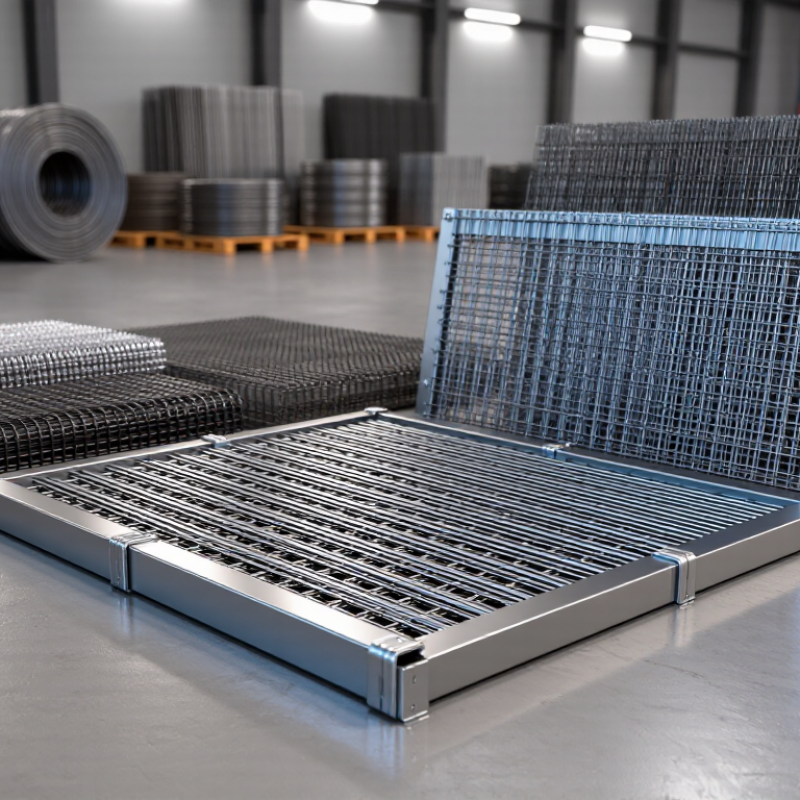
Table of Contents [Hide]
Define the Application and Performance Requirements
How to Choose the Right Steel Wire Mesh?
Choosing steel wire mesh starts with the application, not the appearance. Identify what the mesh must do before comparing sizes or finishes. A screen for flour dust needs different performance than a guard around moving equipment.
Measure the opening size carefully. A 10 mm aperture may suit material screening, but it may be unsafe for small parts or fingers. Check the wire diameter, panel strength, and expected load. Consider impact, vibration, airflow, and cleaning methods. Outdoor installations also require protection against moisture and corrosion. Stainless steel may perform well in damp areas, while coated steel can suit less aggressive environments. Always verify temperature limits and relevant safety requirements with a qualified engineer.
In practical projects, I have seen buyers choose mesh by price alone. That decision caused early deformation. I have also underestimated cleaning access before. It was a useful reminder. Performance depends on the whole installation, including frames, fasteners, and support spacing.
Tips: Write down the material size, load, environment, and service temperature. Request test data or technical drawings when performance matters. Compare open area, not aperture size alone. Inspect a sample under realistic conditions before ordering large quantities. Small details matter.