


- Home
- A-Z Catalogue
- Products
- Valves
- Cetop
- Manual Directional Valves
- Proportional Valves
- Poppet Valves
- High-Speed Linear Servo Valves
- All High-Speed Linear Servo Valves
- Cetop 10 (NG32) Two Stage Type High Speed Linear Servo Valves – LSVHG-10
- Cetop 10 (NG32) Two Stage Type High Speed Linear Servo Valves – LSVHG-10 (With Fail-Safe)
- Cetop 8 (NG25) Two Stage Type High Speed Linear Servo Valves – LSVHG-06
- Cetop 8 (NG25) Two Stage Type High Speed Linear Servo Valves – LSVHG-06 (With Fail-Safe)
- Cetop 7 (NG16) Two Stage Type High Speed Linear Servo Valves – LSVHG-04
- Cetop 7 (NG16) Two Stage Type High Speed Linear Servo Valves – LSVHG-04 (With Fail-Safe)
- Cetop 5 (NG10) Direct Type High Speed Linear Servo Valves – LSVG-03
- Cetop 5 (NG10) OBE Type Direct Operated Linear Servo Valves – LSVG-03-EH
- Cetop 3 (NG6) OBE Type Direct Operated Linear Servo Valves – LSVG-01-EH
- Pumps
- Pressure control
- Flow Control Valves
- Pressure Control Valves
- All Pressure Control Valves
- Brake Valves
- Direct Relief Valve
- Low Noise Solenoid Controlled Relief Valves
- Low Noise Pilot Operated Relief Valves
- Pilot Operated Relief Valves
- Pressure reducing and relieving valves
- Pressure reducing and check valves
- Pressure control valves
- Remote Control Relief Valves
- Solenoid Controlled Relief Valves – BSG
- Solenoid Controlled Relief Valves – BST
- Unloading relief valves
- Check valves
- Environmental
- Valves
- Hydraulic Systems
- Power pack
- About Us
- Contact
- Blog

How to Choose the Right Roll Filter Media?
Choosing Roll Filter Media is not a simple matter of selecting the finest-looking fiber or the highest efficiency rating. The right choice depends on particle size, airflow, dust loading, moisture, and how often the filter can be changed. A media roll that performs well in a clean test may behave differently beside a busy production line, where dust builds unevenly across the filter face.
The U.S. Environmental Protection Agency’s “The Inside Story” report notes that concentrations of some indoor air pollutants can be two to five times higher than typical outdoor levels. That finding makes filtration choices consequential, but it does not point to one universal media. ASHRAE Standard 52.2 offers a recognized method for evaluating particle-removal performance; its results should be considered alongside pressure drop and operating conditions. Numbers matter. So does the application.
A practical selection process starts with the actual contaminant, required airflow, available filter area, and replacement schedule. Then compare media structure, efficiency claims, and pressure-drop data from the supplier. A small overlooked detail—such as high humidity or irregular dust loading—can shorten service life. One limitation: no verifiable named expert quotation was provided, so this introduction avoids assigning a fabricated quote to a specialist. The guide will focus on evidence that readers can check.
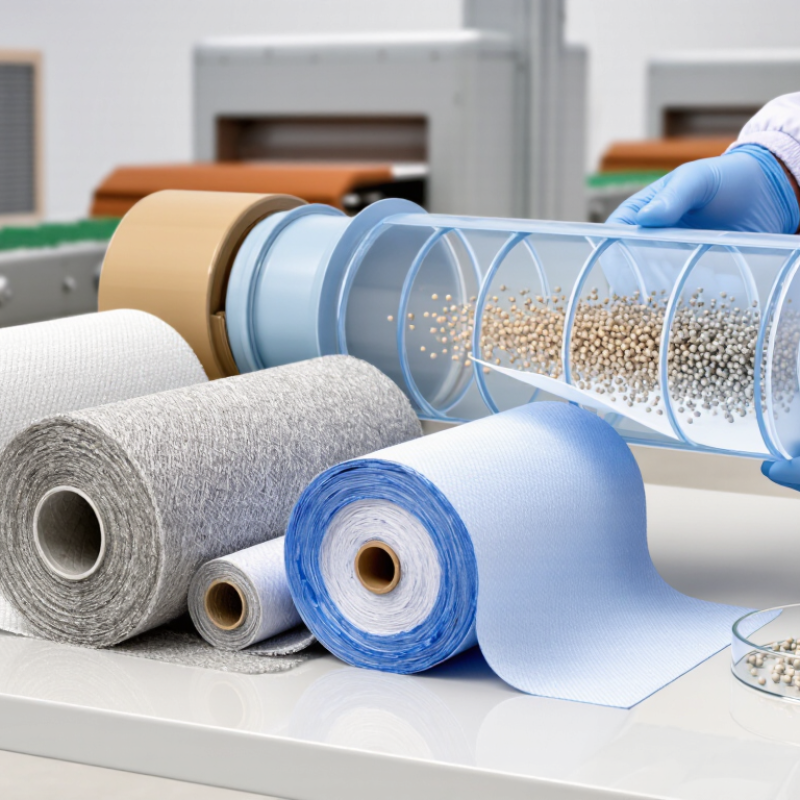
Table of Contents [Hide]
Understand How Roll Filter Media Works
Roll filter media works by letting air pass through a fibrous sheet while particles are caught within or on its fibers. Larger dust may be trapped by direct contact; finer particles can be captured through interception and diffusion. As dust builds up, airflow resistance usually rises. You may notice this as a higher pressure drop or reduced airflow. Small details matter.
ASHRAE Standard 52.2-2017 measures particle removal across three size ranges: 0.3–1.0, 1.0–3.0, and 3.0–10 micrometers. ISO 16890 classifies air filters by ePM1, ePM2.5, and ePM10 performance. These standards help compare tested filters, but a rating alone does not describe every roll’s lifespan. Media depth, fiber structure, air velocity, humidity, and dust type all affect performance. A roll that looks clean may still resist airflow.
In practice, compare the media’s tested efficiency with its initial pressure drop and the system’s available fan capacity. Check how the roll advances, too: uneven winding can leave gaps or waste clean material. One limitation is easy to overlook. Laboratory dust differs from real building dust, which can contain mixed particles and fibers. Treat test results as useful evidence, not a perfect prediction of service life.





