


- Home
- A-Z Catalogue
- Products
- Valves
- Cetop
- Manual Directional Valves
- Proportional Valves
- Poppet Valves
- High-Speed Linear Servo Valves
- All High-Speed Linear Servo Valves
- Cetop 10 (NG32) Two Stage Type High Speed Linear Servo Valves – LSVHG-10
- Cetop 10 (NG32) Two Stage Type High Speed Linear Servo Valves – LSVHG-10 (With Fail-Safe)
- Cetop 8 (NG25) Two Stage Type High Speed Linear Servo Valves – LSVHG-06
- Cetop 8 (NG25) Two Stage Type High Speed Linear Servo Valves – LSVHG-06 (With Fail-Safe)
- Cetop 7 (NG16) Two Stage Type High Speed Linear Servo Valves – LSVHG-04
- Cetop 7 (NG16) Two Stage Type High Speed Linear Servo Valves – LSVHG-04 (With Fail-Safe)
- Cetop 5 (NG10) Direct Type High Speed Linear Servo Valves – LSVG-03
- Cetop 5 (NG10) OBE Type Direct Operated Linear Servo Valves – LSVG-03-EH
- Cetop 3 (NG6) OBE Type Direct Operated Linear Servo Valves – LSVG-01-EH
- Pumps
- Pressure control
- Flow Control Valves
- Pressure Control Valves
- All Pressure Control Valves
- Brake Valves
- Direct Relief Valve
- Low Noise Solenoid Controlled Relief Valves
- Low Noise Pilot Operated Relief Valves
- Pilot Operated Relief Valves
- Pressure reducing and relieving valves
- Pressure reducing and check valves
- Pressure control valves
- Remote Control Relief Valves
- Solenoid Controlled Relief Valves – BSG
- Solenoid Controlled Relief Valves – BST
- Unloading relief valves
- Check valves
- Environmental
- Valves
- Hydraulic Systems
- Power pack
- About Us
- Contact
- Blog

How to Choose a Pneumatic Bending Machine?
Choosing the right Pneumatic Bending Machine requires more than comparing prices and advertised pressure ratings. The correct model should match your materials, production volume, bend angles, and available workshop space. A machine handling thin aluminum may struggle with stainless steel. Check the maximum sheet thickness, working width, bending radius, and air consumption before making a decision. Small details matter.
Experienced operators usually begin with the workpiece, not the machine brand. Measure a typical sheet, inspect its surface finish, and identify the tightest required bend. Then compare the machine’s force, die design, stroke length, and control method. A stable frame reduces vibration, while clear adjustment markings help operators repeat accurate bends. Ask suppliers for test results, maintenance guidance, and realistic cycle-time data. Do not rely only on polished demonstrations.
Safety deserves equal attention. Look for guarded moving parts, emergency controls, dependable foot pedals, and accessible maintenance points. Confirm that your compressor can provide clean, steady air at the required pressure. Otherwise, performance may fluctuate during long production runs. A perfect choice rarely exists. Your first estimate may also be wrong. Recheck actual workloads, future material changes, and operator skill levels before ordering. Reliable suppliers should explain limitations, not hide them. With practical measurements, documented specifications, and feedback from trained users, you can select a Pneumatic Bending Machine that delivers consistent results without creating avoidable operating costs.
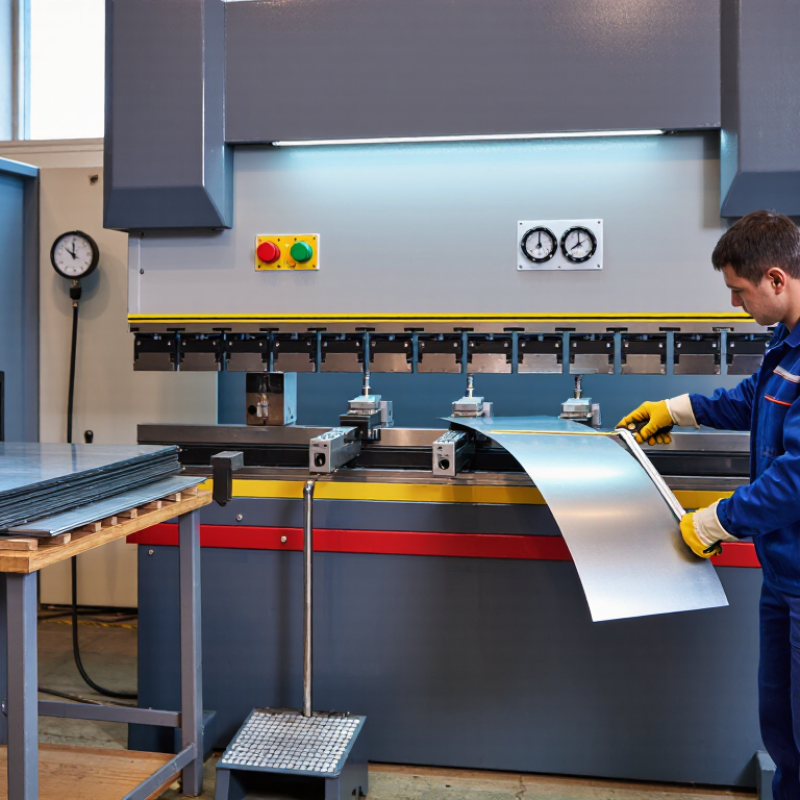
Table of Contents [Hide]
Understand How Pneumatic Bending Machines Work
How to Choose a Pneumatic Bending Machine?
A pneumatic bending machine converts compressed air into controlled mechanical movement. Air enters a cylinder through a directional valve. The piston then pushes a linkage, punch, or bending die. When the valve reverses, the piston returns. The basic force estimate is simple: cylinder force equals pressure multiplied by piston area. Real results are less tidy. Friction, pressure loss, tooling geometry, and material springback all reduce effective force.
The U.S. Department of Energy’s Compressed Air Systems Sourcebook reports that leaks can waste 20–30% of compressor output. That figure matters when comparing machines. A small cylinder may appear economical, yet it can cycle slowly under unstable pressure. Check the required bending force, stroke length, throat depth, cycle rate, and air consumption. Also inspect the regulator, filter, hoses, and exhaust mufflers. A pressure gauge should remain visible near the actuator.
ISO 4414 emphasizes safe pneumatic-system design, including controlled exhaust and protection against unexpected movement. During selection, match the machine to the material thickness and daily workload, not only its maximum rating. Leave practical capacity for variation. In workshop testing, a 90-degree bend may open slightly after release. That result can change with grain direction and tooling wear. A calculation helps, but one sample bend often reveals more than a perfect spreadsheet.