


- Home
- A-Z Catalogue
- Products
- Valves
- Cetop
- Manual Directional Valves
- Proportional Valves
- Poppet Valves
- High-Speed Linear Servo Valves
- All High-Speed Linear Servo Valves
- Cetop 10 (NG32) Two Stage Type High Speed Linear Servo Valves – LSVHG-10
- Cetop 10 (NG32) Two Stage Type High Speed Linear Servo Valves – LSVHG-10 (With Fail-Safe)
- Cetop 8 (NG25) Two Stage Type High Speed Linear Servo Valves – LSVHG-06
- Cetop 8 (NG25) Two Stage Type High Speed Linear Servo Valves – LSVHG-06 (With Fail-Safe)
- Cetop 7 (NG16) Two Stage Type High Speed Linear Servo Valves – LSVHG-04
- Cetop 7 (NG16) Two Stage Type High Speed Linear Servo Valves – LSVHG-04 (With Fail-Safe)
- Cetop 5 (NG10) Direct Type High Speed Linear Servo Valves – LSVG-03
- Cetop 5 (NG10) OBE Type Direct Operated Linear Servo Valves – LSVG-03-EH
- Cetop 3 (NG6) OBE Type Direct Operated Linear Servo Valves – LSVG-01-EH
- Pumps
- Pressure control
- Flow Control Valves
- Pressure Control Valves
- All Pressure Control Valves
- Brake Valves
- Direct Relief Valve
- Low Noise Solenoid Controlled Relief Valves
- Low Noise Pilot Operated Relief Valves
- Pilot Operated Relief Valves
- Pressure reducing and relieving valves
- Pressure reducing and check valves
- Pressure control valves
- Remote Control Relief Valves
- Solenoid Controlled Relief Valves – BSG
- Solenoid Controlled Relief Valves – BST
- Unloading relief valves
- Check valves
- Environmental
- Valves
- Hydraulic Systems
- Power pack
- About Us
- Contact
- Blog

How to Choose a Permanent Formwork Magnet
Choosing a Permanent Formwork Magnet can look like a small procurement decision. On a busy precast line, it affects setup time, panel alignment, and how reliably forms stay in place. A magnet that slips under vibration can leave a visible defect. One that is awkward to release can slow the next pour. Details matter.
The scale of construction helps explain why these choices deserve careful review. Oxford Economics and Global Construction Perspectives projected in their Global Construction 2030 report that worldwide construction output could reach $15.5 trillion by 2030, an increase of 85% from 2014. This is a broad industry forecast, not a magnet-market estimate. Still, it points to growing pressure for repeatable, efficient production. A single headline number cannot tell buyers which magnet fits their mould.
Look closely at the actual job. Check the form material, required holding force, concrete pressure, surface condition, and release method. Ask suppliers for test data under conditions resembling your production line. Then verify dimensions and operating instructions with the people who handle the equipment. Small checks help.
A named specialist’s quotation should be verified against its original source; none was provided for this introduction. Inventing one would weaken the reliability this guide should offer. Selection is not always tidy, either: a stronger magnet is not automatically the better choice if it complicates release or maintenance. This guide will compare the practical criteria, evidence, and trade-offs behind choosing a Permanent Formwork Magnet.
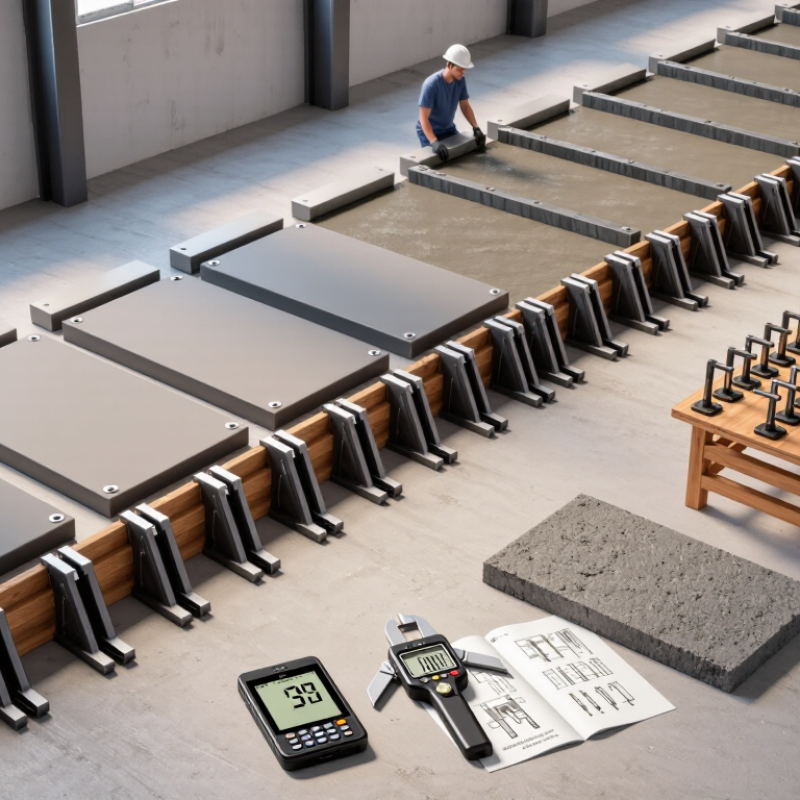
Table of Contents [Hide]
Understand How Permanent Formwork Magnets Work
A permanent formwork magnet uses permanent magnets to create a holding force without electrical power. Its steel housing directs magnetic flux toward the contact face, where the magnet grips a steel formwork table. In many designs, a lever or button shifts the internal magnetic circuit between holding and release positions. The exact mechanism varies, so check how a unit operates before fitting it to a production line.
That matters.
A thin gap between the magnet and table can weaken the grip. Dried concrete, rust, or a bent contact surface may cause that gap. On a real setup, clean the steel and check that the magnet sits flat against it. Then consider how the load acts: a pull straight away from the table differs from sideways movement during vibration. A published holding-force figure may not reflect either condition perfectly.
Not magic. Test the magnet with the actual formwork profile and table, and follow the maker’s handling instructions. I would also inspect the release mechanism; a sticky lever can slow removal and invite rough prying.
One detail is easy to overlook: a magnet that holds well on a clean sample may behave differently on a worn shop-floor table. That deserves a practical check.





