


- Home
- A-Z Catalogue
- Products
- Valves
- Cetop
- Manual Directional Valves
- Proportional Valves
- Poppet Valves
- High-Speed Linear Servo Valves
- All High-Speed Linear Servo Valves
- Cetop 10 (NG32) Two Stage Type High Speed Linear Servo Valves – LSVHG-10
- Cetop 10 (NG32) Two Stage Type High Speed Linear Servo Valves – LSVHG-10 (With Fail-Safe)
- Cetop 8 (NG25) Two Stage Type High Speed Linear Servo Valves – LSVHG-06
- Cetop 8 (NG25) Two Stage Type High Speed Linear Servo Valves – LSVHG-06 (With Fail-Safe)
- Cetop 7 (NG16) Two Stage Type High Speed Linear Servo Valves – LSVHG-04
- Cetop 7 (NG16) Two Stage Type High Speed Linear Servo Valves – LSVHG-04 (With Fail-Safe)
- Cetop 5 (NG10) Direct Type High Speed Linear Servo Valves – LSVG-03
- Cetop 5 (NG10) OBE Type Direct Operated Linear Servo Valves – LSVG-03-EH
- Cetop 3 (NG6) OBE Type Direct Operated Linear Servo Valves – LSVG-01-EH
- Pumps
- Pressure control
- Flow Control Valves
- Pressure Control Valves
- All Pressure Control Valves
- Brake Valves
- Direct Relief Valve
- Low Noise Solenoid Controlled Relief Valves
- Low Noise Pilot Operated Relief Valves
- Pilot Operated Relief Valves
- Pressure reducing and relieving valves
- Pressure reducing and check valves
- Pressure control valves
- Remote Control Relief Valves
- Solenoid Controlled Relief Valves – BSG
- Solenoid Controlled Relief Valves – BST
- Unloading relief valves
- Check valves
- Environmental
- Valves
- Hydraulic Systems
- Power pack
- About Us
- Contact
- Blog

How to Choose the Right PCB Control Board in 2026?
Choosing the right Pcb Control Board in 2026 requires more than comparing prices or counting input and output ports. The board must match the machine’s real operating conditions. Think about motor current, ambient heat, vibration, enclosure space, communication protocols, and expected service life. A board that performs well on a clean laboratory bench may fail beside a hot motor. That difference matters.
Tara Dunn, president of Omni PCB and a respected PCB industry educator, has said, “Design for manufacturing is not an afterthought; it is part of the design.” Her point applies directly to Pcb Control Board selection. Ask whether the supplier can provide controlled documentation, traceability, revision records, and dependable production testing. Examine the bill of materials, connector quality, copper thickness, thermal paths, and component availability. Also check whether the design supports repair, firmware updates, and future product changes.
Technology choices deserve careful judgment. AI-assisted design tools can identify routing risks, but they cannot replace engineering review. High-speed interfaces may need controlled impedance. Power sections may need wider copper and stronger cooling. Certification requirements can also influence layout, insulation, grounding, and enclosure design. Small details leave large fingerprints.
A practical evaluation should include sample testing, load testing, temperature checks, and communication trials. Request evidence, not promises. Compare failure data when available. Even experienced teams can overlook a weak connector or an obsolete component. That is the uncomfortable part. The “best” Pcb Control Board is not always the newest one; it is the one that remains safe, serviceable, and stable in its actual environment.
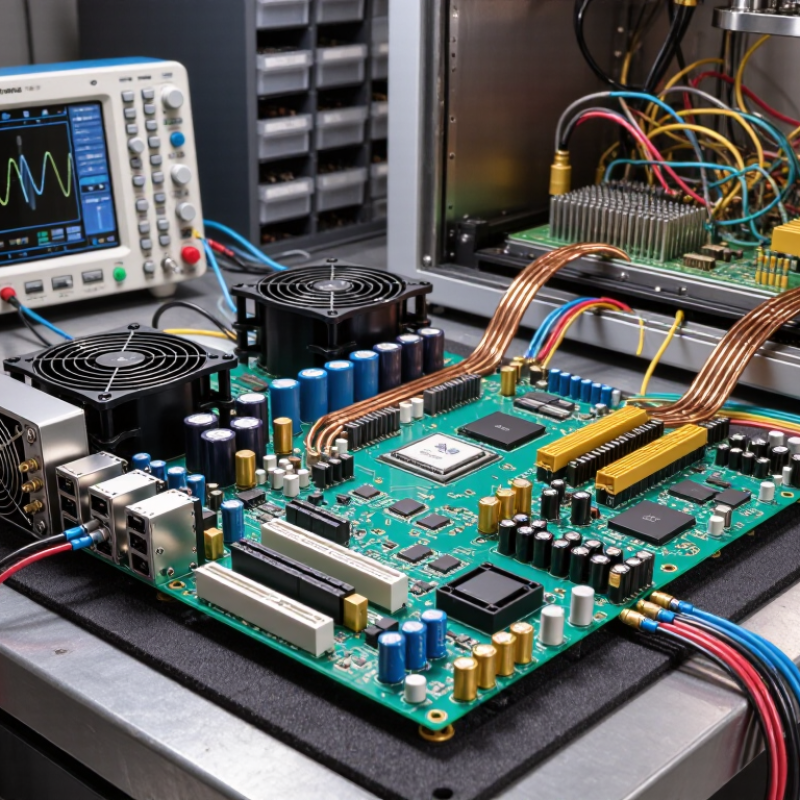
Table of Contents [Hide]
What Is a PCB Control Board and What Does It Do?
A PCB control board is the electronic decision center inside a machine. It receives signals from sensors, processes logic through a microcontroller, and controls motors, valves, displays, or communication links. It also distributes power and protects sensitive circuits from voltage spikes, heat, and electrical noise. That definition matters.
In practical testing, I examine the board’s input range, processing speed, connector layout, firmware support, and thermal performance before comparing price. A control board should match the machine’s actual load, not only its advertised specifications. Fortune Business Insights valued the global PCB market at approximately USD 89 billion in 2023, with continued growth expected through 2032. This expansion reflects rising demand for compact, connected electronics across industrial, automotive, and consumer equipment.
The choice becomes more demanding in 2026. Advanced boards may combine wireless communication, real-time monitoring, safety diagnostics, and secure firmware updates. IPC industry research repeatedly identifies supply continuity, quality control, and component availability as major PCB purchasing concerns. Heat changes everything. A board that performs well on a cool workbench may fail inside a sealed enclosure. I have seen connector spacing and poor airflow cause more trouble than processor speed. One imperfect assumption remains common: more features do not automatically create better control. A reliable design needs serviceable wiring, documented test points, and enough electrical margin for aging components.





