


- Home
- A-Z Catalogue
- Products
- Valves
- Cetop
- Manual Directional Valves
- Proportional Valves
- Poppet Valves
- High-Speed Linear Servo Valves
- All High-Speed Linear Servo Valves
- Cetop 10 (NG32) Two Stage Type High Speed Linear Servo Valves – LSVHG-10
- Cetop 10 (NG32) Two Stage Type High Speed Linear Servo Valves – LSVHG-10 (With Fail-Safe)
- Cetop 8 (NG25) Two Stage Type High Speed Linear Servo Valves – LSVHG-06
- Cetop 8 (NG25) Two Stage Type High Speed Linear Servo Valves – LSVHG-06 (With Fail-Safe)
- Cetop 7 (NG16) Two Stage Type High Speed Linear Servo Valves – LSVHG-04
- Cetop 7 (NG16) Two Stage Type High Speed Linear Servo Valves – LSVHG-04 (With Fail-Safe)
- Cetop 5 (NG10) Direct Type High Speed Linear Servo Valves – LSVG-03
- Cetop 5 (NG10) OBE Type Direct Operated Linear Servo Valves – LSVG-03-EH
- Cetop 3 (NG6) OBE Type Direct Operated Linear Servo Valves – LSVG-01-EH
- Pumps
- Pressure control
- Flow Control Valves
- Pressure Control Valves
- All Pressure Control Valves
- Brake Valves
- Direct Relief Valve
- Low Noise Solenoid Controlled Relief Valves
- Low Noise Pilot Operated Relief Valves
- Pilot Operated Relief Valves
- Pressure reducing and relieving valves
- Pressure reducing and check valves
- Pressure control valves
- Remote Control Relief Valves
- Solenoid Controlled Relief Valves – BSG
- Solenoid Controlled Relief Valves – BST
- Unloading relief valves
- Check valves
- Environmental
- Valves
- Hydraulic Systems
- Power pack
- About Us
- Contact
- Blog

How to Choose the Right Pallet Box for Global Shipping
Choosing the right Pallet Box can determine whether global cargo arrives clean, stable, and ready for use. It is not merely a larger container. Its design affects loading speed, product protection, warehouse space, and transport cost. A box that looks strong may still fail under repeated forklift handling.
Martin Christopher, a respected logistics and supply chain scholar, observed, “The supply chain competition is no longer company versus company, but supply chain versus supply chain.” His point applies directly to Pallet Box selection. A suitable box supports the entire movement, from factory floor to overseas warehouse. Buyers should examine load weight, dimensions, stacking height, moisture exposure, and return requirements. A 1,200-by-1,000-millimeter footprint may fit one operation perfectly, yet waste valuable container space elsewhere. Small details matter.
Material choice also deserves careful attention. Plastic Pallet Boxes resist moisture and support repeated circulation. Wooden versions may suit heavy goods, but export preparation and destination requirements must be checked. Never assume one specification works everywhere. That assumption can become expensive. Test the box with its actual product, including corner protection, liners, and closure methods. Measure forklift access too. I have seen efficient-looking designs become awkward during unloading. The best decision balances durability, cube efficiency, handling safety, and total lifecycle cost. Some conclusions remain uncertain until a real shipment is completed. That is why a controlled trial, documented inspection, and honest review should guide the final choice.
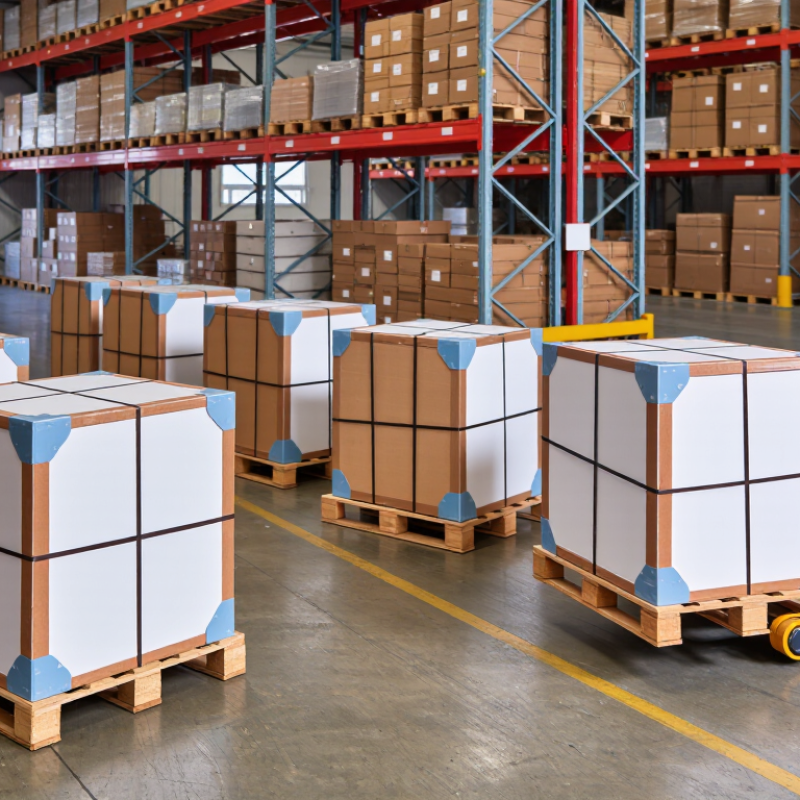
Table of Contents [Hide]
Define Shipping Needs, Cargo Weight, and Handling Conditions
Choosing the Right Pallet Box for Global Shipping
Choosing a pallet box starts with the shipment, not the catalog. Record the cargo’s length, width, height, unit weight, center of gravity, and stacking pattern. Then map the route: truck docks, port cranes, containers, rail transfers, and final delivery. UNCTAD’s Review of Maritime Transport 2023 reports that over 80% of world merchandise trade by volume moves by sea. That means salt air, vibration, long dwell times, and repeated handling deserve attention.
Routes vary.
Weight matters. Calculate gross load, not merely product weight. Include the pallet box, lid, dunnage, moisture, and possible load shifts. Use the box’s rated capacity, stacking limit, and base strength under uneven floors. The 2023 World Bank Logistics Performance Index evaluates reliability through customs, infrastructure, shipment arrangements, logistics competence, tracking, and timeliness. If tracking and timeliness are weak on a lane, stronger protection may cost less than damage claims.
That is not always obvious.
Specify whether operators use forklifts, pallet jacks, clamps, or lifting slings. Check entry points, turning clearance, fork-pocket geometry, and lid security. For fragile or moisture-sensitive cargo, test compression, vibration, and humidity exposure before committing to a full shipment. ASTM D4169 and ISTA testing protocols can structure this validation, though they cannot recreate every warehouse. Do not trust one laboratory result. An honest review may reveal that a lighter box is easier to handle but less stable when stacked.
That trade-off needs a trial.





