


- Home
- A-Z Catalogue
- Products
- Valves
- Cetop
- Manual Directional Valves
- Proportional Valves
- Poppet Valves
- High-Speed Linear Servo Valves
- All High-Speed Linear Servo Valves
- Cetop 10 (NG32) Two Stage Type High Speed Linear Servo Valves – LSVHG-10
- Cetop 10 (NG32) Two Stage Type High Speed Linear Servo Valves – LSVHG-10 (With Fail-Safe)
- Cetop 8 (NG25) Two Stage Type High Speed Linear Servo Valves – LSVHG-06
- Cetop 8 (NG25) Two Stage Type High Speed Linear Servo Valves – LSVHG-06 (With Fail-Safe)
- Cetop 7 (NG16) Two Stage Type High Speed Linear Servo Valves – LSVHG-04
- Cetop 7 (NG16) Two Stage Type High Speed Linear Servo Valves – LSVHG-04 (With Fail-Safe)
- Cetop 5 (NG10) Direct Type High Speed Linear Servo Valves – LSVG-03
- Cetop 5 (NG10) OBE Type Direct Operated Linear Servo Valves – LSVG-03-EH
- Cetop 3 (NG6) OBE Type Direct Operated Linear Servo Valves – LSVG-01-EH
- Pumps
- Pressure control
- Flow Control Valves
- Pressure Control Valves
- All Pressure Control Valves
- Brake Valves
- Direct Relief Valve
- Low Noise Solenoid Controlled Relief Valves
- Low Noise Pilot Operated Relief Valves
- Pilot Operated Relief Valves
- Pressure reducing and relieving valves
- Pressure reducing and check valves
- Pressure control valves
- Remote Control Relief Valves
- Solenoid Controlled Relief Valves – BSG
- Solenoid Controlled Relief Valves – BST
- Unloading relief valves
- Check valves
- Environmental
- Valves
- Hydraulic Systems
- Power pack
- About Us
- Contact
- Blog

How to Choose a Horizontal Drill Guide?
Choosing a Horizontal Drill Guide starts with the workpiece, not the product photo. A narrow pine rail, a thick hardwood panel, and a metal fixture each place different demands on alignment and support. Check the guide’s compatible drill size, mounting method, adjustment range, and ability to resist movement. Small details matter. A clamp that slips by a few millimeters can leave a visible, unusable hole.
Think about the holes you need to make. Will you drill into an edge, across a panel, or through repeated parts? Look for a guide that keeps the bit square, holds the work securely, and offers clear adjustments you can repeat. Inspect the base, bushings, and clamping surfaces; rough edges or loose fittings may affect accuracy. A useful guide should also feel manageable in your hands, especially when you need to reposition it between holes.
Experience helps, but a quotation needs a verifiable source. No expert name or source material was provided, so I can’t responsibly invent a specialist’s statement. This outline can instead assess the practical factors that shape a sound choice: accuracy, compatibility, stability, durability, and ease of use. It will also address limitations, because no guide suits every drill, workpiece, or workshop. Check the manufacturer’s specifications before buying, and test the setup on scrap material. A short test can reveal alignment problems before they reach the finished piece.
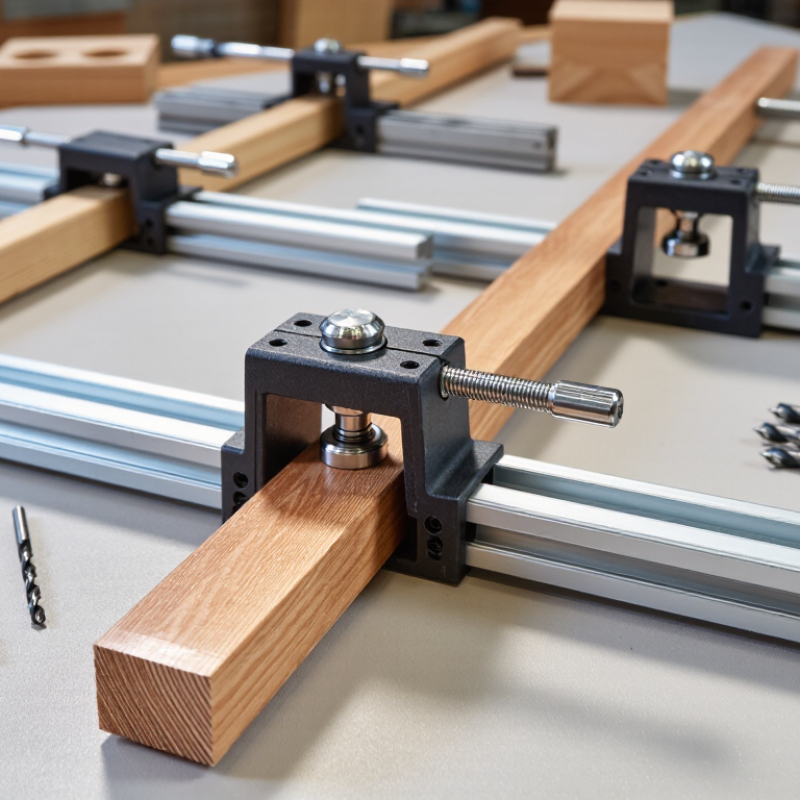
Table of Contents [Hide]
Define the Drilling Task and Required Accuracy
How to Choose a Horizontal Drill Guide?
Define the Drilling Task and Required Accuracy
Before choosing a horizontal drill guide, define the hole’s purpose. Are you joining two boards, installing shelf pins, or drilling through a thick panel edge? Each task calls for different hole diameters, depths, and positions. Write down the material, workpiece thickness, and distance from the edge. Small details matter.
Accuracy should be measurable, not just “good enough.” For a row of shelf-pin holes, spacing and alignment must stay consistent. For a single joint, the hole may need to meet a matching hole in another piece. Note the acceptable position error and drilling angle. A few millimeters can spoil a tight-fitting joint.
Check that the guide fits your drill bit and supports the workpiece securely. A snug bushing, a clear edge reference, and clamps help reduce movement. Test the setup on scrap of the same thickness. Mark the entry point, drill slowly, then check the exit point and angle. It can feel tedious. Still, it reveals problems early.
Do not expect a guide to correct every setup issue. A warped board, loose clamp, or bit with noticeable runout can shift the hole. I would reassess the setup if repeated test holes drift, even when the guide appears aligned. The required accuracy should shape the choice, not the other way around.





