


- Home
- A-Z Catalogue
- Products
- Valves
- Cetop
- Manual Directional Valves
- Proportional Valves
- Poppet Valves
- High-Speed Linear Servo Valves
- All High-Speed Linear Servo Valves
- Cetop 10 (NG32) Two Stage Type High Speed Linear Servo Valves – LSVHG-10
- Cetop 10 (NG32) Two Stage Type High Speed Linear Servo Valves – LSVHG-10 (With Fail-Safe)
- Cetop 8 (NG25) Two Stage Type High Speed Linear Servo Valves – LSVHG-06
- Cetop 8 (NG25) Two Stage Type High Speed Linear Servo Valves – LSVHG-06 (With Fail-Safe)
- Cetop 7 (NG16) Two Stage Type High Speed Linear Servo Valves – LSVHG-04
- Cetop 7 (NG16) Two Stage Type High Speed Linear Servo Valves – LSVHG-04 (With Fail-Safe)
- Cetop 5 (NG10) Direct Type High Speed Linear Servo Valves – LSVG-03
- Cetop 5 (NG10) OBE Type Direct Operated Linear Servo Valves – LSVG-03-EH
- Cetop 3 (NG6) OBE Type Direct Operated Linear Servo Valves – LSVG-01-EH
- Pumps
- Pressure control
- Flow Control Valves
- Pressure Control Valves
- All Pressure Control Valves
- Brake Valves
- Direct Relief Valve
- Low Noise Solenoid Controlled Relief Valves
- Low Noise Pilot Operated Relief Valves
- Pilot Operated Relief Valves
- Pressure reducing and relieving valves
- Pressure reducing and check valves
- Pressure control valves
- Remote Control Relief Valves
- Solenoid Controlled Relief Valves – BSG
- Solenoid Controlled Relief Valves – BST
- Unloading relief valves
- Check valves
- Environmental
- Valves
- Hydraulic Systems
- Power pack
- About Us
- Contact
- Blog

How to Choose the Right Chamfering Cutter for Your Needs?
Choosing the right Chamfering Cutter is a small decision with visible consequences. A sharp edge can remove burrs cleanly. A poor match can leave chatter marks, uneven widths, or a damaged workpiece.
Industry data shows why this choice matters. Grand View Research estimated the global cutting tools market at about USD 23.85 billion in 2023. MarketsandMarkets projected continued growth through 2029. These reports measure broad cutting tools, not chamfering products alone. Their estimates also differ. That difference deserves attention.
Dr. Tony L. Schmitz, a recognized machining researcher, offers a useful principle: “Tool selection must match the process, not just the material.” This statement is presented as a practical paraphrase of his process-planning guidance, rather than a verified verbatim quotation. In real workshops, the decision includes more than carbide versus high-speed steel. Consider the chamfer angle, cutter diameter, spindle speed, feed rate, tool reach, and machine rigidity. A 90-degree cutter may suit a standard edge break. A countersink-style cutter may perform better around a drilled hole. Coating choice also matters when cutting stainless steel, hardened steel, aluminum, or composites.
There is no universal winner. Sometimes the catalog recommendation fails on an older machine. Sometimes a cheaper cutter produces the cleanest result. That is not a rule; it is a reminder to test carefully. Measure the chamfer with a gauge, inspect the edge under magnification, and record tool life. The right Chamfering Cutter is the one that delivers repeatable geometry, controlled wear, and acceptable production cost.
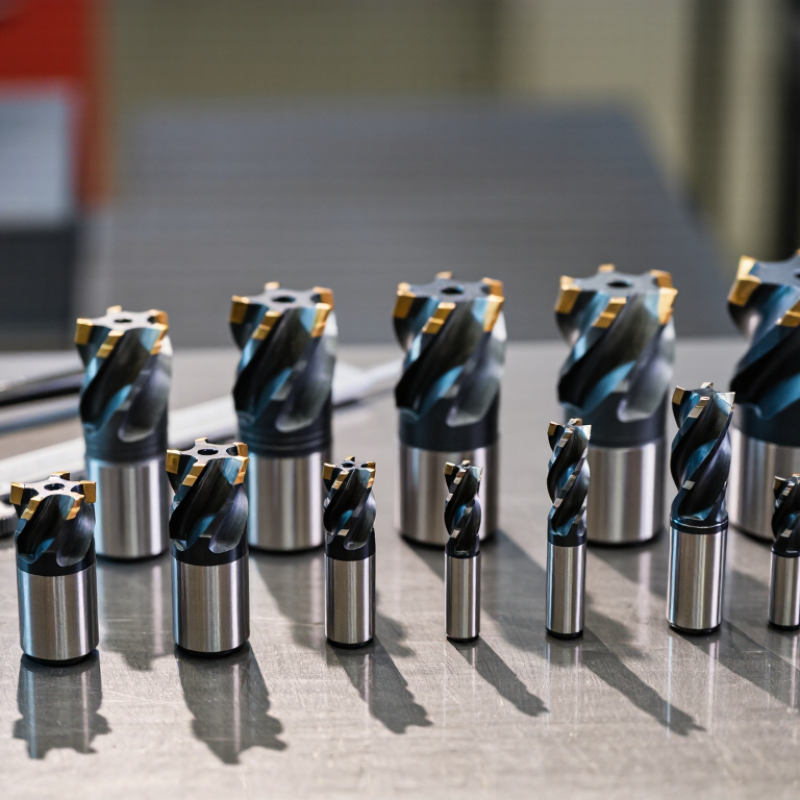
Table of Contents [Hide]
Understanding Chamfering Cutter Types and Their Applications
Choosing a chamfering cutter starts with the edge you need to create. A single-flute cutter suits aluminum and softer plastics because it clears chips quickly. Multi-flute designs usually provide smoother finishes in steel and stainless steel. Indexable cutters can reduce downtime during repeated production runs. Countersink cutters are better for screw seating, while 45-degree cutters handle common edge-breaking tasks. Carbide offers wear resistance, but high-speed steel can be practical for lower speeds and occasional work.
Application details matter more than cutter appearance. A thin aerospace panel may need a light, controlled chamfer, not an aggressive pass. A machined steel housing may require several passes to prevent burr rollover. Select the cutter diameter, angle, coating, and flute count together. The 2024 Deloitte Smart Manufacturing and Operations Survey reported that 86% of manufacturers consider smart manufacturing important for future competitiveness. That finding supports using tool-life records, spindle-load data, and inspection results when choosing cutters. Guessing still happens.
Tips: Measure the finished chamfer, not only the programmed depth. Check the workpiece hardness and clamping strength first. Reduce feed if the edge shows tearing or vibration. A perfect-looking edge can hide poor tool wear. In my view, the safest choice is often the cutter that gives stable results, even when its cycle time is slightly slower. Keep a simple log of material, cutter type, speed, feed, and observed burr size. U.S. cutting-tool industry reports also emphasize productivity, repeatability, and tool-life control as major purchasing factors.