


- Home
- A-Z Catalogue
- Products
- Valves
- Cetop
- Manual Directional Valves
- Proportional Valves
- Poppet Valves
- High-Speed Linear Servo Valves
- All High-Speed Linear Servo Valves
- Cetop 10 (NG32) Two Stage Type High Speed Linear Servo Valves – LSVHG-10
- Cetop 10 (NG32) Two Stage Type High Speed Linear Servo Valves – LSVHG-10 (With Fail-Safe)
- Cetop 8 (NG25) Two Stage Type High Speed Linear Servo Valves – LSVHG-06
- Cetop 8 (NG25) Two Stage Type High Speed Linear Servo Valves – LSVHG-06 (With Fail-Safe)
- Cetop 7 (NG16) Two Stage Type High Speed Linear Servo Valves – LSVHG-04
- Cetop 7 (NG16) Two Stage Type High Speed Linear Servo Valves – LSVHG-04 (With Fail-Safe)
- Cetop 5 (NG10) Direct Type High Speed Linear Servo Valves – LSVG-03
- Cetop 5 (NG10) OBE Type Direct Operated Linear Servo Valves – LSVG-03-EH
- Cetop 3 (NG6) OBE Type Direct Operated Linear Servo Valves – LSVG-01-EH
- Pumps
- Pressure control
- Flow Control Valves
- Pressure Control Valves
- All Pressure Control Valves
- Brake Valves
- Direct Relief Valve
- Low Noise Solenoid Controlled Relief Valves
- Low Noise Pilot Operated Relief Valves
- Pilot Operated Relief Valves
- Pressure reducing and relieving valves
- Pressure reducing and check valves
- Pressure control valves
- Remote Control Relief Valves
- Solenoid Controlled Relief Valves – BSG
- Solenoid Controlled Relief Valves – BST
- Unloading relief valves
- Check valves
- Environmental
- Valves
- Hydraulic Systems
- Power pack
- About Us
- Contact
- Blog

How to Choose the Right Canned Motor Pump?
Choosing a Canned Motor Pump is not a matter of matching a pipe size to a catalogue photograph. The right choice depends on the liquid, operating range, site conditions, and consequences of leakage. A canned motor design integrates the motor and pump, eliminating the conventional shaft seal. That can reduce an important leak path, but it does not make every application automatically suitable. The pumped fluid must also support the design’s internal lubrication and cooling needs.
The U.S. Department of Energy’s Improving Pumping System Performance sourcebook reports that pumping systems can consume 25–50% of the energy used in some industrial facilities. That figure is a reminder to check efficiency across the operating range, not just at one advertised duty point. A pump running far from its best-efficiency point can waste energy and increase wear. Small details matter: fluid temperature, viscosity, solids, suction pressure, and available maintenance access.
Machinery-reliability authority Heinz P. Bloch’s work emphasizes reliability and operating conditions. A practical paraphrase—not a verbatim quotation—is: “Select for the real duty, not the catalogue headline.” That advice is easy to agree with, and easy to neglect when schedules are tight. This guide outlines how to compare process requirements, materials, performance curves, and lifecycle costs before choosing a Canned Motor Pump. The final decision should be checked against manufacturer data and the actual installation; even a careful selection can miss something.
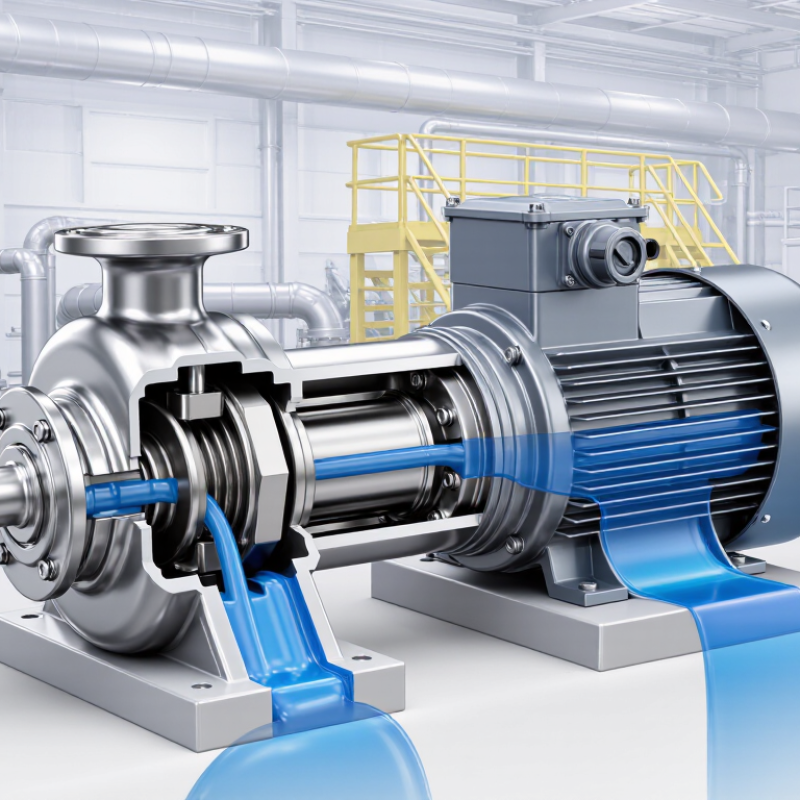
Table of Contents [Hide]
Define the Operating Requirements for the Canned Motor Pump
Define the Operating Requirements for the Canned Motor Pump
Start with the process conditions, not the pump size. Record the required flow rate and discharge pressure at normal operation. Then note the minimum and maximum values the system may demand. A pump chosen for one steady duty point may struggle during startup or changing tank levels. Small details matter.
Describe the liquid clearly. Include its temperature, viscosity, vapor pressure, density, and any suspended particles. These properties affect pump performance and material selection. Canned motor pumps use the pumped liquid to cool the motor and lubricate internal bearings, so confirm that the fluid can serve these functions. Check the required inlet pressure and available NPSH as well. If your measurements are estimates, say so; an uncertain assumption can lead to a poor selection.
Tips: Gather real operating data where possible. Note short periods of low flow, frequent starts, and temperature changes. Confirm the electrical supply and installation environment with a qualified pump engineer. A neat spreadsheet helps, but it cannot replace checking the actual process conditions.





