


- Home
- A-Z Catalogue
- Products
- Valves
- Cetop
- Manual Directional Valves
- Proportional Valves
- Poppet Valves
- High-Speed Linear Servo Valves
- All High-Speed Linear Servo Valves
- Cetop 10 (NG32) Two Stage Type High Speed Linear Servo Valves – LSVHG-10
- Cetop 10 (NG32) Two Stage Type High Speed Linear Servo Valves – LSVHG-10 (With Fail-Safe)
- Cetop 8 (NG25) Two Stage Type High Speed Linear Servo Valves – LSVHG-06
- Cetop 8 (NG25) Two Stage Type High Speed Linear Servo Valves – LSVHG-06 (With Fail-Safe)
- Cetop 7 (NG16) Two Stage Type High Speed Linear Servo Valves – LSVHG-04
- Cetop 7 (NG16) Two Stage Type High Speed Linear Servo Valves – LSVHG-04 (With Fail-Safe)
- Cetop 5 (NG10) Direct Type High Speed Linear Servo Valves – LSVG-03
- Cetop 5 (NG10) OBE Type Direct Operated Linear Servo Valves – LSVG-03-EH
- Cetop 3 (NG6) OBE Type Direct Operated Linear Servo Valves – LSVG-01-EH
- Pumps
- Pressure control
- Flow Control Valves
- Pressure Control Valves
- All Pressure Control Valves
- Brake Valves
- Direct Relief Valve
- Low Noise Solenoid Controlled Relief Valves
- Low Noise Pilot Operated Relief Valves
- Pilot Operated Relief Valves
- Pressure reducing and relieving valves
- Pressure reducing and check valves
- Pressure control valves
- Remote Control Relief Valves
- Solenoid Controlled Relief Valves – BSG
- Solenoid Controlled Relief Valves – BST
- Unloading relief valves
- Check valves
- Environmental
- Valves
- Hydraulic Systems
- Power pack
- About Us
- Contact
- Blog

7 Tips for Choosing the Best Wireless Intercom Speaker?
Choosing the right Wireless Intercom Speaker is more demanding than comparing volume levels and product photos. In a busy warehouse, a weak microphone can turn a simple instruction into repeated calls. At a school entrance, unclear audio may delay a visitor response. In a hotel, background music, glass walls, and long corridors can expose poor equipment quickly. These real operating conditions matter more than impressive specifications.
Industry research supports this shift toward practical evaluation. Grand View Research’s 2024 smart home market analysis identifies connected security and communication devices as important growth areas. MarketsandMarkets also reports continued expansion in wireless communication technologies, driven by flexible installation and reduced cabling requirements. However, market growth does not guarantee reliable performance. Reports often group different devices together, while actual intercom quality depends on range, interference control, battery endurance, microphone sensitivity, and network stability. That distinction deserves attention.
This guide presents seven practical tips for selecting a Wireless Intercom Speaker with greater confidence. It considers voice clarity, transmission distance, installation conditions, power options, durability, compatibility, and support quality. A speaker may sound excellent in a quiet showroom but fail beside machinery or through concrete walls. Test before trusting it. Ideally, compare two models in the same environment, using the same distance and background noise. I would not rely on advertised range alone; real buildings are rarely as friendly as laboratory spaces. The best choice balances technical evidence, user experience, and long-term operating costs. That balance is easy to miss.
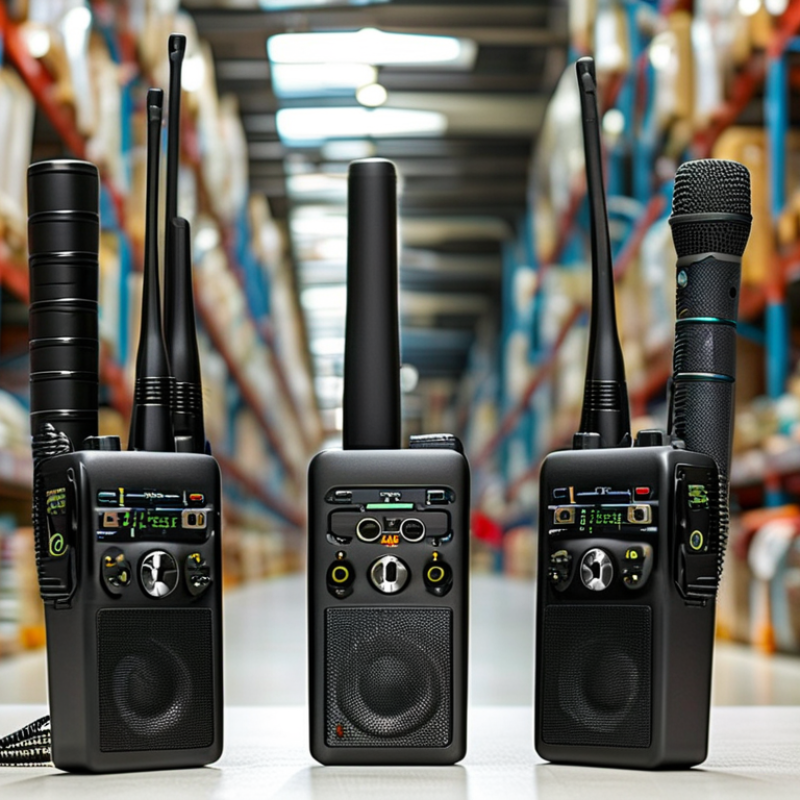
Table of Contents [Hide]
Define Your Communication Needs and Installation Environment
Choosing the Best Wireless Intercom Speaker: Define Your Communication Needs and Installation Environment
Start by mapping who must communicate, how often, and from which locations. A home entrance needs different performance from a warehouse, clinic, or school. Note background noise, wall materials, power access, and expected speaking distance. I once selected a system by range alone. That was a mistake. Concrete walls reduced clarity more than the specification suggested.
The International Telecommunication Union reported that 5.4 billion people were online in 2023, representing 67% of the global population. Connectivity is widespread, but wireless reliability still depends on local conditions. Test the proposed installation points, especially near metal doors, elevators, routers, and thick partitions. Record signal strength at busy times, not only during quiet testing. A short field trial can reveal interference, delay, or dropped audio.
Sound safety also matters. The National Institute for Occupational Safety and Health identifies 85 dBA over eight hours as a recommended exposure limit. Choose adjustable volume rather than maximum output. In a noisy loading area, prioritize speech intelligibility and microphone direction. In a quiet residence, excessive volume may disturb nearby rooms. Check weather exposure, temperature changes, mounting height, and emergency power needs. IP protection ratings help, but they do not replace proper drainage and sealed cable entries. My own planning can become too detailed. Still, ignoring one installation constraint often costs more than adding a practical test.
7 Tips for Choosing the Best Wireless Intercom Speaker? - Define Your Communication Needs and Installation Environment
| No. | Selection Tip | Communication Need | Installation Environment | Recommended Specification | Practical Check |
|---|---|---|---|---|---|
| 1 | Define the coverage area | Point-to-point calls, multi-room paging, or site-wide announcements | Small rooms, offices, warehouses, campuses, or outdoor areas | Confirm the rated indoor or outdoor range and account for walls, metal structures, and floor levels | Create a simple floor plan and mark every intended speaker and calling point |
| 2 | Match the audio output to the space | Clear speech is usually more important than maximum loudness | Quiet offices require less output than workshops, loading areas, or production floors | Look for adjustable volume, voice-focused sound reproduction, and sufficient acoustic headroom | Test speech at the farthest listening position while normal equipment is operating |
| 3 | Select the right wireless technology | Basic room communication, mobile use, or scalable networked communication | Assess radio interference, building density, network availability, and local regulations | Use a short-range option for simple rooms; consider network-based equipment for larger or distributed sites | Check operating bands, interference management, encryption, and compatibility with the existing network |
| 4 | Evaluate power and battery life | Continuous daily use, occasional calls, or emergency operation | Fixed locations may have mains power; mobile or temporary locations may not | Compare operating time, charging time, standby time, and low-battery alerts | Calculate expected talk time per shift and provide backup charging or spare batteries where needed |
| 5 | Check durability and protection | Reliable operation in clean, dusty, damp, or high-traffic areas | Indoor spaces, covered outdoor areas, kitchens, workshops, or industrial sites | Choose an enclosure with an appropriate IP rating; IP54 generally indicates dust-limited and splash-resistant protection | Verify temperature limits, mounting strength, cleaning requirements, and exposure to water or chemicals |
| 6 | Prioritize speech clarity and controls | Fast, hands-free responses or controlled one-to-one conversations | Busy areas may include machinery, reverberation, or background conversations | Look for microphone noise reduction, echo control, adjustable volume, and intuitive call buttons | Conduct a two-way voice test from both ends and confirm that controls are easy to use with gloves if required |
| 7 | Plan installation, expansion, and support | A quick installation today and additional speakers or stations later | Permanent facilities, rented premises, temporary projects, or changing layouts | Prefer flexible mounting, simple pairing, replaceable components, and documented capacity limits | Confirm installation clearances, firmware support, spare-part availability, and the maximum number of devices |
Selection principle: Choose the wireless intercom speaker that delivers intelligible speech, dependable coverage, suitable environmental protection, and enough capacity for future expansion.