


- Home
- A-Z Catalogue
- Products
- Valves
- Cetop
- Manual Directional Valves
- Proportional Valves
- Poppet Valves
- High-Speed Linear Servo Valves
- All High-Speed Linear Servo Valves
- Cetop 10 (NG32) Two Stage Type High Speed Linear Servo Valves – LSVHG-10
- Cetop 10 (NG32) Two Stage Type High Speed Linear Servo Valves – LSVHG-10 (With Fail-Safe)
- Cetop 8 (NG25) Two Stage Type High Speed Linear Servo Valves – LSVHG-06
- Cetop 8 (NG25) Two Stage Type High Speed Linear Servo Valves – LSVHG-06 (With Fail-Safe)
- Cetop 7 (NG16) Two Stage Type High Speed Linear Servo Valves – LSVHG-04
- Cetop 7 (NG16) Two Stage Type High Speed Linear Servo Valves – LSVHG-04 (With Fail-Safe)
- Cetop 5 (NG10) Direct Type High Speed Linear Servo Valves – LSVG-03
- Cetop 5 (NG10) OBE Type Direct Operated Linear Servo Valves – LSVG-03-EH
- Cetop 3 (NG6) OBE Type Direct Operated Linear Servo Valves – LSVG-01-EH
- Pumps
- Pressure control
- Flow Control Valves
- Pressure Control Valves
- All Pressure Control Valves
- Brake Valves
- Direct Relief Valve
- Low Noise Solenoid Controlled Relief Valves
- Low Noise Pilot Operated Relief Valves
- Pilot Operated Relief Valves
- Pressure reducing and relieving valves
- Pressure reducing and check valves
- Pressure control valves
- Remote Control Relief Valves
- Solenoid Controlled Relief Valves – BSG
- Solenoid Controlled Relief Valves – BST
- Unloading relief valves
- Check valves
- Environmental
- Valves
- Hydraulic Systems
- Power pack
- About Us
- Contact
- Blog

How to Choose the Best Vertical Boring Machine?
Choosing a Vertical Boring Machine starts with the workpiece, not the machine brochure. A heavy casting may look manageable on paper, yet its diameter, weight, and setup can expose real limits. Bed size, table capacity, spindle range, and achievable accuracy all matter. So does the operator’s experience.
Industry reports can frame the wider market, but they cannot choose a machine for a specific shop. Gardner Business Media’s World Machine Tool Survey tracks machine-tool production and consumption across markets. CECIMO’s Statistical Toolbox provides related European production and trade data. These sources help readers understand industry movement; they do not replace verified machine specifications, test cuts, or a review of actual part drawings.
Manufacturing-process scholar Fritz Klocke is a useful technical reference. A practical selection principle, consistent with process-focused engineering, is: “Match the machine to the part, not the sales brochure.” This is an editorial summary, not a verified verbatim quotation from Klocke. That distinction matters. A guide should not put invented words in an expert’s mouth.
Look closely at the details. Will the table support the heaviest part with a safe margin? Can the machine reach required tolerances after warm-up? Ask for cutting demonstrations using comparable materials. Check service access, tooling, control familiarity, and installation needs. Small omissions become expensive.
There is no perfect specification sheet. That is worth remembering. The best choice balances capacity, accuracy, uptime, and future work—while admitting what the shop still needs to verify.
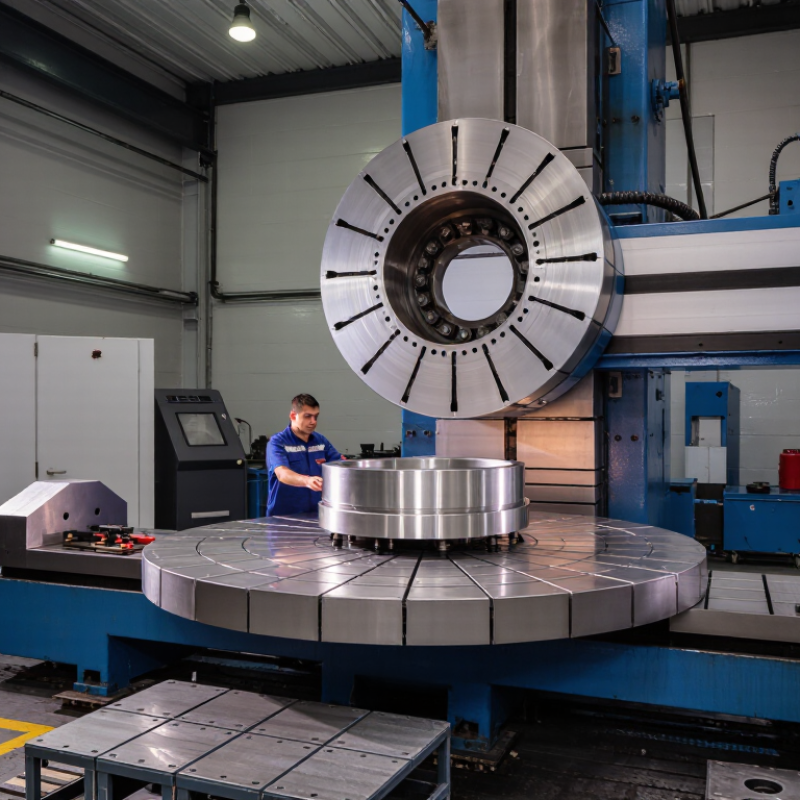
Table of Contents [Hide]
Understanding Vertical Boring Machines and Their Main Types
How to Choose the Best Vertical Boring Machine?
Understanding Vertical Boring Machines and Their Main Types
A vertical boring machine holds a workpiece on a horizontal rotating table. The cutting tool moves across its face and around its diameter. This arrangement suits large, heavy parts that are difficult to turn horizontally, such as turbine housings or broad flanges. Common designs include single-column and double-column machines. A single-column model needs less floor space. A double-column frame offers more support for wide, heavy workpieces. Some machines use a turret head; others use a ram for longer tool reach. These terms can overlap, so check the machine’s actual configuration.
Tips: Compare the maximum turning diameter, workpiece weight, and height with your largest parts. Ask about spindle speed and tool travel, too. A generous capacity is useful, but may raise costs and take up valuable shop space.
Choose based on the work you repeat, not only the biggest part you might machine someday. Check required tolerances and whether parts need facing, boring, or both. For interrupted cuts, frame rigidity matters; vibration can leave visible marks on a finished surface. A larger machine may seem like the safer choice, yet it can be inefficient for smaller batches. That trade-off is easy to underestimate. If possible, review a cutting demonstration using similar material and tooling before deciding.





