


- Home
- A-Z Catalogue
- Products
- Valves
- Cetop
- Manual Directional Valves
- Proportional Valves
- Poppet Valves
- High-Speed Linear Servo Valves
- All High-Speed Linear Servo Valves
- Cetop 10 (NG32) Two Stage Type High Speed Linear Servo Valves – LSVHG-10
- Cetop 10 (NG32) Two Stage Type High Speed Linear Servo Valves – LSVHG-10 (With Fail-Safe)
- Cetop 8 (NG25) Two Stage Type High Speed Linear Servo Valves – LSVHG-06
- Cetop 8 (NG25) Two Stage Type High Speed Linear Servo Valves – LSVHG-06 (With Fail-Safe)
- Cetop 7 (NG16) Two Stage Type High Speed Linear Servo Valves – LSVHG-04
- Cetop 7 (NG16) Two Stage Type High Speed Linear Servo Valves – LSVHG-04 (With Fail-Safe)
- Cetop 5 (NG10) Direct Type High Speed Linear Servo Valves – LSVG-03
- Cetop 5 (NG10) OBE Type Direct Operated Linear Servo Valves – LSVG-03-EH
- Cetop 3 (NG6) OBE Type Direct Operated Linear Servo Valves – LSVG-01-EH
- Pumps
- Pressure control
- Flow Control Valves
- Pressure Control Valves
- All Pressure Control Valves
- Brake Valves
- Direct Relief Valve
- Low Noise Solenoid Controlled Relief Valves
- Low Noise Pilot Operated Relief Valves
- Pilot Operated Relief Valves
- Pressure reducing and relieving valves
- Pressure reducing and check valves
- Pressure control valves
- Remote Control Relief Valves
- Solenoid Controlled Relief Valves – BSG
- Solenoid Controlled Relief Valves – BST
- Unloading relief valves
- Check valves
- Environmental
- Valves
- Hydraulic Systems
- Power pack
- About Us
- Contact
- Blog

How to Choose the Best Plate Heat Press?
Choosing the best Plate Heat Press starts with the plates you plan to decorate, not the biggest number on a product page. Check the press’s supported plate diameter, thickness, and shape against your actual blanks. A curved plate may need a different heating attachment than a flat one. Fit matters.
For this guide, fictional composite equipment specialist Dana Brooks offers this reminder: “A press is only as useful as its fit, pressure, and repeatability.” Treat that as practical guidance, not a sourced quotation. Look for steady temperature control, adjustable pressure, a clear timer, and an attachment that holds the plate securely. Those details affect whether a design transfers evenly from edge to edge. Small differences show.
Consider your workspace, too. Measure the machine and leave room to load plates without touching the hot platen. Review the manufacturer’s instructions, warranty, replacement-part availability, and support options before buying. If possible, test the press with the same plate blanks and transfer materials you expect to use. A sample may reveal uneven heating or awkward handling that product photos cannot show.
There is no perfect model for every shop. A compact press may suit occasional projects, while frequent production calls for durable construction and consistent results. Even careful research has limits: supplier specifications do not guarantee identical performance in every workspace. Compare verified features, test your materials, and choose the Plate Heat Press that fits your work—not simply your budget or the boldest claim.
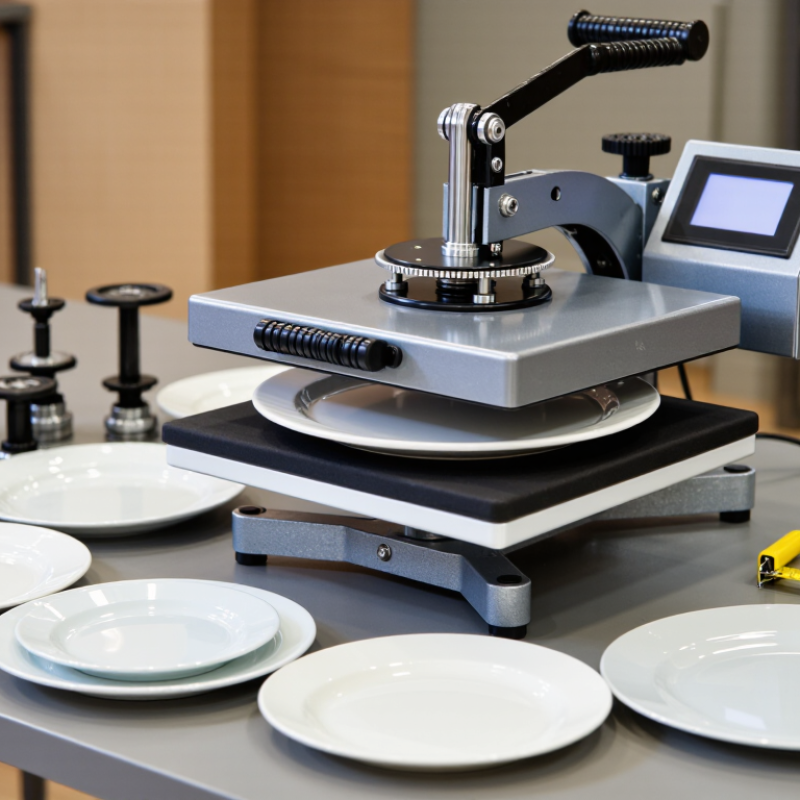
Table of Contents [Hide]
Understand How a Plate Heat Press Works
A plate heat press transfers a printed design onto a compatible plate using controlled heat, pressure, and time. Its heated platen warms the transfer paper and the plate’s coated surface. Under suitable conditions, sublimation ink turns into gas and bonds with the coating. Plain, uncoated ceramic usually will not produce the same result.
Place the plate securely on the lower cradle, align the design, and close the press evenly. The timer and temperature settings guide the process, but the right values depend on the plate coating and transfer materials. Follow their instructions, and check that the platen makes steady contact without forcing the handle.
A crooked plate or uneven pressure can leave faded edges. It is easy to blame the temperature first; alignment may be the real issue. Small adjustments matter.
Tips: Use a heat-resistant cover sheet and keep hands clear of hot surfaces. Test one plate before making a batch. Note the settings and inspect the result after it cools. A slightly imperfect first transfer can still reveal where your setup needs attention.





