


- Home
- A-Z Catalogue
- Products
- Valves
- Cetop
- Manual Directional Valves
- Proportional Valves
- Poppet Valves
- High-Speed Linear Servo Valves
- All High-Speed Linear Servo Valves
- Cetop 10 (NG32) Two Stage Type High Speed Linear Servo Valves – LSVHG-10
- Cetop 10 (NG32) Two Stage Type High Speed Linear Servo Valves – LSVHG-10 (With Fail-Safe)
- Cetop 8 (NG25) Two Stage Type High Speed Linear Servo Valves – LSVHG-06
- Cetop 8 (NG25) Two Stage Type High Speed Linear Servo Valves – LSVHG-06 (With Fail-Safe)
- Cetop 7 (NG16) Two Stage Type High Speed Linear Servo Valves – LSVHG-04
- Cetop 7 (NG16) Two Stage Type High Speed Linear Servo Valves – LSVHG-04 (With Fail-Safe)
- Cetop 5 (NG10) Direct Type High Speed Linear Servo Valves – LSVG-03
- Cetop 5 (NG10) OBE Type Direct Operated Linear Servo Valves – LSVG-03-EH
- Cetop 3 (NG6) OBE Type Direct Operated Linear Servo Valves – LSVG-01-EH
- Pumps
- Pressure control
- Flow Control Valves
- Pressure Control Valves
- All Pressure Control Valves
- Brake Valves
- Direct Relief Valve
- Low Noise Solenoid Controlled Relief Valves
- Low Noise Pilot Operated Relief Valves
- Pilot Operated Relief Valves
- Pressure reducing and relieving valves
- Pressure reducing and check valves
- Pressure control valves
- Remote Control Relief Valves
- Solenoid Controlled Relief Valves – BSG
- Solenoid Controlled Relief Valves – BST
- Unloading relief valves
- Check valves
- Environmental
- Valves
- Hydraulic Systems
- Power pack
- About Us
- Contact
- Blog

How to Choose the Best Combined Harvester in 2026?
Choosing the best Combined Harvester in 2026 requires more than comparing engine power or catalogue prices. Crop type, field size, terrain, grain moisture, and local service support can change the right decision. A machine that performs beautifully in dry wheat may struggle in damp rice fields. That detail matters.
The OECD-FAO Agricultural Outlook 2024–2033 projects global agricultural and fish production to grow by about 1.1% annually during the next decade. Much of this growth must come from better productivity, not simply from expanding farmland. The FAO also identifies sustainable agricultural mechanization as an important tool for improving efficiency, reducing labor pressure, and limiting harvest losses. These findings make harvesting capacity a strategic farm investment, not merely an equipment purchase.
Reliable selection begins with measurable field evidence. Review average hectares harvested daily, fuel use per hectare, grain loss, unloading speed, and maintenance response time. The U.S. Department of Agriculture’s WASDE reports show how frequently grain production expectations change with weather and market conditions. Flexibility therefore deserves serious attention. Adjustable headers, automatic settings, moisture monitoring, and strong residue management can protect performance across changing seasons.
Still, no checklist is perfect. Operators may value cab visibility more than published specifications. Dealers may promise support that feels slower during harvest. A careful 2026 comparison should combine manufacturer data, independent testing, operator feedback, and a realistic three-year ownership cost. The strongest Combined Harvester is not always the largest one. It is the machine that delivers clean grain, dependable uptime, and practical support when the crop is ready.
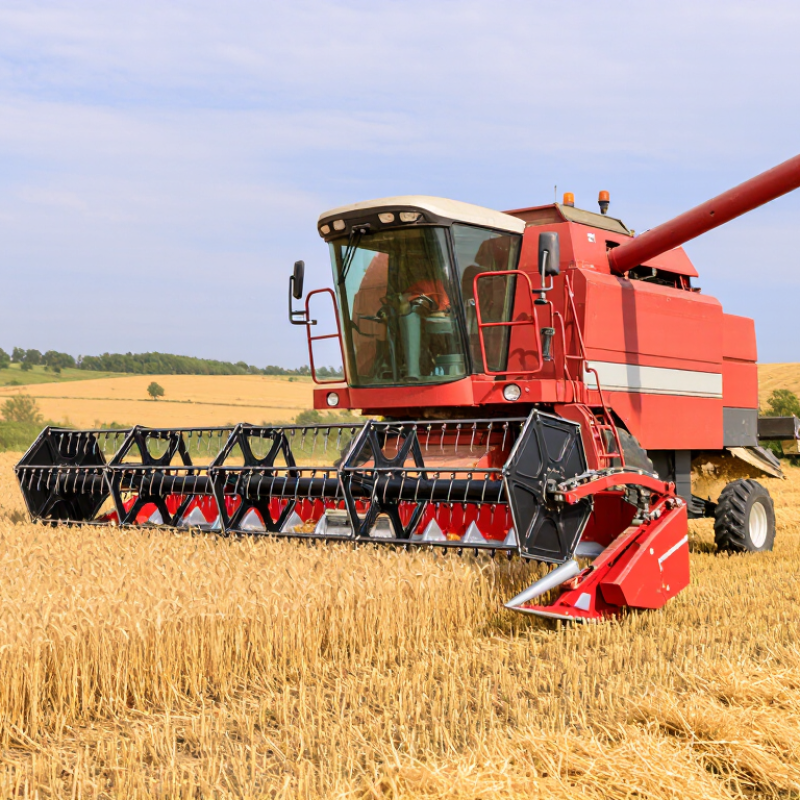
Table of Contents [Hide]
What a Combined Harvester Is and How It Works
How to Choose the Best Combined Harvester in 2026?
What a Combined Harvester Is and How It Works
A combined harvester is a field machine that performs several jobs in one pass. It cuts crops, feeds them inward, separates grain, cleans it, and stores it. This design reduces field traffic and saves valuable harvest time. The machine usually includes a header, feeder, threshing system, cleaning unit, grain tank, and unloading auger.
The process begins at the header. Rotating blades cut the crop, while reels guide stems toward the feeder. The feeder carries the material into a drum or rotor. There, friction and impact release the grain from the ears or pods. Concaves help separate grain from straw. Sieves and a fan then remove chaff and lighter debris. Clean grain reaches the tank, while straw leaves through the rear.
Real field performance depends on crop moisture, ground speed, and machine settings. A dry crop may need gentler threshing. Damp material can demand slower feeding and stronger airflow. Small adjustments matter. Watch grain samples, check losses behind the machine, and inspect damaged kernels regularly. A full grain tank is not proof of efficiency. Some grain may still remain on the ground.
Choosing the right harvester also requires honest self-assessment. Field size, crop variety, terrain, service access, and operator skill all affect results. Bigger capacity can help, but excessive size may increase fuel use and maintenance demands. The best choice is not always the largest machine.





