


- Home
- A-Z Catalogue
- Products
- Valves
- Cetop
- Manual Directional Valves
- Proportional Valves
- Poppet Valves
- High-Speed Linear Servo Valves
- All High-Speed Linear Servo Valves
- Cetop 10 (NG32) Two Stage Type High Speed Linear Servo Valves – LSVHG-10
- Cetop 10 (NG32) Two Stage Type High Speed Linear Servo Valves – LSVHG-10 (With Fail-Safe)
- Cetop 8 (NG25) Two Stage Type High Speed Linear Servo Valves – LSVHG-06
- Cetop 8 (NG25) Two Stage Type High Speed Linear Servo Valves – LSVHG-06 (With Fail-Safe)
- Cetop 7 (NG16) Two Stage Type High Speed Linear Servo Valves – LSVHG-04
- Cetop 7 (NG16) Two Stage Type High Speed Linear Servo Valves – LSVHG-04 (With Fail-Safe)
- Cetop 5 (NG10) Direct Type High Speed Linear Servo Valves – LSVG-03
- Cetop 5 (NG10) OBE Type Direct Operated Linear Servo Valves – LSVG-03-EH
- Cetop 3 (NG6) OBE Type Direct Operated Linear Servo Valves – LSVG-01-EH
- Pumps
- Pressure control
- Flow Control Valves
- Pressure Control Valves
- All Pressure Control Valves
- Brake Valves
- Direct Relief Valve
- Low Noise Solenoid Controlled Relief Valves
- Low Noise Pilot Operated Relief Valves
- Pilot Operated Relief Valves
- Pressure reducing and relieving valves
- Pressure reducing and check valves
- Pressure control valves
- Remote Control Relief Valves
- Solenoid Controlled Relief Valves – BSG
- Solenoid Controlled Relief Valves – BST
- Unloading relief valves
- Check valves
- Environmental
- Valves
- Hydraulic Systems
- Power pack
- About Us
- Contact
- Blog

7 Tips for Choosing the Best Car Garage Lift
A Car Garage Lift can make routine repairs easier, free up floor space, and provide better access beneath a vehicle. But choosing one is not just a matter of comparing prices or picking the model with the highest capacity. The lift must suit your vehicles, garage, and planned work. Small details matter. A low ceiling, narrow bay, or uneven concrete floor can rule out an otherwise appealing option.
These seven tips focus on practical checks buyers can make before committing. Compare lift styles and rated capacity, then consider vehicle weight distribution, door clearance, and the space needed to open doors or position lift arms. Read the manufacturer’s installation requirements carefully; a lift’s rating alone does not confirm that your garage floor is suitable. When concrete specifications are unclear, ask a qualified installer to assess the site. A tape measure helps, but it cannot answer every structural question.
It is easy to focus on convenience and overlook how often you will use the lift. That is worth reconsidering. Think about daily access, storage, maintenance, and the tools you need nearby. Inspect the locking system, controls, warranty terms, and availability of replacement parts. This guide explains what to check and why each choice matters. A little extra planning can prevent an expensive mismatch. Even careful buyers can miss a clearance issue, so verify your measurements before ordering.
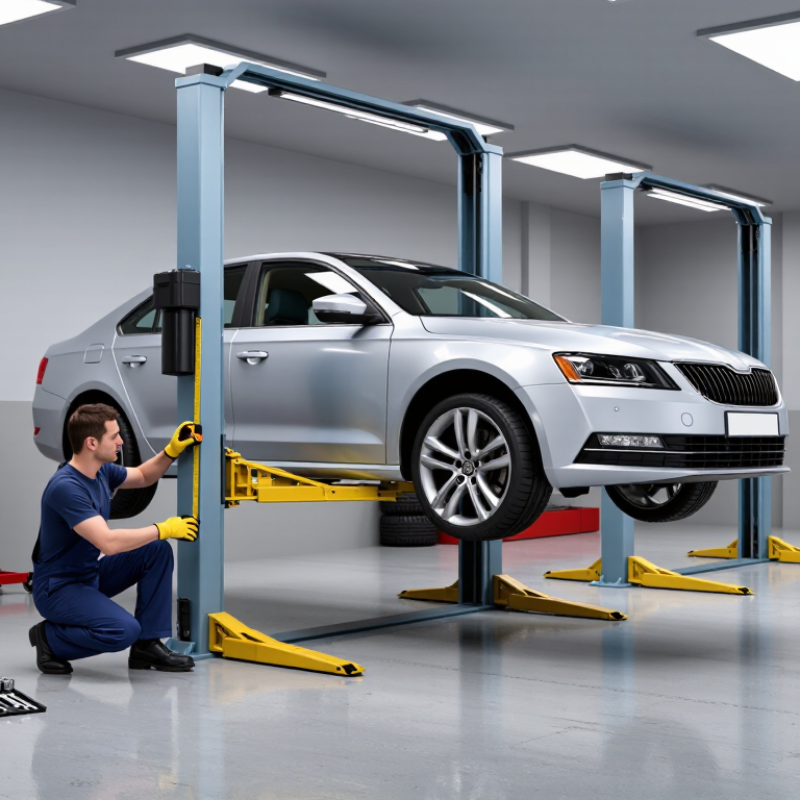
Table of Contents [Hide]
Assess Your Vehicle Types and Garage Needs
7 Tips
7 Tips for Choosing the Best Car Garage Lift
Assess Your Vehicle Types and Garage Needs
Start with the vehicles you actually own, not the lift that looks most convenient. EPA’s 2024 Automotive Trends Report puts the average new light-duty vehicle at about 4,329 pounds for model year 2023. That average can hide a heavier pickup, electric vehicle, or loaded SUV. Check each vehicle’s manual for weight and approved lifting points, then compare the heaviest vehicle with the lift’s rated capacity. Leave room for accessories and vehicles you may own later. Averages are only a starting point.
Measure the garage before comparing lift styles. Record ceiling height, door clearance, bay width, and the space needed to walk around a raised vehicle. A tape measure beats a guess. Also check the installation requirements for the floor and concrete slab; the Automotive Lift Institute’s lift-safety guidance emphasizes proper installation and vehicle positioning. A two-post lift can offer open access underneath, while a four-post design may suit storage and parking needs. Neither is automatically right. I would not treat one measurement as gospel: roof racks, tire changes, and future vehicles can shift the fit. Note those details before choosing.





